


What is ceremonial grade matcha? How Japan judges quality
Ceremonial grade matcha is matcha meant to be whisked with water and drunk on its own. It is not a Japanese grade, because in Japan each tea house sets its own quality levels and the term itself is rarely used there. The leaf and the shading decide the quality, and in the end you can tell it by the colour, scent and umami in the bowl.
What Japan does fix is what matcha actually is, namely shaded tencha dried without rolling and finely ground.
What does ceremonial grade matcha mean?
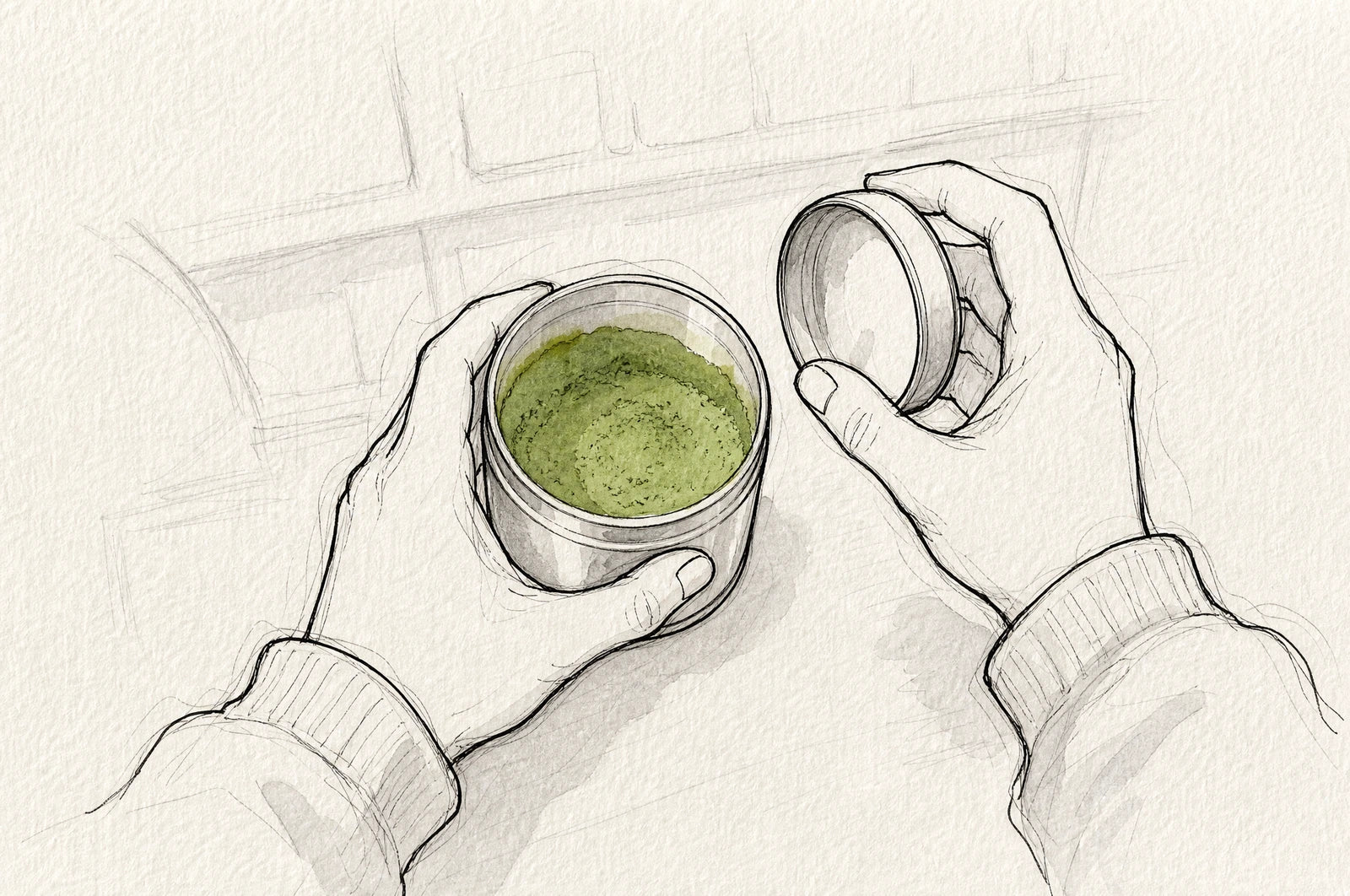
In the trade, ceremonial grade means matcha you whisk with water and drink on its own. The term describes a purpose, not a tested level. If you buy ceremonial matcha, you get a powder meant for the plain bowl.
Packaging often repeats the same promises, such as first harvest, long shading, young leaves, no stems or veins and very fine milling.
Where the term comes from is not clearly documented. It is usually linked to the Japanese tea ceremony. Premium and culinary often sit alongside it.
Is ceremonial grade a Japanese matcha grade?
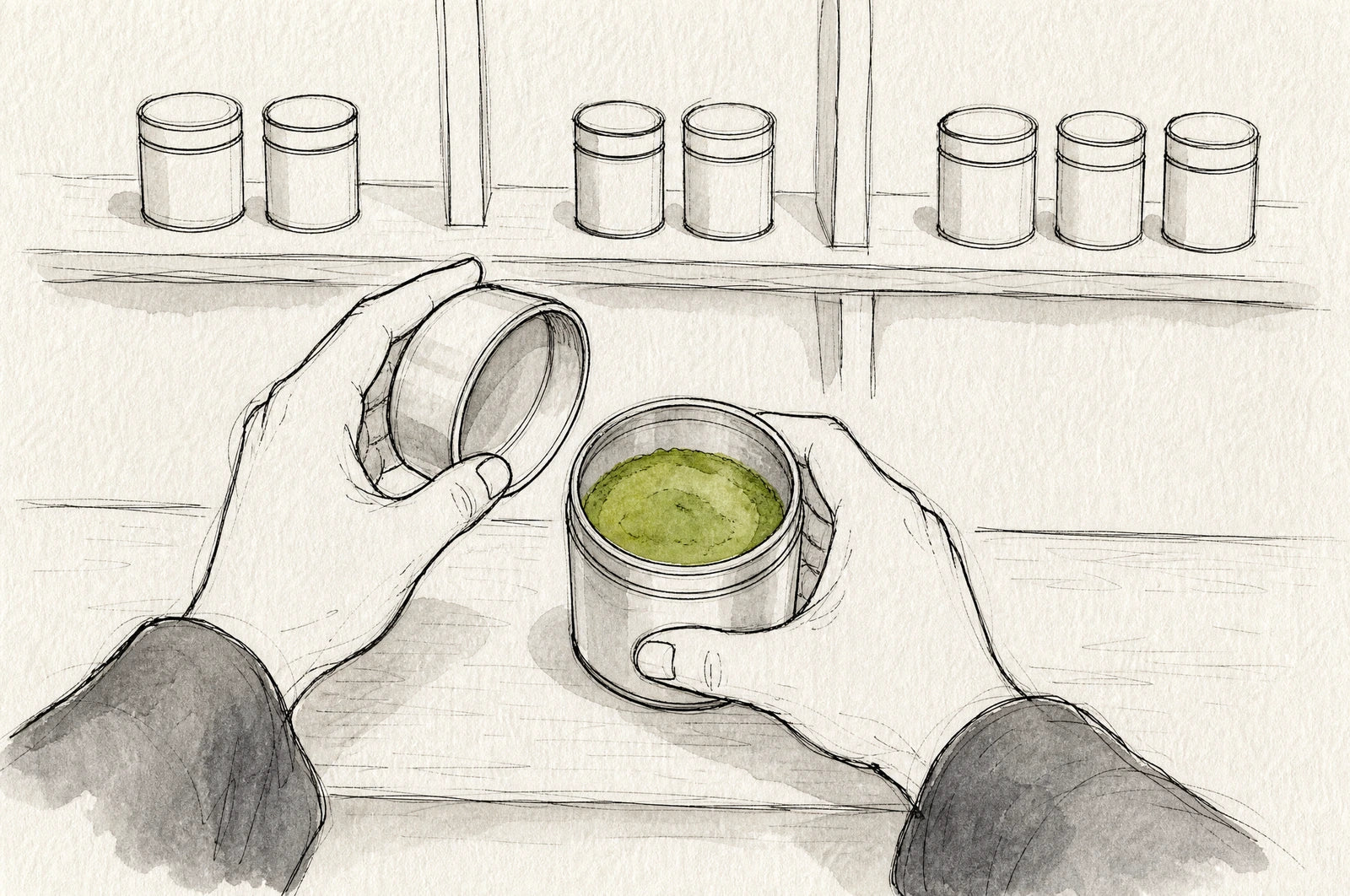
A tea house in Kyoto, founded in 1717, does not use the term ceremonial grade and writes that it is not used in Japan. Every variety the house sells suits drinking on its own and is also used in the tea ceremony.
Instead of grades, tea shops in Japan sort matcha by occasion, such as for practice, for tea gatherings, for koicha, the thick, slowly kneaded bowl, or for usucha, the thin one, and for baking and cooking. A tea shop in Okayama sells the matcha for tea gatherings as a special taste for guests, and the one for practice as good quality at an easy price.
There is no shared grade in Japan. The tea house Yamamasa Koyamaen (in Japanese) in Uji writes that each maker draws the line between matcha for drinking and matcha for processing itself, and that there is no clear definition by method or ingredients. What counts as a processing grade at one house may be sold as a drinking grade at another, and each shop also sorts by occasion in its own way.
The labelling rules of the Japanese tea association also define what matcha is, but set no grades.
Where a producer does use the term, such as a tea grower in Kagoshima for its export line, it gives its own reasons, the cultivar and how that cultivar did in a state tasting.
| Topic | In Japan |
|---|---|
| What matcha is | defined in the labelling rules of the Japanese tea association |
| Grades | none shared, each tea house has its own levels under its own tea names |
| Sorting in the shop | by occasion, such as for practice, for tea gatherings or for baking and cooking |
| Line between drinking and processing | drawn by each tea house |
| Ceremonial, premium, culinary | rarely used at home, a few producers use the term for export and give their own reasons |
How do Japanese tea houses judge matcha quality?
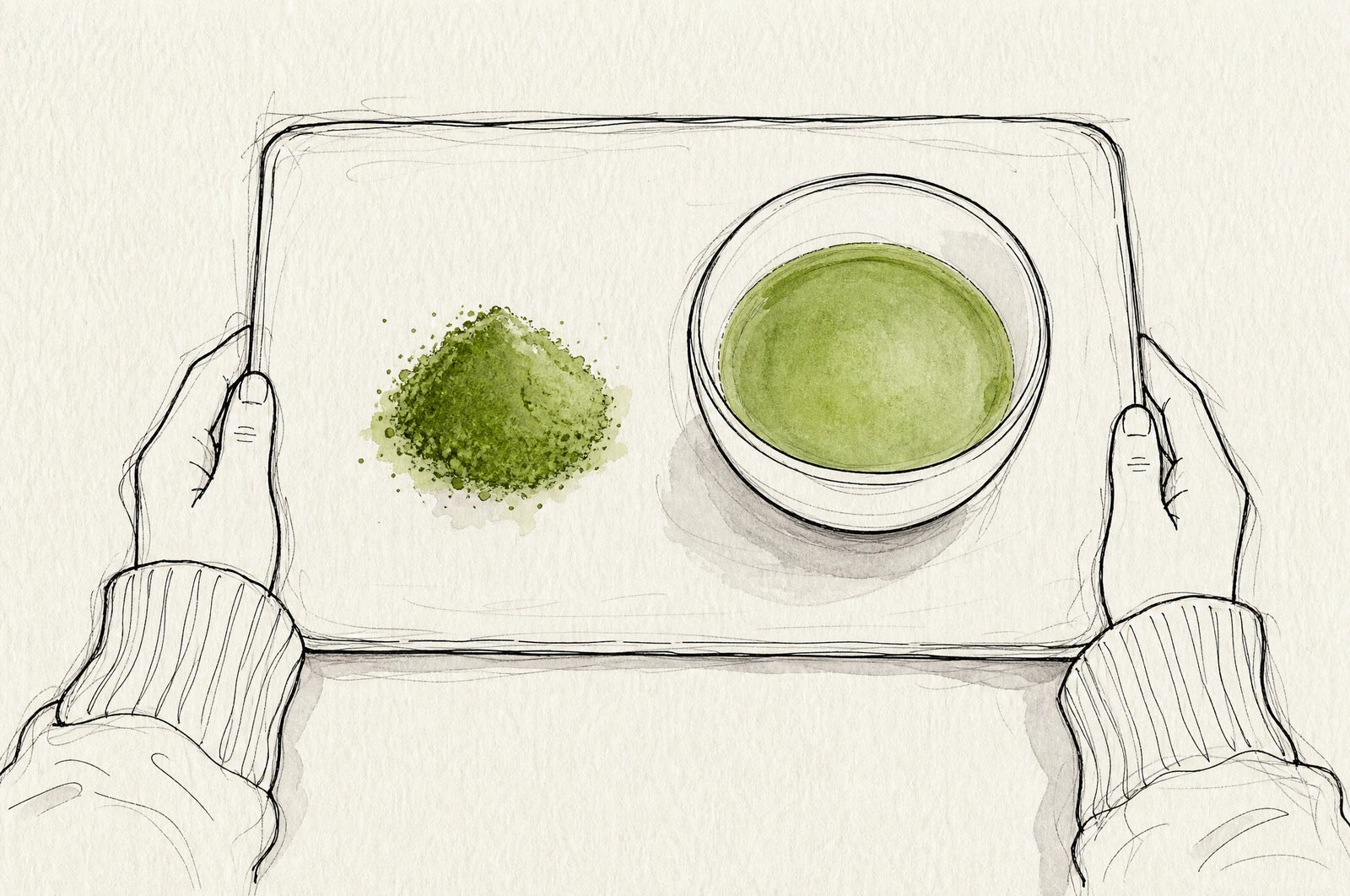
When it comes to quality, tea houses look to the leaf. According to the Uji tea house, the quality of the matcha follows the quality of the tencha it is ground from. Three things count in the taste, umami, which can recall boiled chestnuts, the scent of shaded leaves, which calls to mind fresh young shoots, and little bitterness. The colour should be a vivid green, while a reddish tinge or a pale whitish green is read as a weaker sign.
The house assesses the tencha on 6 points, namely shape, leaf colour, scent, colour of the infusion, taste and colour of the spent leaf, and people taste and smell before they blend.
The same house does not call its varieties ceremonial or premium but gives them tea names of their own, from Chajyu-no-mukashi to Maki-no-shiro. It carries 12 varieties for drinking and 5 for processing, 17 levels in all, and the top level costs more than 50 times the lowest.
At home you can check colour, scent and umami the same way and measure them against what good matcha tastes like.
Is ceremonial matcha always first harvest and hand-picked?
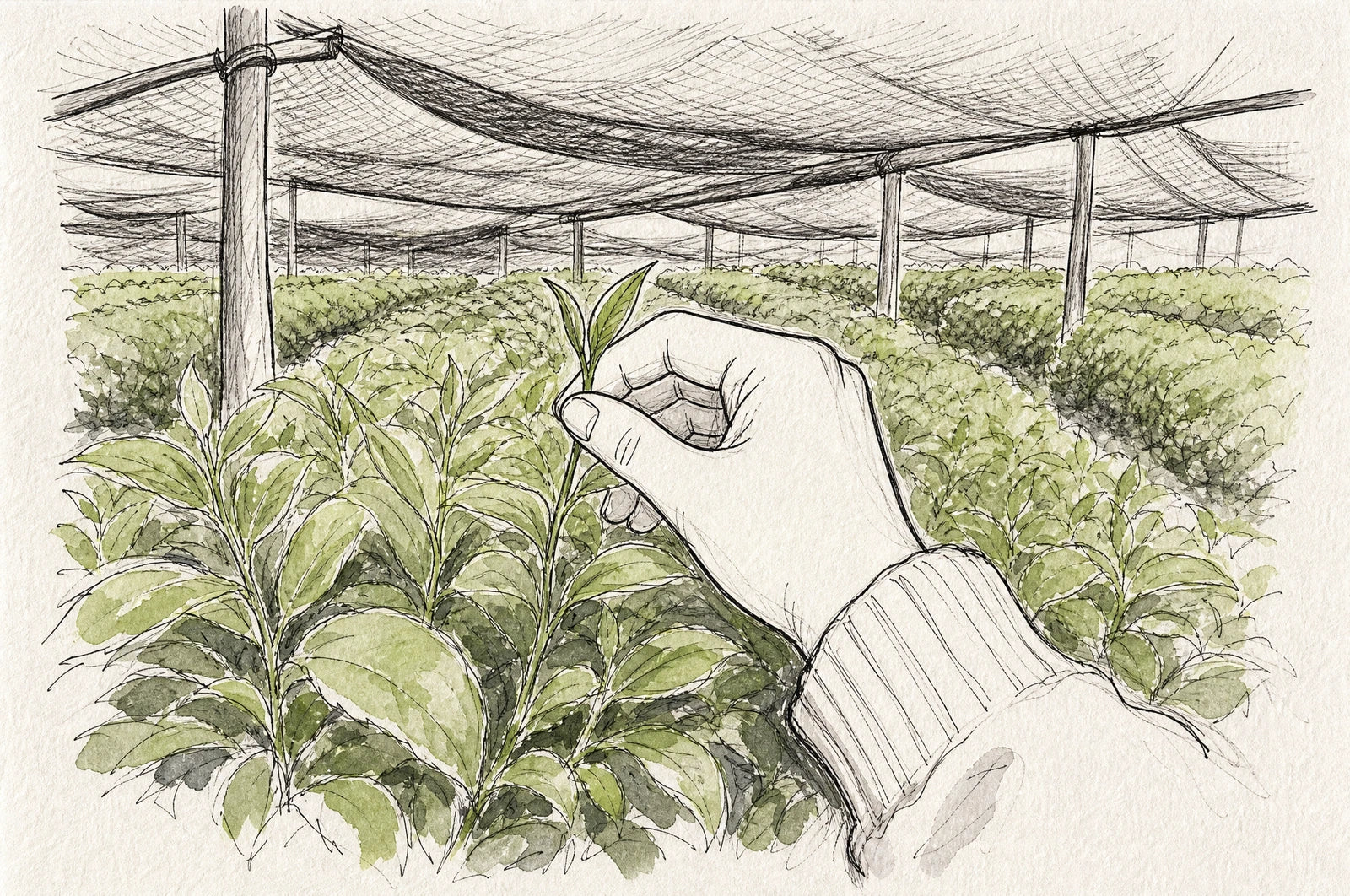
Not necessarily. With shading and harvest several features can be set one at a time, and tea houses combine them differently for each variety. Each feature is its own lever, not a package.
The tea plants stand in shade for 3 to 4 weeks before picking. Without light, less theanine, the amino acid behind umami, turns into catechins, which stand for bitterness. The leaf comes mainly from the first harvest in spring, because picked too early the umami has not yet developed, and too late the leaf is too tough.
The best raw tea is picked by hand, otherwise a machine does the work. Tea fields kept in their natural shape for hand picking take more fertiliser and heavier shading, while a machine saves a great deal of picking time and cost.
Among the growing regions such as Kagoshima, Shizuoka and Uji, Kagoshima produces the most tencha, followed by Kyoto and Shizuoka, according to the Ministry of Agriculture, Forestry and Fisheries (2026). Origin alone does not decide quality. Growing and processing of tencha have advanced a long way outside Kyoto as well.
| Feature | What happens in the leaf | How it is handled in Japan |
|---|---|---|
| Shading | more umami, less bitterness, deeper green | 3 to 4 weeks before picking |
| Picking time | young shoots in spring carry the most umami | mainly the first harvest in spring |
| Hand picking | more fertiliser and heavier shading possible | for the best raw tea, otherwise machine |
| Growing region | climate and skill of the growers | Kagoshima produces the most tencha, origin alone does not decide |
Ceremonial, premium or culinary, how do matcha grades differ?
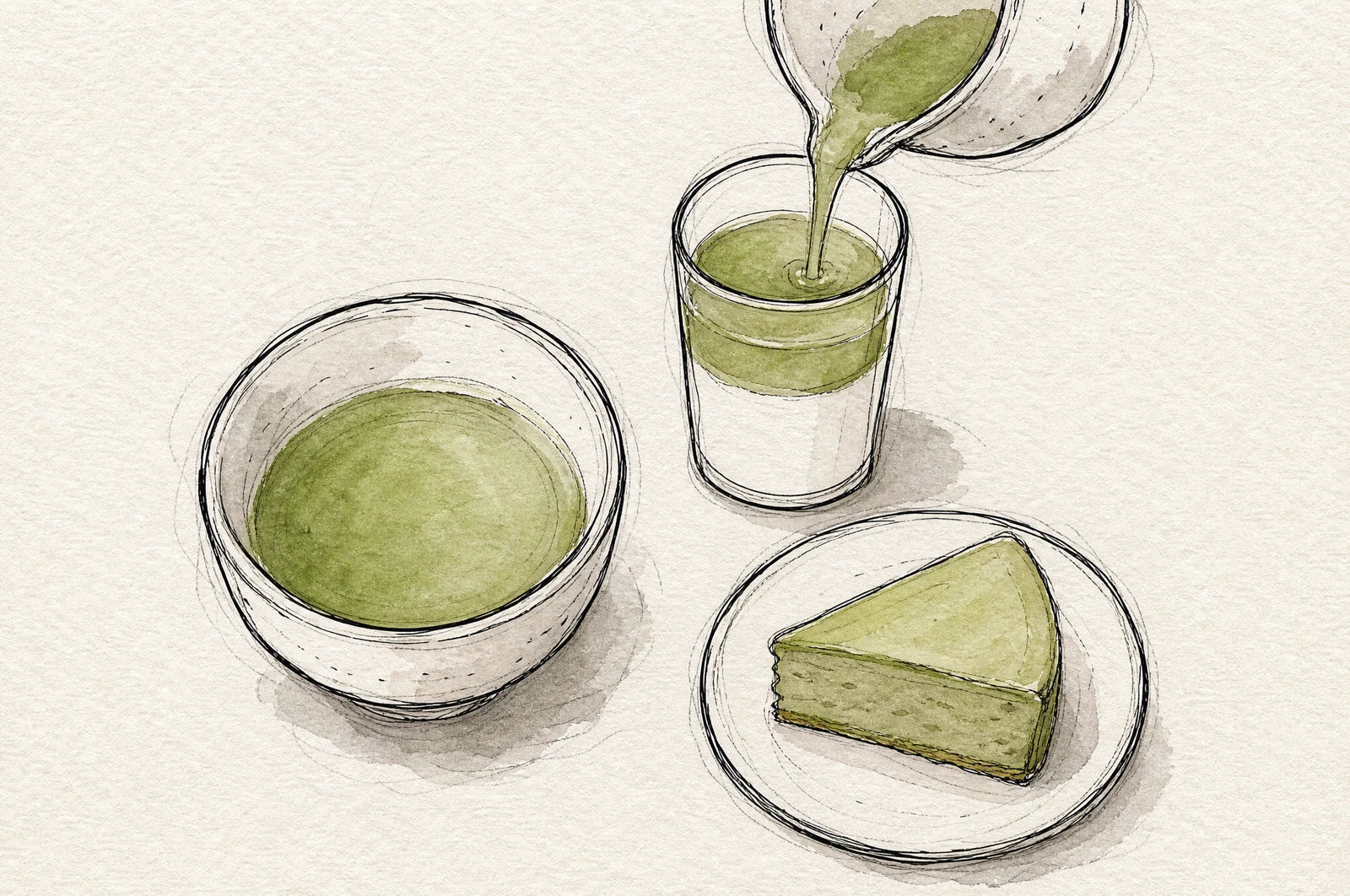
On western shelves, culinary vs ceremonial matcha is a split by purpose. Ceremonial is meant for the plain bowl, premium for every day and lattes, though its meaning shifts from seller to seller, and culinary for baking, cooking and sweetened drinks. Each seller draws the line itself.
The Uji tea house writes that makers draw the line between drinking and processing grades by how pleasant the matcha is to drink on its own, mainly by its bitterness. For lattes and baking it recommends "a more affordable drinking grade instead of the best one" or the top processing grade. Matcha with colouring or oils added for processing is something else, and you can see it on the ingredients list.
For baking with matcha you don't need a separate matcha, you choose the variety to suit the recipe.
| Term | Meant for | What to look for |
|---|---|---|
| Ceremonial | whisked with water and drunk on its own | origin and harvest named, vivid green |
| Premium | every day and lattes, the meaning shifts from seller to seller | what the seller means by it |
| Culinary | baking, cooking, sweetened drinks | ingredients list, matcha only or with additives |
Is ceremonial matcha better, and do you need it?
Drinking quality pays off most in the plain bowl. When you whisk matcha on its own, 2g in 60ml, plenty of umami and a short bitter edge stand out most.
Drinking quality holds up in milk, so a ceremonial matcha latte works, but a more affordable drinking grade instead of the best one is enough.
Neither the price nor the word on the tin says on its own whether ceremonial matcha is worth it for you. Origin, harvest time and the colour and scent in the bowl say more.
On its own, MOKU-AN's Stillpoint shows best. For a latte, Waterline is the first choice.
What does ceremonial grade mean on a MOKU-AN tin?
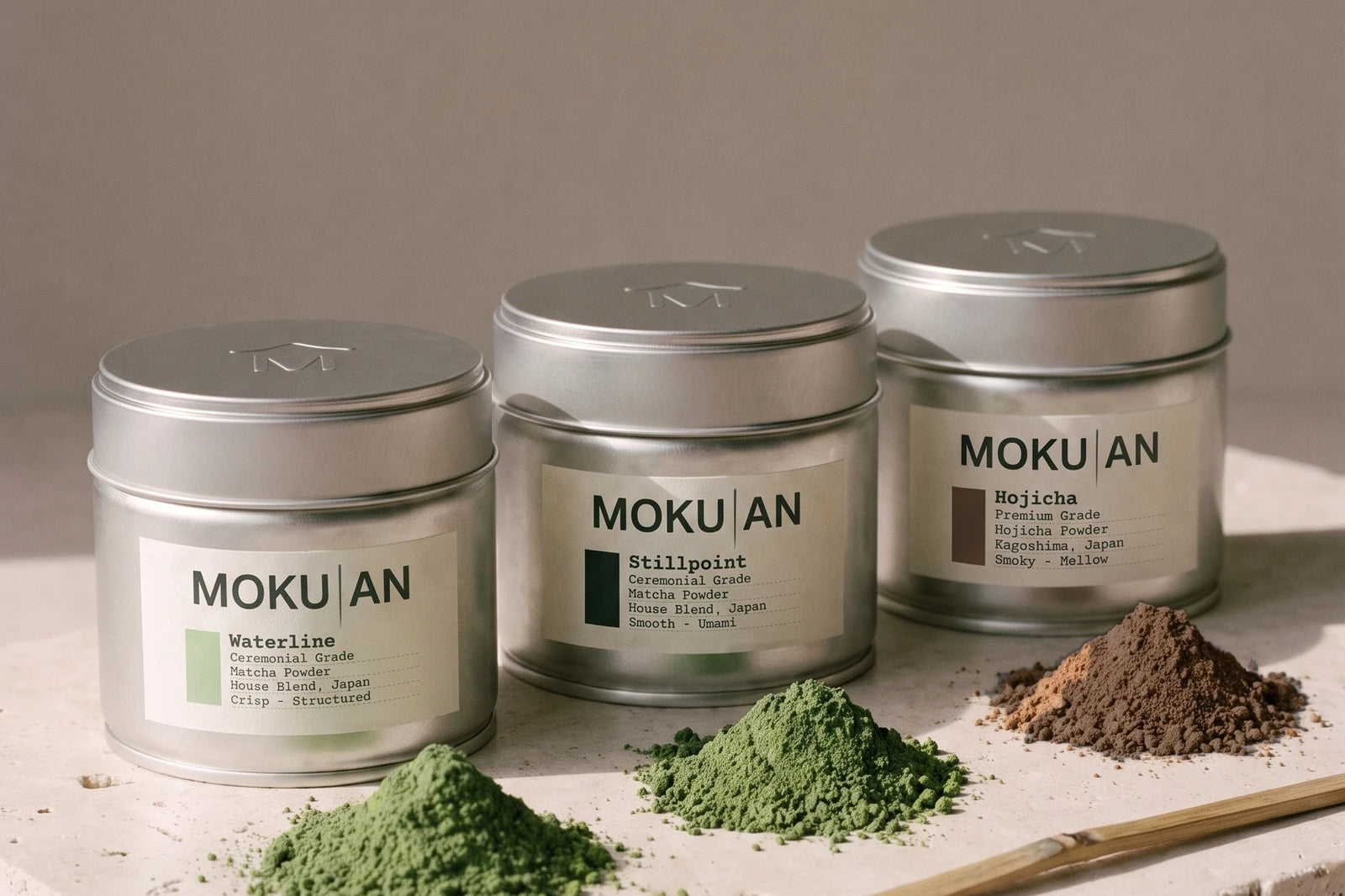
We use the term and say what it means to us. People shopping for matcha tend to search for ceremonial. We call Waterline and Stillpoint ceremonial grade because they belong to the upper drinking quality you could also serve at a tea gathering. That means shade-grown leaf with the stems and veins taken out, milled fine enough to whisk straight into water. It is the grade made for drinking on its own, which is also why it holds up in milk.
Both are house blends from our matcha collection, with leaf from Kagoshima, Shizuoka and Miyazaki, blended by a long-established tea house in Shizuoka that is run by the fourth generation.
Hojicha is a single origin from Kagoshima, roasted green tea milled as fine as matcha, but not matcha.
As with any matcha made from shaded tencha, in the end the bowl decides, not the label.
FAQ
Is matcha without "ceremonial" on the label worse?
No. The term is rarely used in Japan. Origin, harvest, colour and scent say more about quality than the label does.
Is ceremonial grade matcha used in the tea ceremony?
Not under that name. In the tea ceremony people speak of matcha for koicha or for usucha, and a tea house in Kyoto whose matcha is drunk there does not use the term ceremonial.
All articles on matcha knowledge
 What is matcha? What it's made of, origin and typesMatcha is shade-grown green tea, ground whole. Where it is grown, how it differs from sencha and what usucha and koicha are.
 What does matcha taste like? Matcha taste in four wordsSavoury and round first, then a short bitter edge, then a faintly sweet finish. Four words describe any cup, plus why matcha can taste bitter or fishy.
MOKU-AN, Düsseldorf · Updated 7 October 2026
