


How to make matcha at home, with or without a whisk
To make matcha, whisk 2g of powder into 60ml of water at about 80°C for 15 seconds, moving the whisk in an M shape. The 2g is two level bamboo scoops (chashaku), about one level teaspoon. For a latte, whisk 5g into 150ml of water and pour it over 150ml of milk. No whisk? A shaker does the job in 20 seconds.
At MOKU-AN the recipe is the same for every can in the range, Waterline, Stillpoint and Hojicha alike. Learn it once and it works for all three.
What do you need to make matcha?
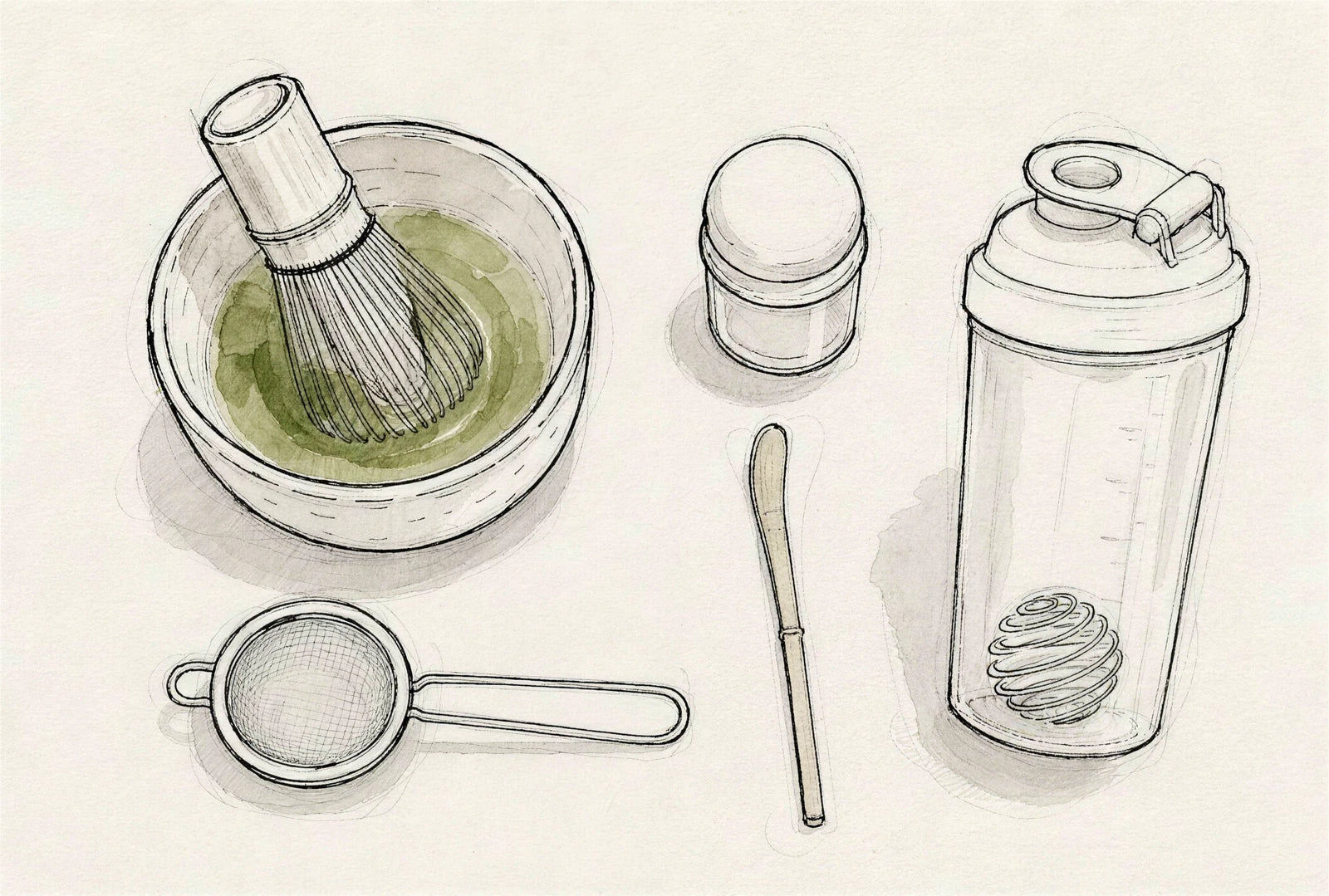
Matcha doesn't dissolve. Sugar or instant powder disappears into water, matcha doesn't. It is the tea leaf itself, ground fine, and the particles are only spread through the water. They hang in it, and if the bowl sits for a while they settle at the bottom. That is why you drink matcha freshly whisked, and why you need something moving fast enough to spread the powder evenly before it clumps. Which tool you pick depends on where and how you drink it.
| Tool | Good for | Less good for |
|---|---|---|
| Bowl and bamboo whisk (chasen) | Hot and straight, the finest foam, a latte base | Taking with you |
| Shaker (about 100ml) | Cold, on the go, one hand | More than one serving at a time |
| Protein shaker with a spring ball | Larger amounts, a latte base at home | The finest foam |
| Handheld milk frother | A quick latte base | Small, shallow bowls, because it splashes |
Add a small tea strainer, a scoop or a fine scale, and a kettle. That is everything you need to start.
How much matcha per cup?
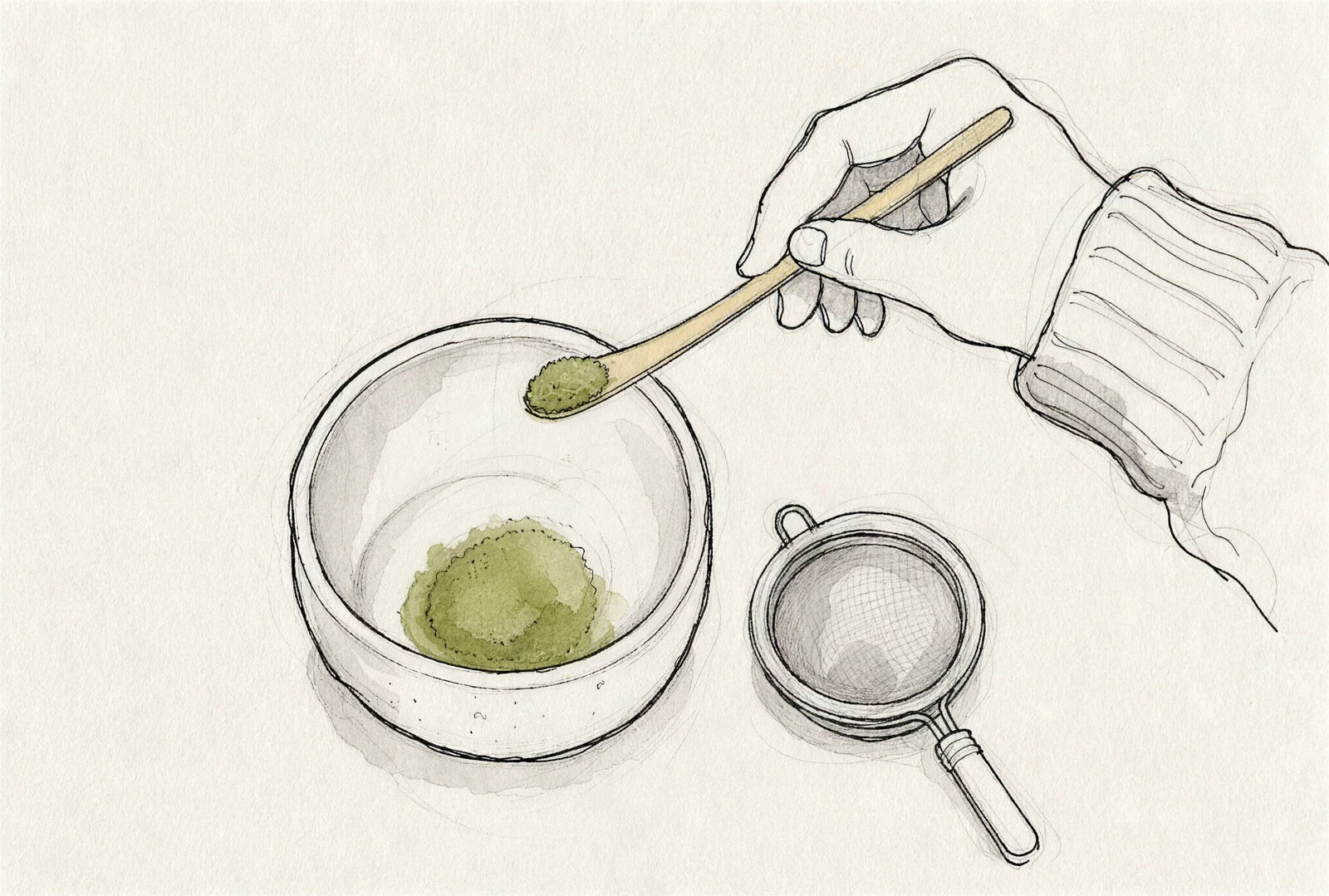
For one bowl of straight matcha, use 2g of powder to 60ml of water. That is two level scoops with a bamboo scoop (chashaku), or roughly one level teaspoon. The matcha to water ratio works out at about 1 to 30. For a latte you use more powder, because milk softens the flavour.
| How you drink it | Matcha | Water (80°C) | Milk | Method |
|---|---|---|---|---|
| Straight, hot | 2g | 60ml | none | Whisk 15sec, drink from the bowl |
| Straight, iced | 2g | 60ml | none | Whisk 15sec, pour over a full glass of ice |
| Hot latte | 5g | 150ml | 150ml, warmed (1:1) | Whisk, pour over the milk |
| Iced latte | 5g | 150ml | 150ml, cold, over ice (1:1) | Whisk, pour over the milk and ice |
| Shaker | 2g | 20ml, then top up with 80ml | or 80ml instead of water | Shake 20sec |
At 2g a bowl, one 30g can gives you about 15 bowls. Some people like it stronger and add a little more powder. You'll know where you sit by the second cup. If you are new to matcha, a little agave syrup softens the edges.
This 2g in 60ml bowl is what Japanese tea vocabulary calls usucha, or thin matcha. When a recipe says usucha, this is the bowl it means.
What water temperature for matcha?
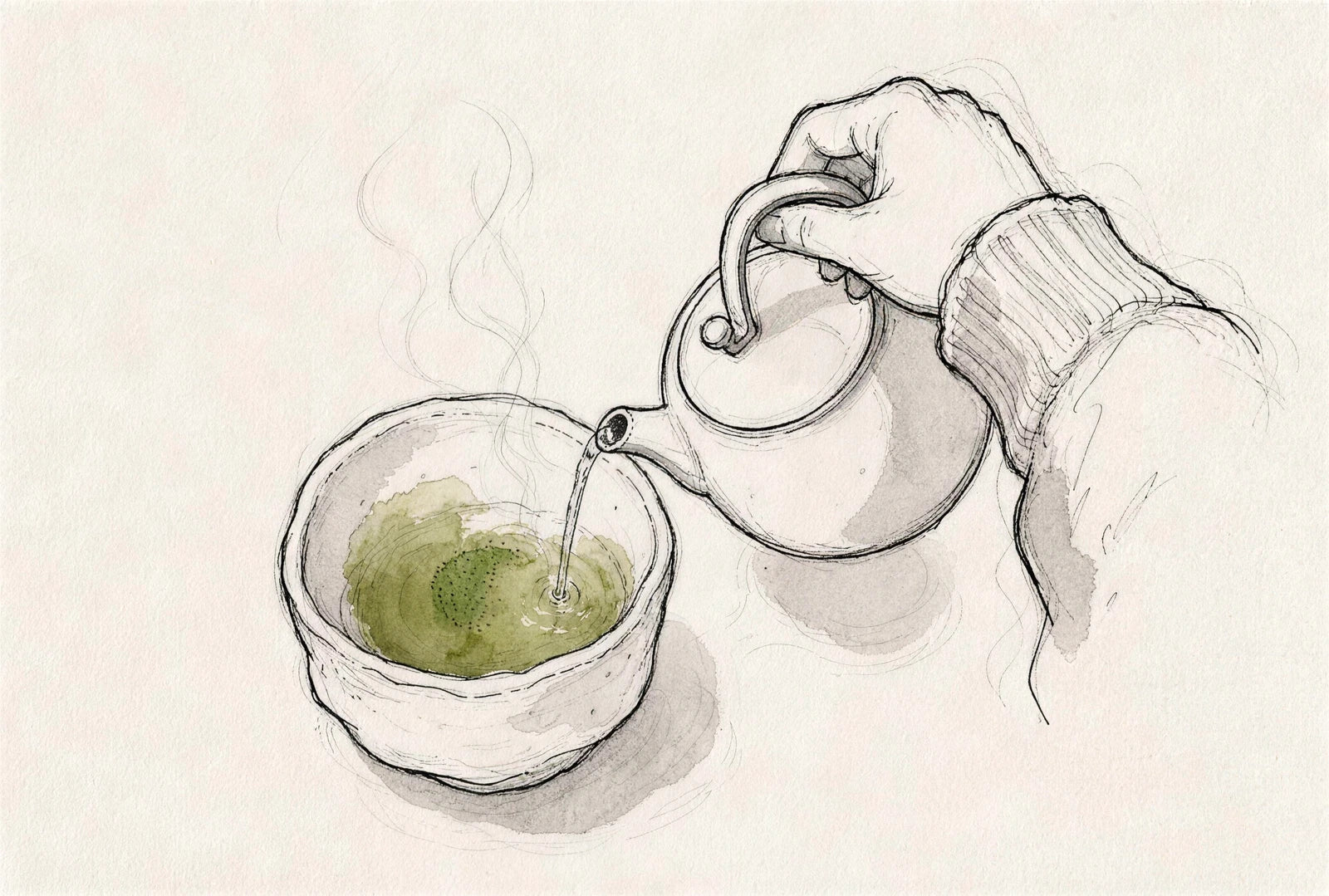
The right water temperature for matcha is about 80°C. Boiling water makes it bite. The reason is tannins, the compounds in the tea leaf behind matcha's bitterness and astringency. The hotter the water, the faster they come out. At 80°C they hold back.
You don't need a thermometer. Boil the kettle, then let it stand for a minute. That puts you close enough.
| Water | What you get in the bowl |
|---|---|
| Straight off the boil | The bitter edge comes through fast |
| Boiled, then rested 1 minute (about 80°C) | Balanced, the tannins hold back |
| Cold | Only worth it in a shaker, the foam is coarser |
For iced matcha, whisk with 80°C water as usual and pour it over the ice afterwards.
How to whisk matcha, step by step
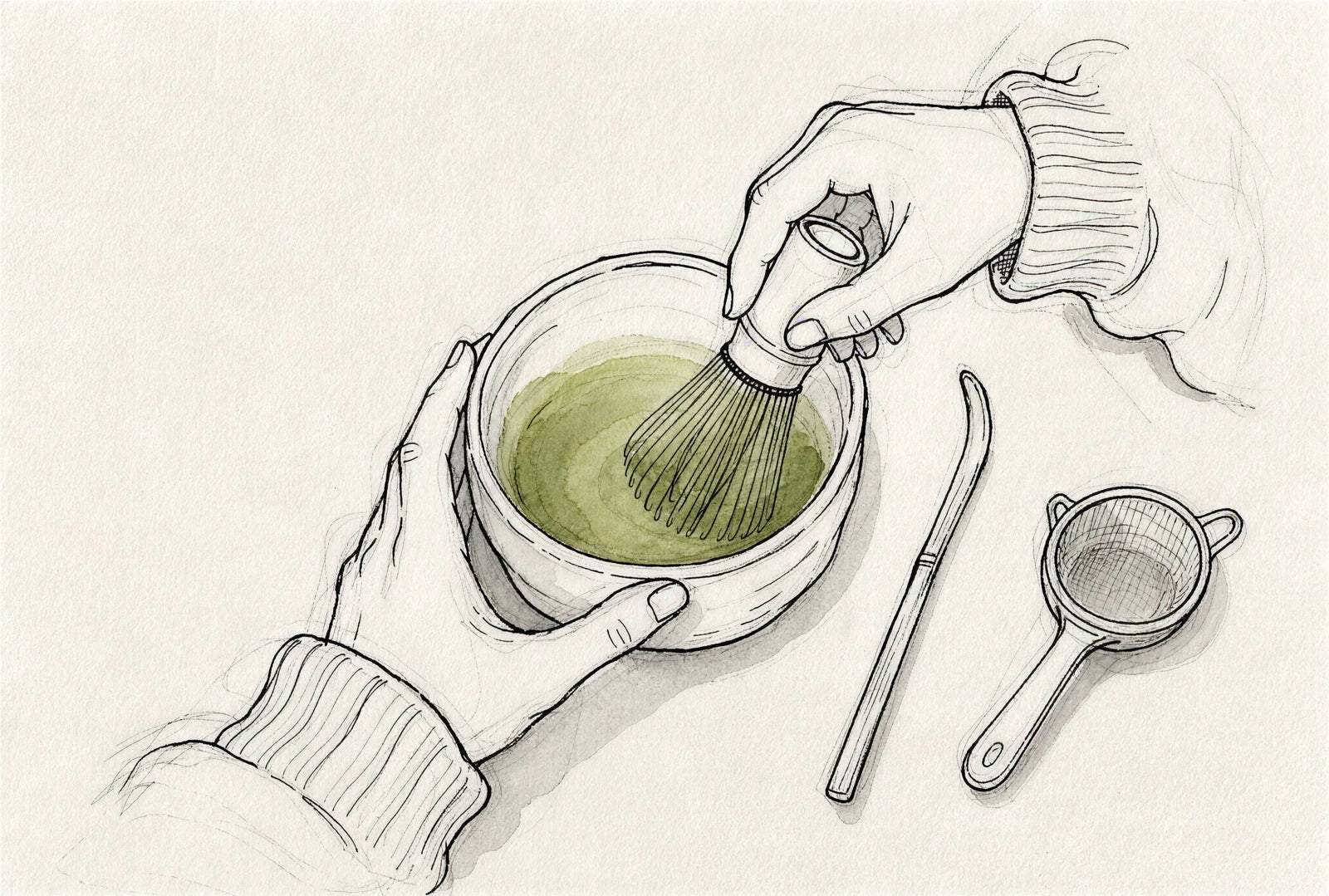
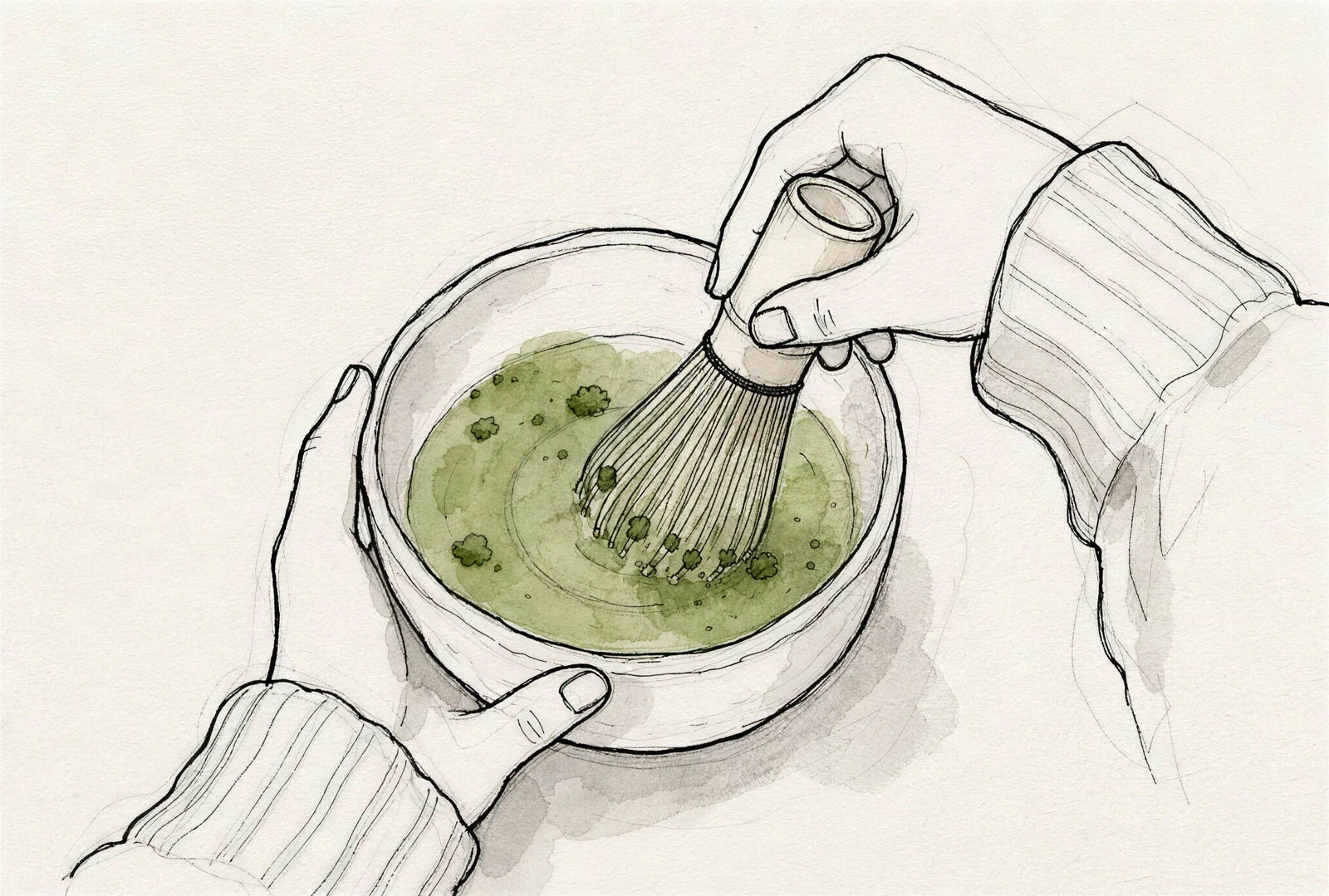
A bamboo whisk gives you the finest foam. The movement comes from the wrist and your arm stays still. Before your first bowl, soak the tines in warm water for a minute. It makes them soft and springy, so they don't snap while whisking and work the foam finer.
- Dose. Put 2g of matcha in the bowl, two level bamboo scoops (chashaku) or about one level teaspoon.
- Sift. Push the powder through a small tea strainer into the bowl so no clumps are left.
- Pour. Add 60ml of water at about 80°C. Boiled and rested for a minute is enough.
- Whisk. Whisk back and forth in an M shape for 15 seconds, until the foam closes over the surface. The speed of the tips decides how fine the foam gets.
Lift the whisk straight up out of the centre and drink it while the foam is still standing. It won't wait for you. Afterwards rinse the tines in warm water, no soap, and rest the whisk on its tube so the curve holds.
How to make matcha without a whisk
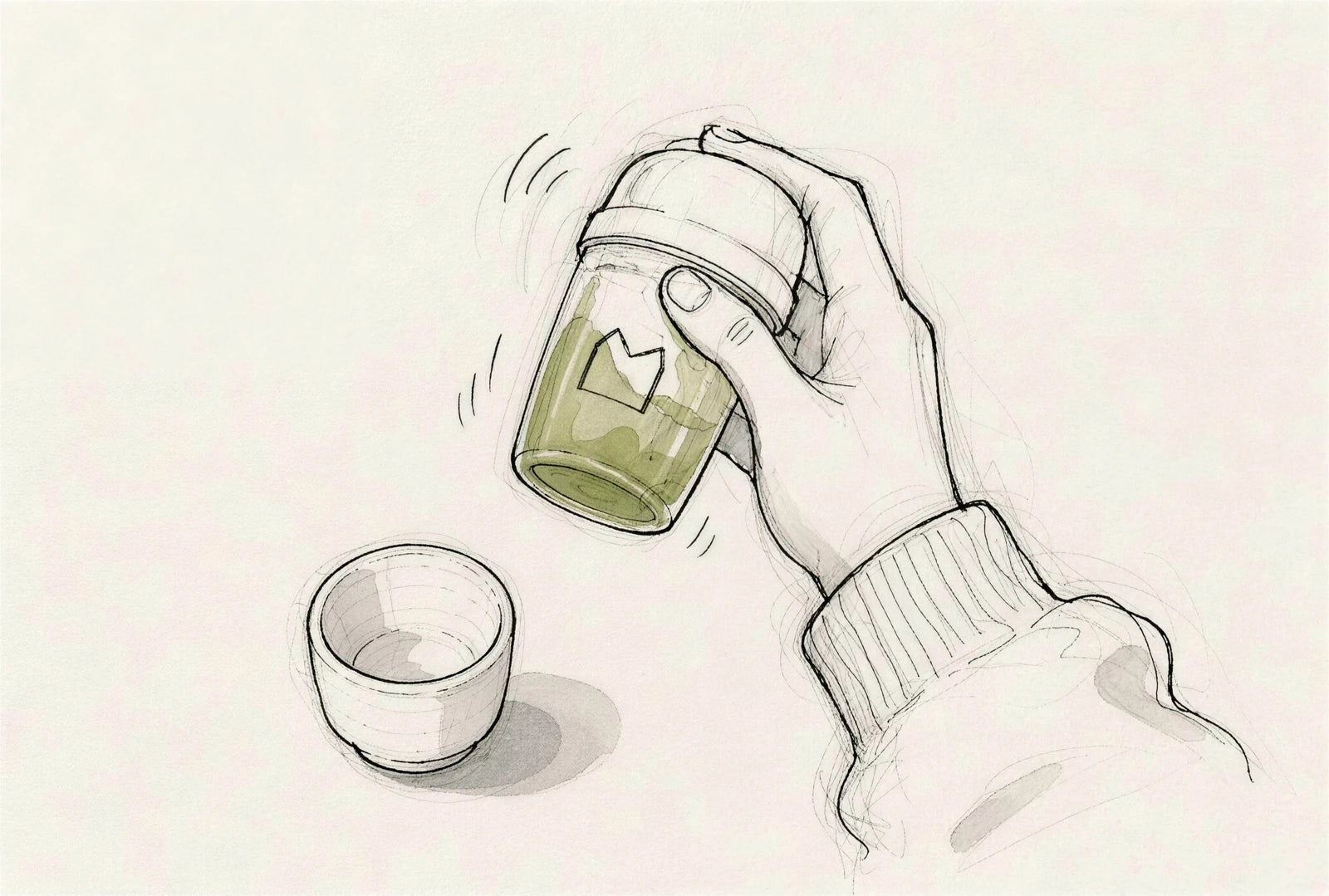
Without a whisk, a shaker is the most reliable way to make matcha. A protein shaker or a handheld milk frother also work. The foam is not quite as fine as with a bamboo whisk, but for a latte it is more than enough.
With a shaker. Pour in 20ml of water and 2g of matcha, put the lid on, shake it up and down for 20 seconds and top up the concentrate with 80ml of water under 80°C to drink it straight, or 80ml of milk for a latte. The base of the MOKU-AN Matcha Shaker is moulded with a raised fin that does the job the tips of a whisk would, breaking the powder apart before it can clump. The shaker is palm-size and holds about 100ml, so 20 seconds from the wrist is enough.
With a protein shaker. An ordinary protein shaker with a spring ball is a good alternative when you make more than one serving at a time. Put room-temperature water and matcha in and shake for 20 seconds. The spring ball beats through the powder and spreads it through the water. The foam won't be as fine as with a bamboo whisk, but for everyday drinking and for lattes it is more than enough. Don't use hot water for this. It builds up pressure inside the closed shaker and the lid can pop open. If you want it warm, top up the room-temperature concentrate with hot water or warm milk afterwards.
With a milk frother. Put the powder and water in a tall cup and hold the frother just under the surface until the powder has spread through. It is less suited to a shallow bowl, because it splashes.
Matcha latte with oat milk
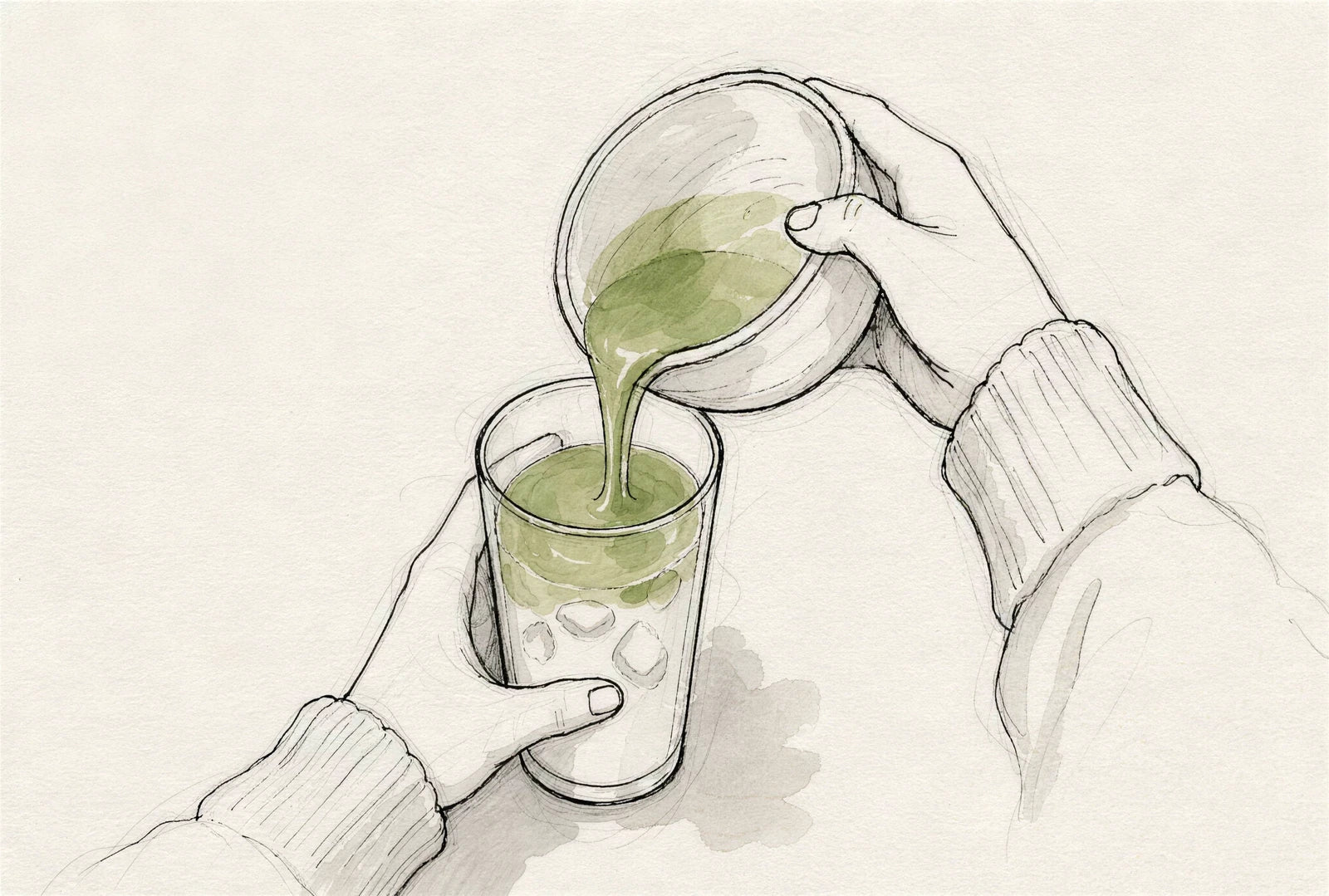
For a matcha latte with oat milk, whisk 5g of matcha into 150ml of water at 80°C in the bowl first. Then pour 150ml of oat milk into the glass and pour the matcha over it from the bowl. The order is always the same, milk first in the glass, matcha on top.
The reason for whisking in water first is that matcha spreads through water far more easily than through milk. Stir the powder straight into oat milk and small green clumps stay behind. Whisked in water, the matcha is already smooth by the time it meets the milk, and it keeps its texture.
| Version | Oat milk |
|---|---|
| Hot latte | Warmed before it goes in the glass, so the foam holds |
| Iced latte | Straight from the fridge over ice |
How much milk goes in a matcha latte?
Recipes disagree on this. In Europe and the US the latte is usually made mild, while Japanese tea houses with centuries of history such as Ippodo in Kyoto (since 1717, 3g in 100ml of water and 100ml of milk) or Nakamura Tokichi in Uji (since 1854, 6g in 70ml of water and 100ml of milk) keep the character of the matcha, its umami, its green aroma and its velvety texture, present through the milk. We recommend 1:1, 150ml of whisked matcha to 150ml of milk, and if matcha is new to you, start at 1:2 (5g in 100ml of water over 200ml of milk) and take the milk back a little each time until the umami and the edge of the matcha come through clearly. Our matcha latte recipe walks through both ratios in the glass step by step, and everything else you can make with 5g of matcha sits under matcha recipes. Oat, soy or dairy, which milk suits which matcha changes the latte more than you might think.
Common matcha mistakes and how to avoid them
Most problems with matcha come down to three things, unsifted powder, water too hot, or too much water in the bowl.
| Problem | Cause | How to avoid it |
|---|---|---|
| Clumps in the bowl | Powder not sifted | Push it through a tea strainer before the water goes in |
| Tastes bitter | Water too hot | Boil, wait 1 minute, about 80°C |
| No foam | Too much water | Stay at 60ml for a bowl |
| No foam | Whisking from the arm | Use the wrist only, fast, in an M shape |
| Foam collapses | Left too long | Drink it while the foam is standing |
| Green clumps in a latte | Powder stirred straight into milk | Whisk in water first, then pour over the milk |
If the foam still won't rise at 60ml, it is almost always the movement. Don't stir in circles. Whisk fast, back and forth.
Which matcha for which cup?
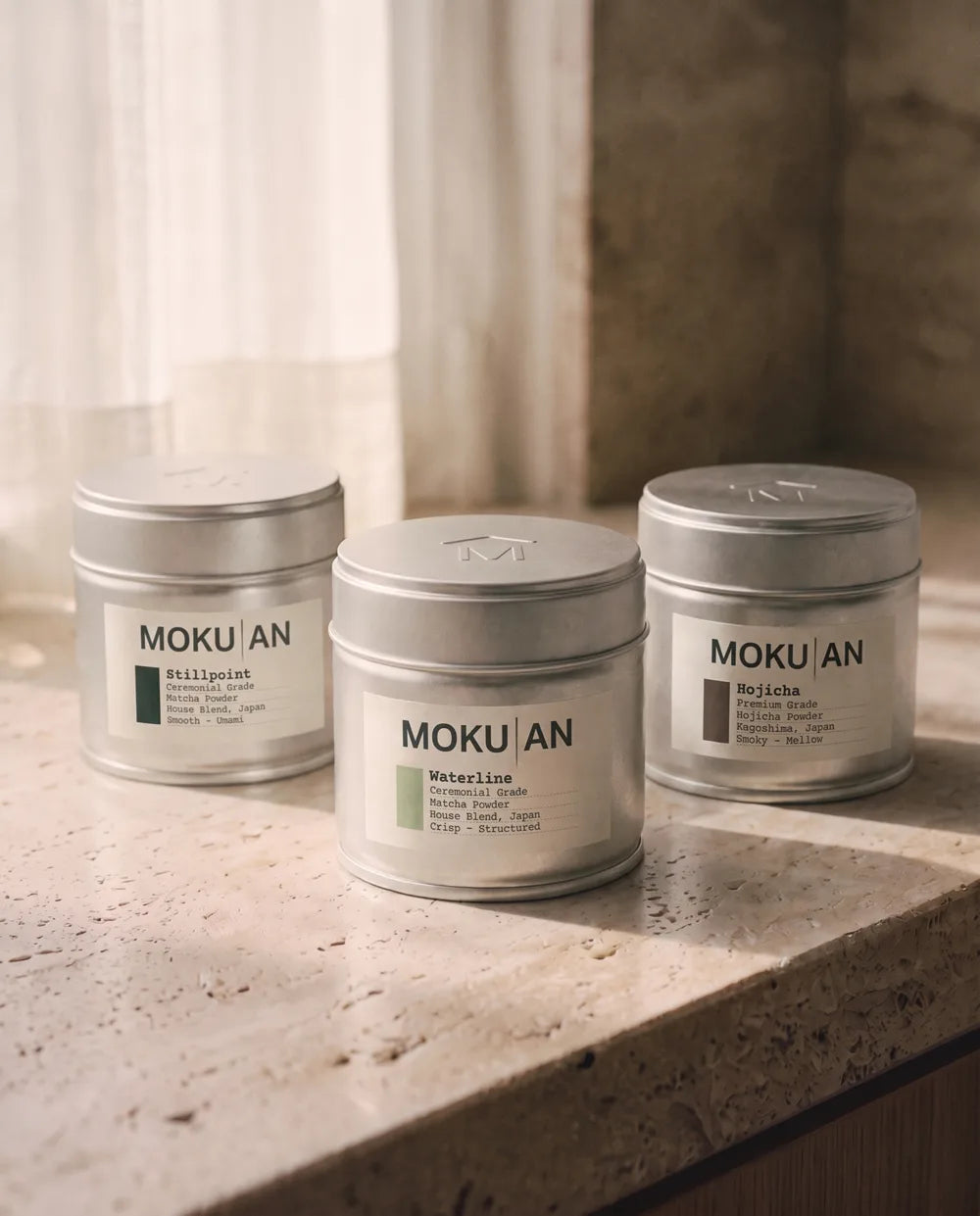
All three MOKU-AN cans take the same recipe, 2g into 60ml of water at 80°C. Waterline is crisp and clean and holds up in milk, Stillpoint is rounded with a long umami finish and shows best on its own, and Hojicha is roasted green tea, nutty with no bitterness, milled fine enough to whisk the way you whisk matcha. You'll find the full range in the matcha collection.
FAQ
Do you need to sift matcha?
Yes, if you don't want clumps in your bowl. Matcha is so fine that the particles stick together in the can. For a single bowl a small tea strainer is enough, just push the 2g through it into the bowl. In a shaker you can skip sifting, because the fin in the base breaks the powder apart.
Can you make matcha with cold water?
Yes, a shaker handles it well. Put in cold water and matcha and shake for 20 seconds. With cold water the foam won't be quite as fine as with 80°C water and a bamboo whisk. For iced matcha in a bowl, whisk with warm water and pour it over ice afterwards.
Why won't my matcha foam?
Usually there is too much water in the bowl, or the whisk is driven from the arm instead of the wrist. Stay at 60ml for 2g and whisk fast in an M shape for 15 seconds. The faster the tips move, the finer the foam.
How long does matcha keep once opened?
Matcha gives up its aroma to the air faster than most teas, so use it up as soon as you can once the can is open. Keep the lid on tight and store the can somewhere cool and dark, away from anything with a strong smell.
How much caffeine is in a cup of matcha?
According to the Standard Tables of Food Composition in Japan 2020 (8th edition, MEXT), matcha contains 3.2g of caffeine per 100g. A 2g bowl comes to about 64mg and a 5g latte to about 160mg.
More on preparing matcha
More articles are on the way.
MOKU-AN, Düsseldorf · Updated 3 October 2026
