


What is matcha? What it's made of, origin and types
Matcha is a Japanese green tea you drink whole, the leaf milled to a fine powder and whisked into water. The tea plants are shaded for several weeks before harvest, the leaves steamed, dried without rolling and stripped of stems and veins. That leaf is called tencha, and only once it is milled does it become matcha.
MOKU-AN's Waterline and Stillpoint are milled from tencha, and what sets them apart is the leaf and the blend.
What is matcha made of?
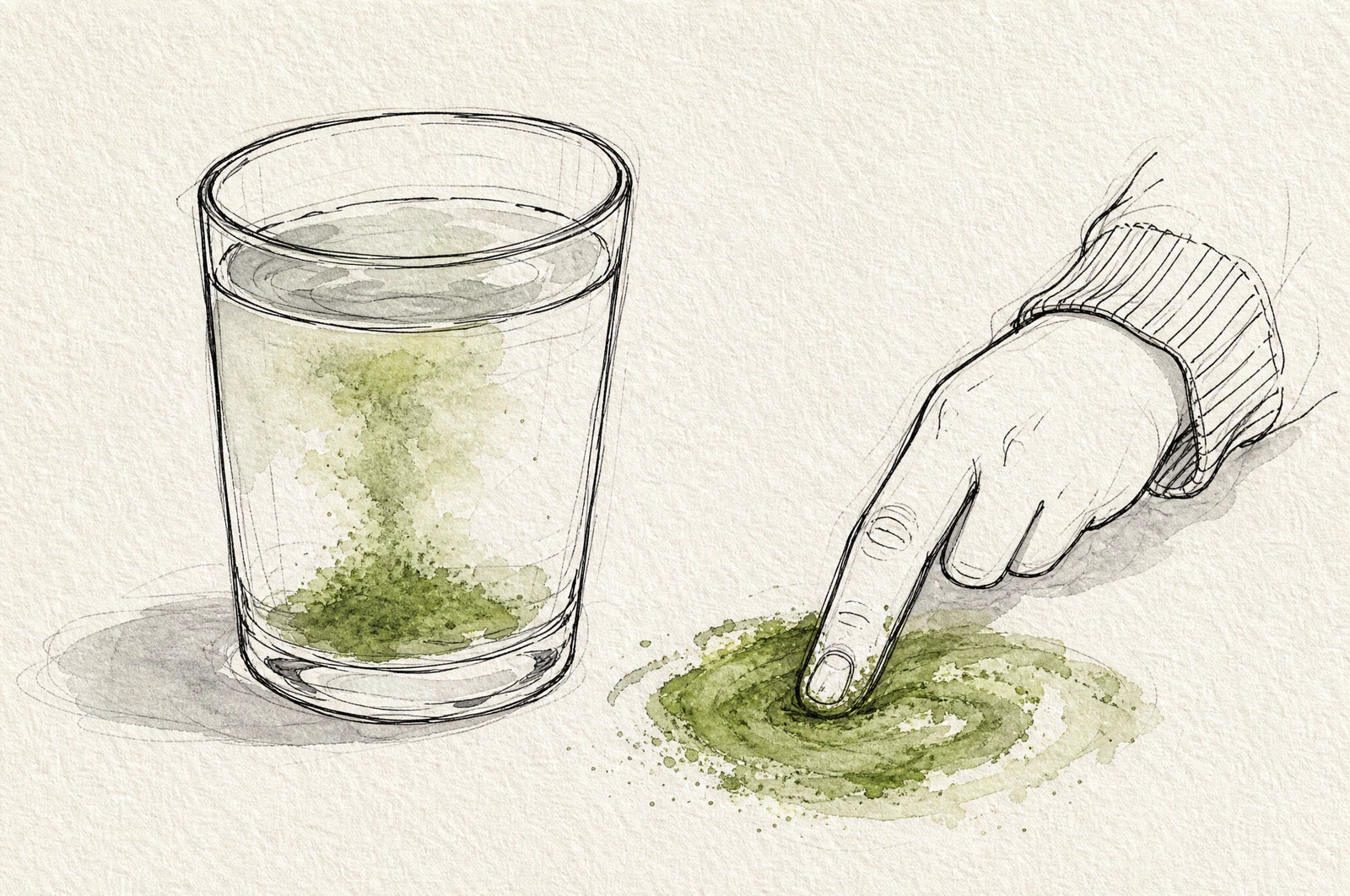
Matcha is ground tencha, which means the whole leaf. Tencha is the shade-grown leaf that has been steamed, dried without rolling and cleared of stems and veins. The tea house Yamamasa Koyamaen in Uji sets out the definition used by the Japanese tea association. By that definition matcha is a powder milled finely from this tencha in a tea mill.
The particles measure 5 to 10µm, no more than a hundredth of a millimetre. Matcha doesn't dissolve in water, it only spreads through it. That is why you whisk it and drink the whole bowl straight away.
The Japanese tea trade has long held to a fixed standard, that matcha is made of ground tencha. There is no legally binding certification for it, though. That is why powders sold as matcha outside Japan can differ in how they are made and how they taste. A look at raw material and origin shows what is in the can.
Is matcha green tea? Matcha vs green tea
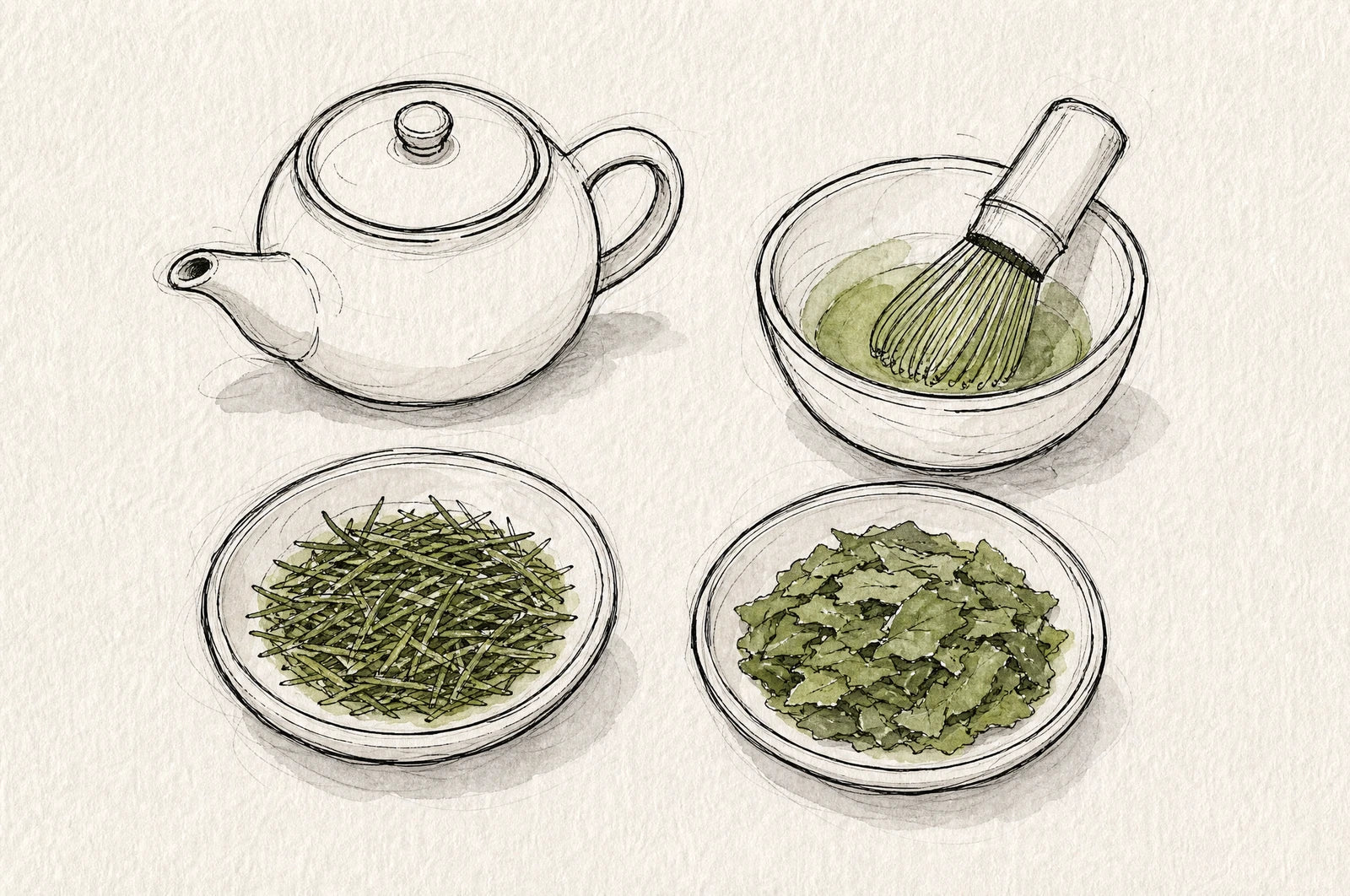
Yes, matcha is green tea, and all green teas come from the same plant, Camellia sinensis. The difference lies in how it is grown and processed, and shade and no rolling set tencha apart from sencha. Sencha grows without shade, is rolled and dried, and is brewed so that the leaves stay behind in the pot. Gyokuro is shaded like tencha but rolled, which is why it never becomes matcha.
Ground sencha is green tea powder but not matcha, and instant green tea is a dried brew that dissolves completely in water. Days under shade also set the types apart, with none for sencha, 7 to 10 for kabusecha (briefly shaded green tea) and 20 or more for gyokuro and tencha.
| Matcha | Sencha | Ground sencha, instant green tea | |
|---|---|---|---|
| Plant | Camellia sinensis | Camellia sinensis | Camellia sinensis |
| Shade before harvest | 20 days or more | none | none (sencha) |
| After steaming | not rolled, dried as tencha | rolled and dried | rolled, then ground, or the brew dried |
| What is removed | stems and veins | nothing | nothing |
| Form | powder, 5 to 10µm | whole leaf | powder |
| Preparation | 2g whisked into 60ml of water at 80°C | brewed, leaves stay in the pot | stirred in |
| What you drink | the whole leaf | the brew | ground leaf, or extract (dissolves) |
From leaf to powder, how matcha is made in brief
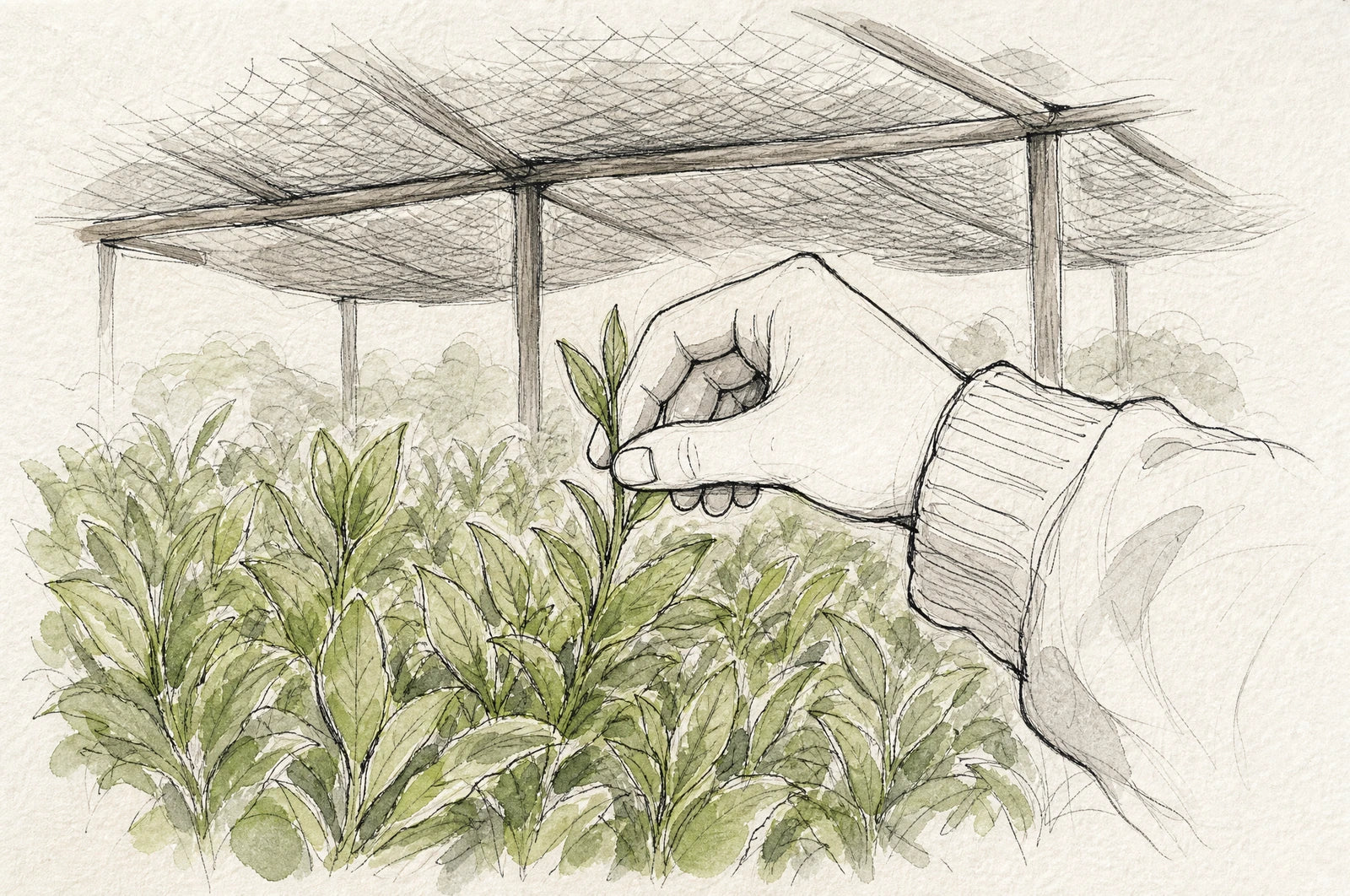
Matcha is made mainly from the first harvest in spring. How matcha is made comes down to eight steps.
- Shading. From mid-April the tea plants stand under netting or straw for 20 days or more. Theanine stays in the leaf, so the tea is less bitter and the green deeper.
- Picking. Harvest is mainly in spring, the best lots by hand, otherwise by machine. What counts is young, soft leaf.
- Steaming. As fresh as possible after picking, strong steam treats the leaves. That stops oxidation and the green stays.
- Drying. The leaves dry without rolling in the tencha oven. Rolled, they would become gyokuro.
- Sorting. Wind separates stems and veins, and only the leaf flesh remains. That is tencha.
- Tasting and blending. Lots are judged on shape, colour, aroma, infusion and taste, then blended.
- Storing. Tencha is kept cool and dry and milled as needed. Milled leaf loses aroma faster.
- Milling. A tea mill grinds the tencha into powder. What counts is the quality of the tencha.
There are two ways to blend. Single origin puts the character of one place first. A blend brings together tea from several gardens so that a brand tastes the same every year, and Ippodo in Kyoto, for example, blends not by field or vintage but to the taste of each brand. Neither is better than the other, and MOKU-AN has both, with Waterline and Stillpoint as blends and Hojicha as a single origin.
Tencha is hard to grow. According to the same Kyoto tea house, new tea fields give a first harvest after five years at the earliest, and the number of farms starting out is not growing. Skilled growers are limited, says the Ministry of Agriculture, Forestry and Fisheries, and a tencha line with its oven costs about 230 to 480 million yen, according to Kagoshima Prefecture. That is why supply can't be raised overnight when demand grows, and it is one big reason behind the current shortage.
Where does matcha come from? History and growing regions
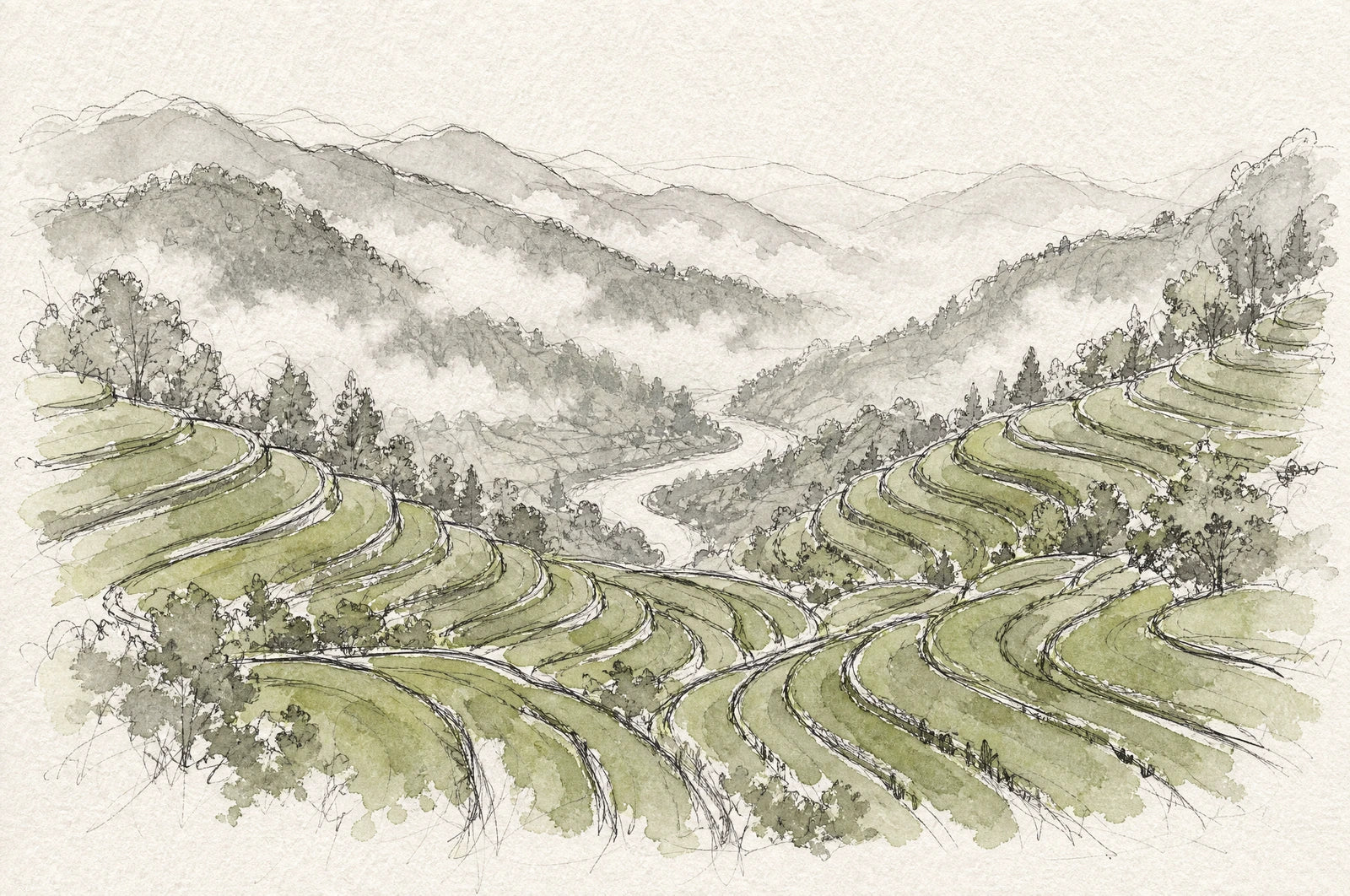
The history of matcha begins with powdered tea, already known in China under the Song dynasty, and according to tradition the Zen monk Eisai brought this way of drinking tea from China to Japan in 1191. Growing tea under shade developed in Japan, and Uji, near Kyoto, became its centre.
Uji is the history, Kagoshima the volume. Uji is regarded as the centre of tradition and craft. In volume Kagoshima leads, because according to the Japanese Ministry of Agriculture, Forestry and Fisheries (2026) the prefecture produces the most tencha in Japan. In the 2023 harvest, according to an earlier ministry statistic, 38% of tencha came from Kagoshima, 23% from Kyoto and 12% from Shizuoka.
Even in Uji, one tea house says that matcha can no longer be judged by origin alone, because other regions have made great strides in growing and processing. Waterline and Stillpoint are a blend of leaf from the growing regions of Kagoshima, Shizuoka and Miyazaki, and Hojicha comes from Kagoshima.
What types of matcha are there? Usucha, koicha and ceremonial grade
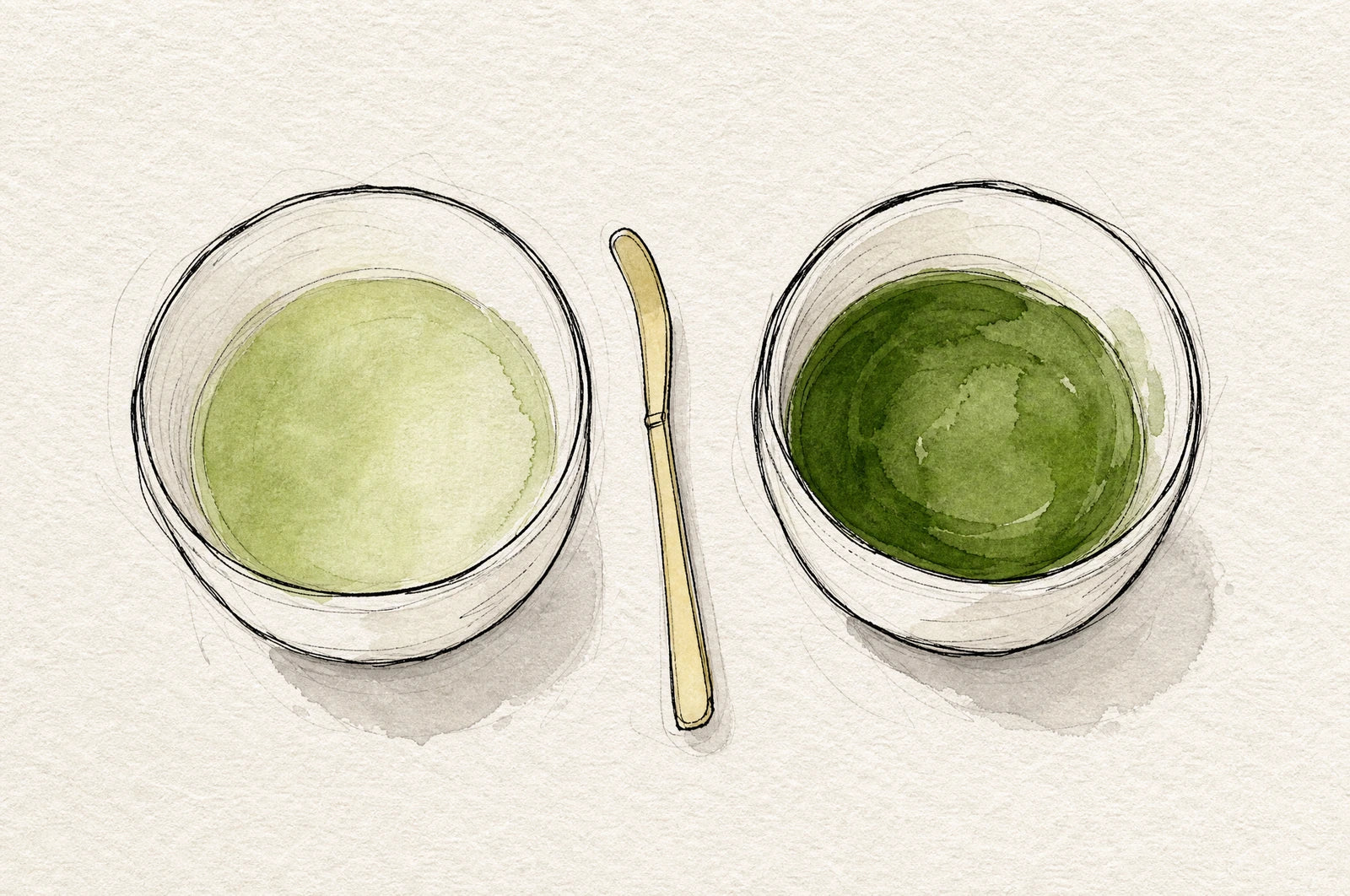
"Ceremonial grade" and "culinary grade" are trade terms that spread as demand grew in the west. Each tea house draws its own line between matcha for drinking and matcha for baking and desserts.
In the tea ceremony the main split is whether a matcha suits koicha or only usucha. A tea house in Uji recommends more affordable blends for daily practice and others for tea gatherings. Usucha and koicha are ways of preparing matcha, not quality levels. Usucha is the thin bowl, 2g in 60ml, and koicha the thick one, 4g in 30ml, slowly kneaded. Because koicha turns bitter easily, it needs the better leaf. The table sets the Japanese and western views side by side.
| In Japan (tea houses and tea ceremony) | In the western trade | |
|---|---|---|
| Common terms | for drinking or for food, for koicha or for usucha | Ceremonial, Premium, Latte, Culinary |
| In the tea ceremony | suited to koicha, or only to usucha | (no counterpart) |
| The top level is called | suited to koicha (4g in 30 to 40ml) | Ceremonial grade |
| Usucha | 2g in 60 to 70ml, 80°C | matches what is drunk here as ceremonial |
On MOKU-AN's cans it says ceremonial grade. That means shade-grown leaf with the stems and veins taken out, milled fine enough to whisk straight into water. It is the grade made for drinking on its own, which is also why it holds up in milk.
What is in matcha?
Because you drink the whole leaf, everything the leaf contains ends up in the bowl, among it the amino acid theanine, catechins, caffeine, fibre and chlorophyll. Shading slows the conversion of theanine into catechins, so a shaded leaf has more umami and less bitterness.
On caffeine, the Japanese food composition tables (Standard Tables of Food Composition in Japan 2020, 8th revised edition, MEXT) give 3.2g per 100g of matcha, which makes about 64mg in a bowl made with 2g.
How do you drink matcha, and what does it taste like?
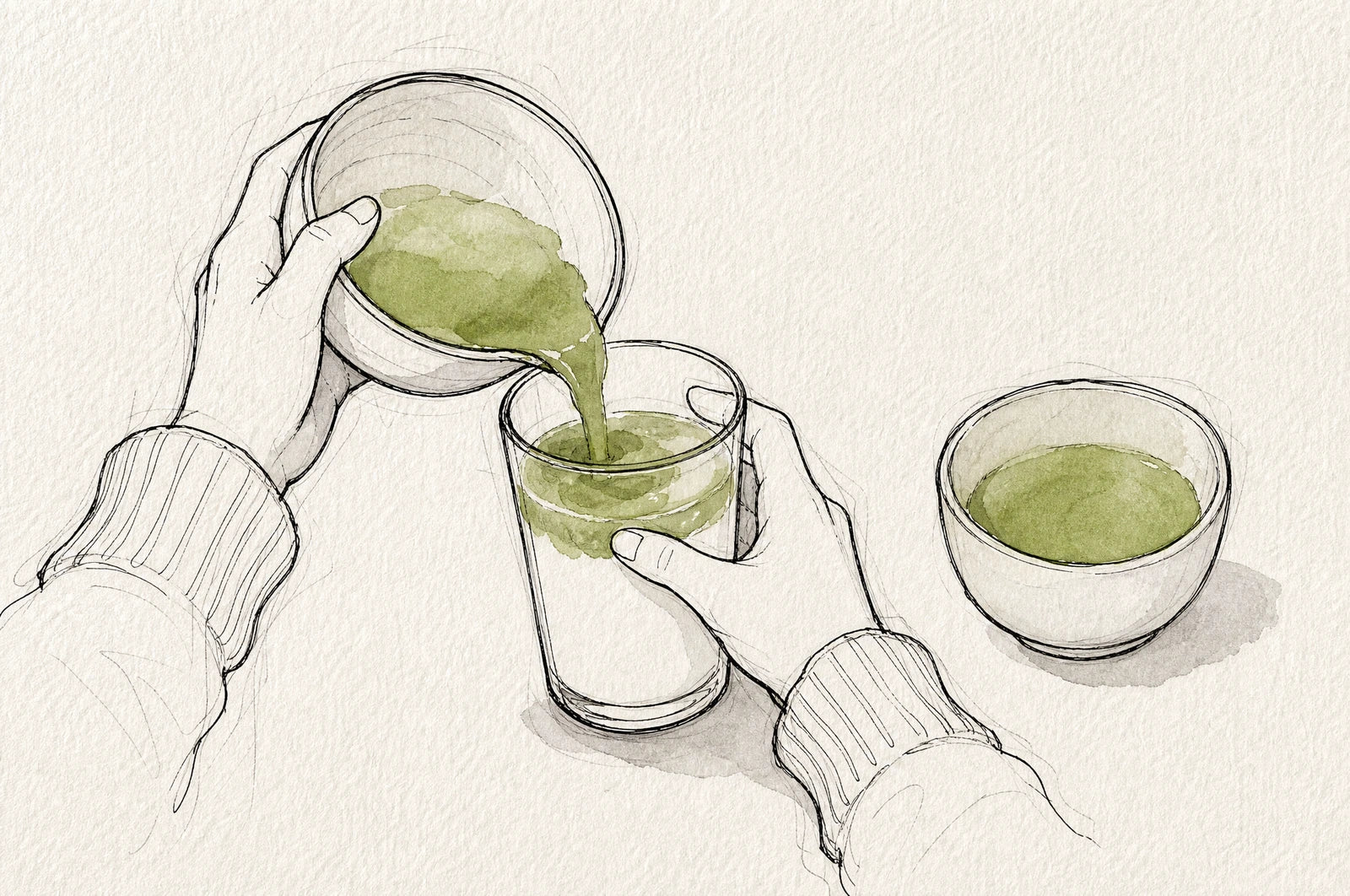
Matcha is whisked, not brewed. To make matcha the classic way, whisk 2g of powder into 60ml of water at 80°C for 15 seconds with a bamboo whisk. For a matcha latte the milk goes into the glass first and the whisked matcha is poured over it from the bowl, hot or over ice.
In the taste of matcha umami comes first, followed by a short bitterness that gives the bowl its outline, and the aroma recalls freshly picked tea leaves.
Is it real matcha? How to read the label
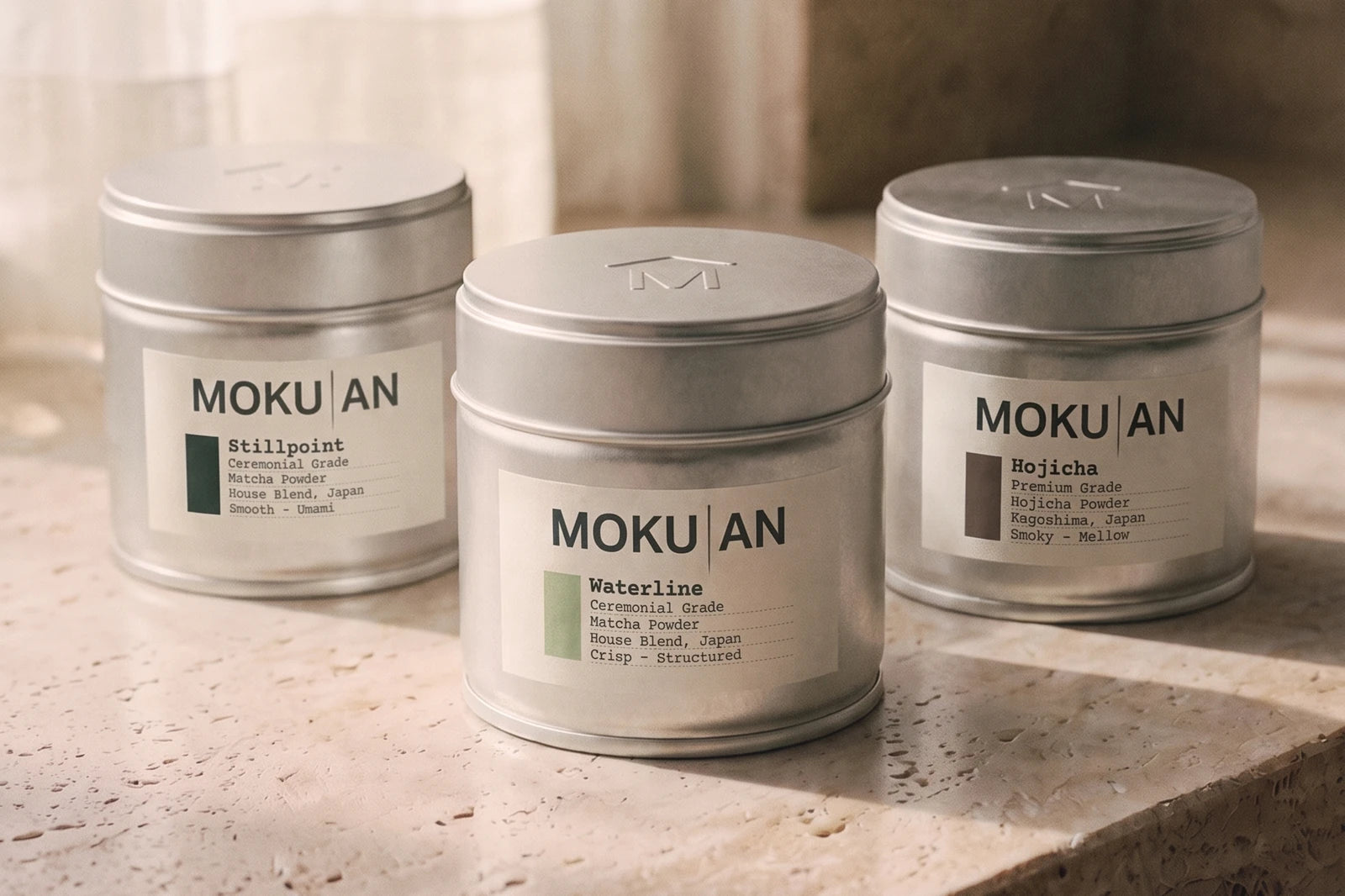
If the pack has an ingredients list, it should say matcha and nothing else. If sugar, milk powder, flavouring or another green tea powder sits beside it, you have a product containing matcha, not pure matcha. The Verbraucherzentrale points to drinks and muesli with only 0.5 to 2% matcha in them.
Then check whether the raw material is named, whether a country of origin is given and whether there is a best-before date. Waterline and Stillpoint are ceremonial grade house blends of leaf from Kagoshima, Shizuoka and Miyazaki. Hojicha is not matcha but a roasted green tea milled as fine as matcha, premium grade and single origin from Kagoshima.
The cans in the matcha collection hold 30g, because matcha gives up its aroma to the air faster than most teas.
FAQ
Is matcha just ground green tea?
No. Matcha is ground from tencha, a shaded leaf that is steamed, dried without rolling and cleared of stems and veins. Ground sencha is green tea powder, but it is not matcha.
Does matcha dissolve in water?
No. Matcha is the ground leaf and only spreads through the water, which is why it is whisked and drunk fresh. If the bowl stands for a while, the powder settles. Instant matcha and powders for matcha milk drinks often look as if they dissolve clearly. That comes from highly soluble ingredients such as sugar or dextrin mixed in with the matcha.
What is a matcha latte?
In a matcha latte the milk goes into the glass first and the whisked matcha is poured over it, hot or over ice.
Why is matcha so expensive?
There are several reasons, namely the shading, a harvest mainly in spring, hand picking for the best lots and the removal of stems and veins. As raw tea, tencha fetches about five times as much as sencha in Japan, according to the Ministry of Agriculture, Forestry and Fisheries (2026). On top of that, supply can't be raised quickly when demand grows, and that is where the matcha shortage comes from.
Does matcha always come from Japan?
Not necessarily. There is no legally binding certification for the name, and powders sold as matcha outside Japan can differ in how they are made and how they taste. What the Japanese tea association describes as matcha is made from shaded tencha. If the pack names no country of origin, ask the seller. MOKU-AN's matcha comes from the growing regions of Kagoshima, Shizuoka and Miyazaki in Japan.
All articles on matcha basics
 What does matcha taste like? Matcha taste in four wordsSavoury and round first, then a short bitter edge, then a faintly sweet finish. Four words describe any cup, plus why matcha can taste bitter or fishy.
 What is ceremonial grade matcha? How Japan judges qualityCeremonial grade matcha is a trade term for matcha to drink on its own, not a Japanese grade. How tea houses in Japan judge quality and when to pay more.
MOKU-AN, Düsseldorf · Updated 4 October 2026
