


What does matcha taste like? Matcha taste in four words
Good matcha tastes savoury and round first, with a mild sweetness like boiled chestnuts. Then comes a short, clean edge of bitterness, like dark chocolate, and it finishes with a long, faintly sweet aftertaste and the scent of fresh tea leaves. If your matcha tastes only bitter, flat or unpleasantly fishy, the cause is usually water that was too hot, too much powder, or a can that has been open for a long time.
Many people try matcha for the first time as a latte in a café, and wonder afterwards whether that was really how it tastes or just a bad cup. The answer lies in four words that describe any matcha and help you place it for yourself.
What does matcha taste like?
Matcha tastes in a fixed order. First umami, then a short bitterness, then a long, faintly sweet aftertaste. If you pay attention to those three steps, you taste a lot more than just green or bitter.
| Moment | What you taste |
|---|---|
| First sip | Umami, savoury and round |
| Middle | A short, clean bitterness that gives the flavour an outline |
| Aftertaste | Long and faintly sweet, with the scent of fresh tea leaves |
Umami is the middle of the bowl, the bitterness gives it an outline, a quiet roasted note sits far in the background, and over the top lies the aroma, the fresh scent of young leaves. Matcha is not sweet like sugar. The sweetness sits in the aftertaste. Our tea expert, who grew up in Japan, tastes good matcha mainly for three things, the deep umami, the clean edge of astringency, and the subtle toasty warmth that comes from the final firing of the leaves.
Compared with a brewed green tea such as sencha, matcha has more fullness, because you drink the whole, finely ground leaf, and its bitterness is shorter.
Matcha taste in four words
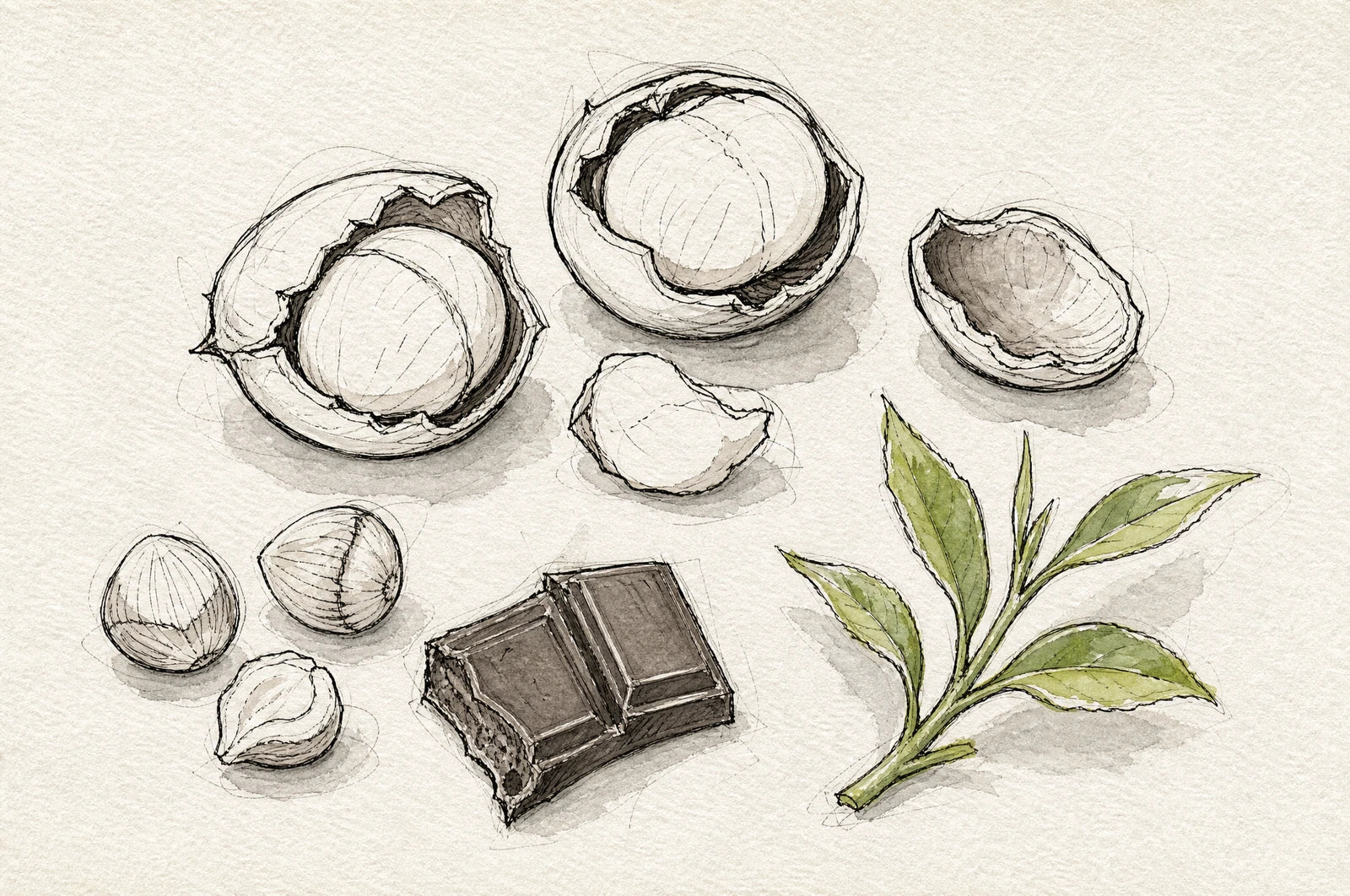
To describe matcha you only need four words, umami, bitterness, roast and aroma. Each word comes with a kitchen comparison and a sign that something has gone out of balance.
| Word | What you taste | Kitchen comparison | When it goes out of balance |
|---|---|---|---|
| Umami (theanine) | Fullness and depth across the whole tongue | Boiled chestnuts, steamed sweet potato, the richness of pure cacao mass | Very strong umami can feel unfamiliar |
| Bitterness | A short tightening at the back of the tongue and in the cheeks | Dark chocolate with 70% cacao | Sharp, hard, and it lingers |
| Roast | A quiet, warm note in the background | Toasted hazelnuts | Stays quiet in matcha, a smoky impression counts as a flaw |
| Aroma | The scent when you open the can and in the first sip | Young spring shoots, sugar snap peas, fresh herbs | Yellowish, khaki, flat and musty |
Umami is the middle of every bowl. The compounds behind it are amino acids such as theanine, which shaded leaves hold in particular amounts. It feels like fullness, and it brings a sweetness of its own, the sweetness of shaded leaves. If you know Japanese sweets, you may recognise it in cooked adzuki beans.
The bitterness is not a flaw as long as it stays short and clean. It is the outline that stops the umami from blurring. The roast is only a quiet note in the background of matcha, while in hojicha it takes the lead. The aroma, finally, shows how young and how well kept the powder is.
As with wine, four words say more than a verdict like tasty or bitter. Two bowls can still taste very different.
Why does matcha taste bitter?
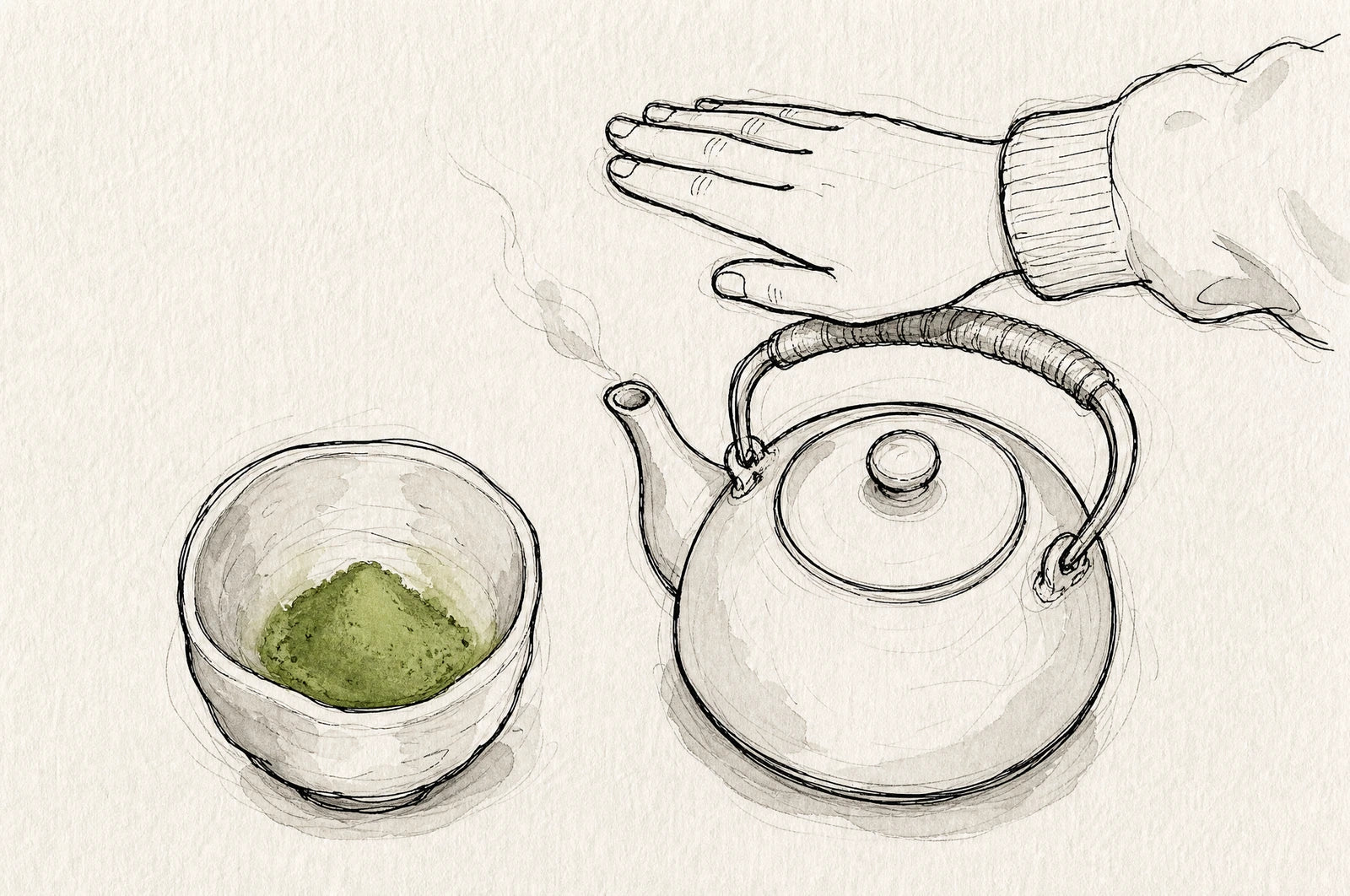
Matcha tastes bitter when the bitterness is no longer short and clean. There are four causes.
| Cause | What happens | What helps |
|---|---|---|
| Water that is too hot | The tannins come out faster and stronger | Boil the kettle, let it stand a minute, about 80°C |
| Too much powder or too little water | The bitterness gets denser | 2g to 60ml |
| Old powder | Oxidation makes the bitterness hard | Finish the can soon after opening |
| Late harvest or a simpler grade | More bitterness, less umami | Matcha from the early harvest, often sold as ceremonial grade |
If you whisk matcha with 80°C water and a bamboo whisk, you get a bitterness that stays short and clean rather than sharp and hard. Like tannin in wine, it gives the flavour structure, and it is gone after a few seconds.
If matcha tastes of nothing at all, you have usually used too little powder, or the powder is old.
Why does matcha taste fishy or grassy?
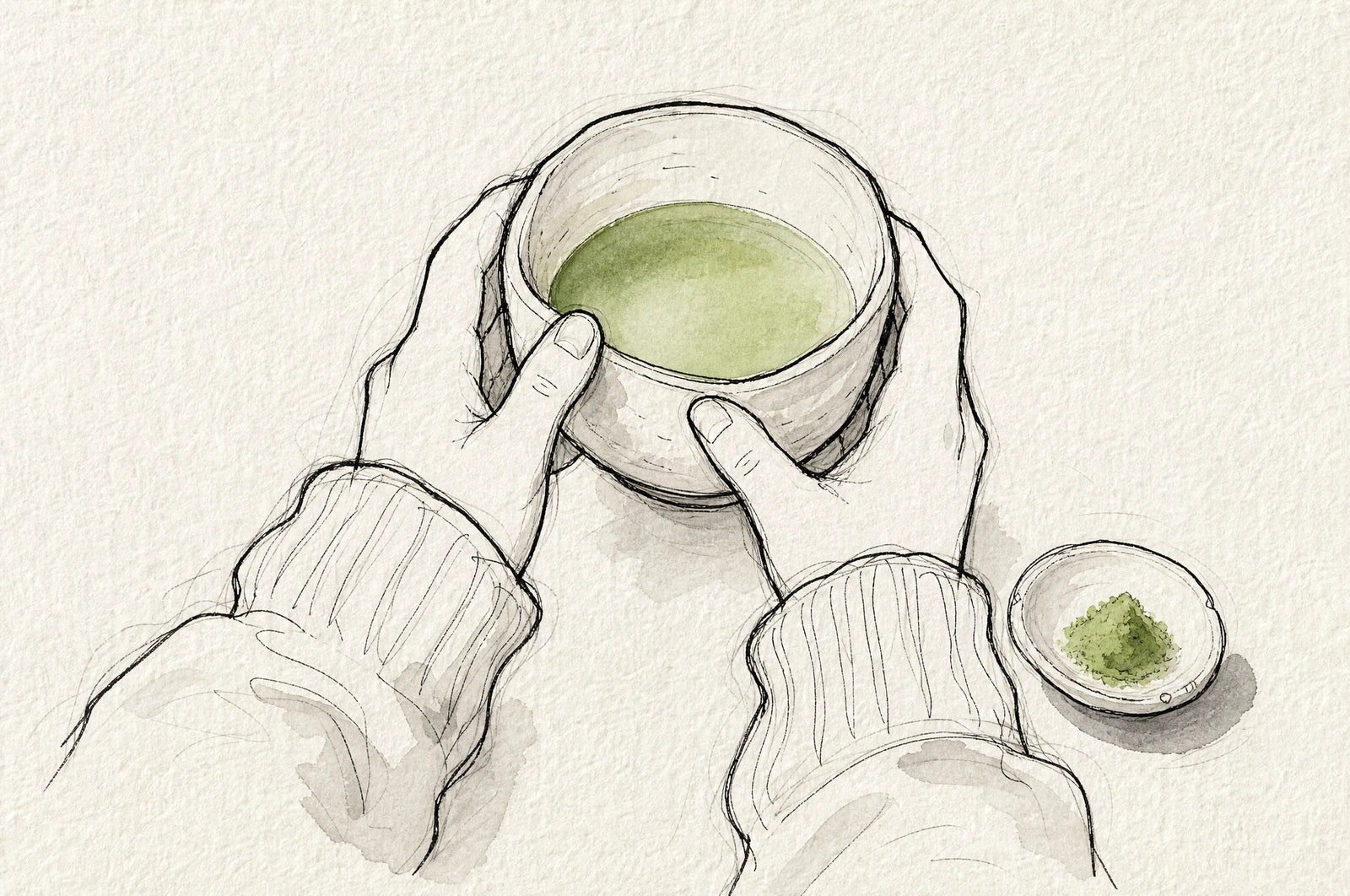
If matcha tastes fishy or grassy to you, one of two things is usually behind it. What many people take for fish is often umami. The other is a powder that is no longer fresh. The table helps you tell them apart.
| What you notice | Where it comes from | What it means |
|---|---|---|
| Savoury and strong, full like a rich vegetable broth, slightly mineral | A lot of umami from shaded leaves | A sign of good matcha, unfamiliar to many |
| Clearly unpleasant, flat and musty, the colour looks dull | Oxidation after opening, water that is too hot, a late harvest | The powder is old or of simple quality |
| Fresh and green like young shoots | Young, fresh leaves | A sign of fresh matcha |
| Green, but dry and flat | The scent has faded | The can has been open too long |
The first case is a good sign. Ippodo, a tea house in Kyoto, explains that an impression like this comes from umami, a savoury, broth-like taste, and that some people need time to get used to it. Shaded leaves hold a lot of amino acids, which is why it is stronger in good matcha.
The second case is a warning sign. A clearly unpleasant, flat and musty smell together with a dull colour points to oxidation, water that was too hot, or a late harvest. Then the powder is old or of simple quality, and there is no point in persevering with it.
If the scent seems grassy, the character is what counts. If it smells of young, fresh leaves, that is the aroma of a good powder. If it smells dry and flat, the can has been open too long.
And if strong umami is simply not for you, there are two ways out. Waterline has a lighter umami with the aroma at the front. If you want to avoid bitterness, try hojicha, which tastes roasted and mild, with no bitterness.
How to tell if your matcha is good quality
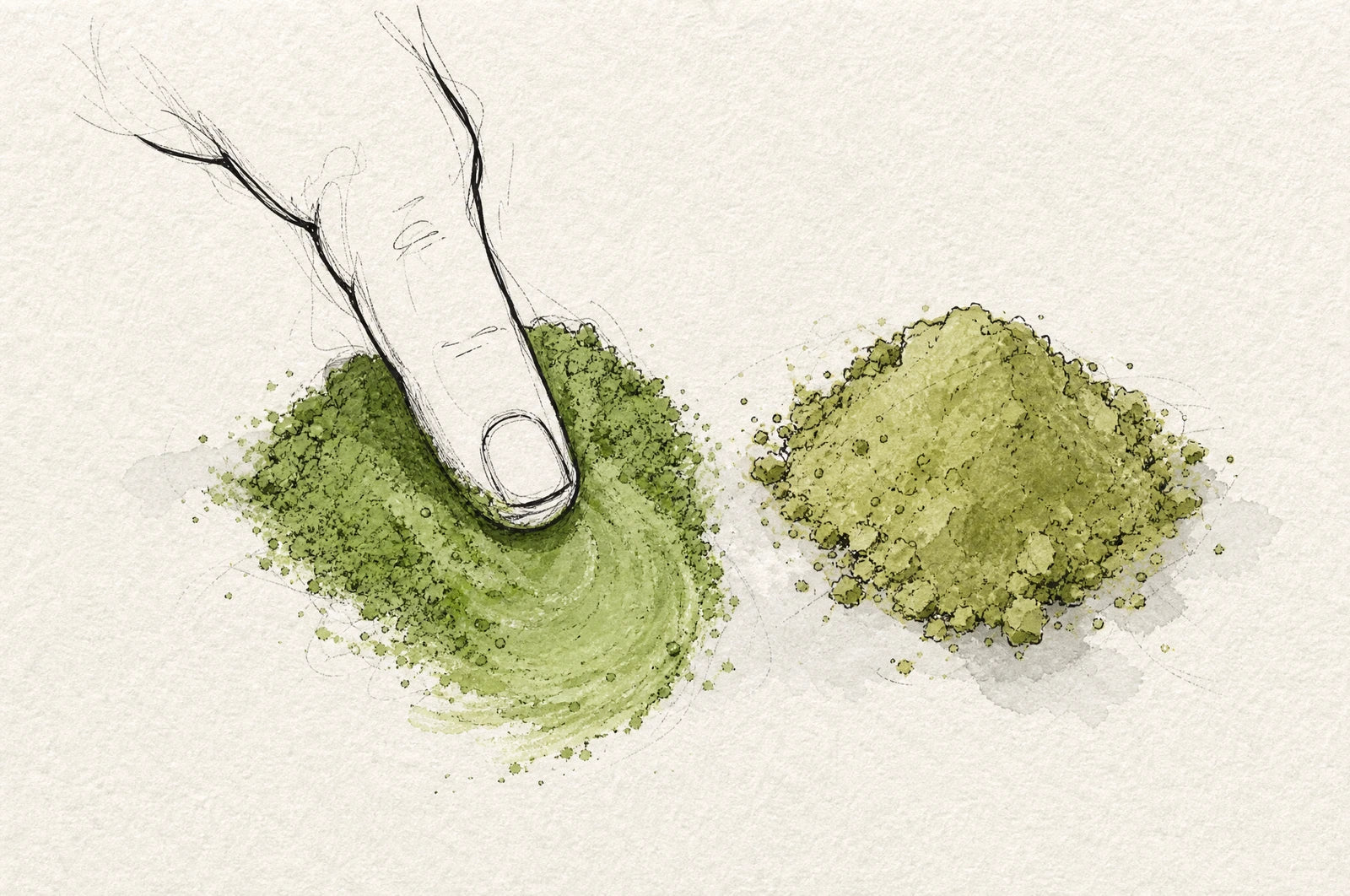
Our tea expert checks matcha in a fixed order, by colour, scent, umami, little bitterness, balance and fineness. You can spot the first two as soon as you open the can.
| Step | What to look for | Good sign | Warning sign |
|---|---|---|---|
| 1. Colour | The powder in the can and in the bowl | A bright, deep green | Yellowish, khaki or dull, the powder is old or of simple quality |
| 2. Scent | The first breath after opening | Sweet, bright, fresh | Flat and musty |
| 3. Umami | The first sip | Clear and round | If it is missing, that is a flaw |
| 4. Little bitterness | The moment after | Short | Hard, and it lingers |
| 5. Balance | The whole bowl | Umami first, bitterness only as an outline | The bitterness is up front |
| 6. Fineness | The powder between your fingers | Disappears when rubbed, like icing sugar | Gritty |
Colour is the quickest test. For the aroma, what counts is how long the can has been open. Nakamura Tokichi in Uji points out that tea oxidises in the air once opened, its colour turns darker and the flavour fades. Drink an opened can as soon as you can, and store your matcha properly.
Why doesn't all matcha taste the same?
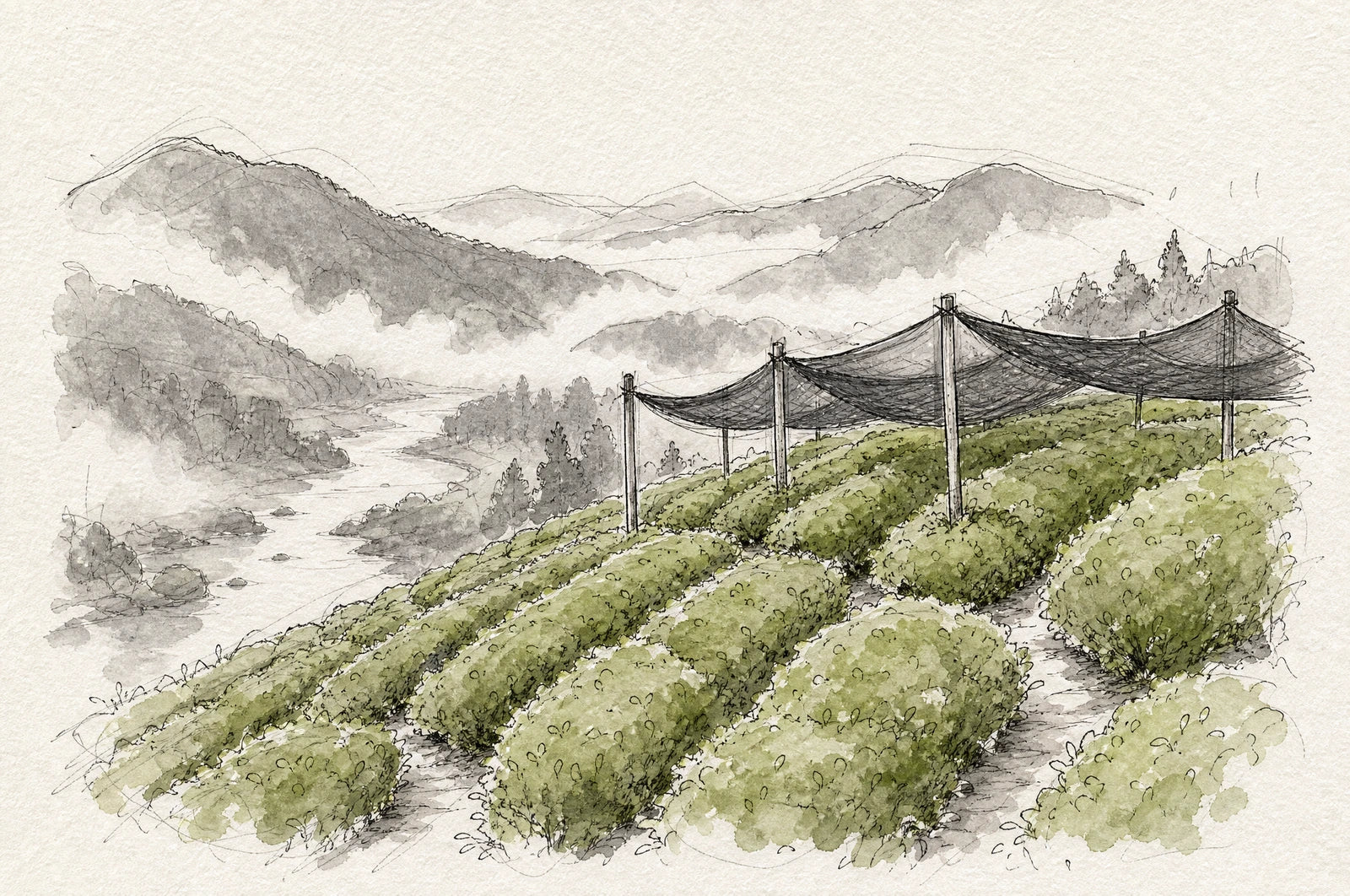
Two bowls of matcha can taste very different, even when both come from Japan. The reason is similar to wine. The flavour comes from origin, harvest, shading, drying and blending.
| Influence | What is behind it | How it tastes |
|---|---|---|
| Origin (terroir) | Location, altitude, temperature swings between morning and evening, river mist | A high scent, mild umami |
| Harvest | The first harvest of spring | Freshly picked it is green and a little sharp, only ageing makes it round |
| Shading | The leaves stand in shade before harvest | Sweetness and umami are kept |
| Drying | The last heating of the leaves | A quiet roasted note |
| Blending (gōgumi) | Several selected tea leaves are blended to suit the taste of each brand | A blend tastes the same every year |
As with wine, place comes first, and matcha from Uji, Shizuoka or Kagoshima tastes different in each case. One Kyoto tea house describes its tea as grown mainly in the hills between the Uji and Kizu rivers, at high altitude, in river mist and with large temperature swings between morning and evening. That gives the tea a high scent and a mild umami.
Then comes shading. A tea house in Uji explains that when young shoots are protected from sunlight, their sweetness and umami do not turn into bitter compounds, which is what shading and drying are for. Here what counts is what arrives in the bowl.
A winery sells the taste of one vintage and one site. A traditional tea house instead blends by the taste of each brand, not by season or field. The tea house blends like a champagne house, toward the same house taste every year. Tea picked fresh in May is green and a little sharp, and only ageing makes it round. Waterline and Stillpoint are blends too, from Kagoshima, Shizuoka and Miyazaki.
What does a matcha latte taste like?
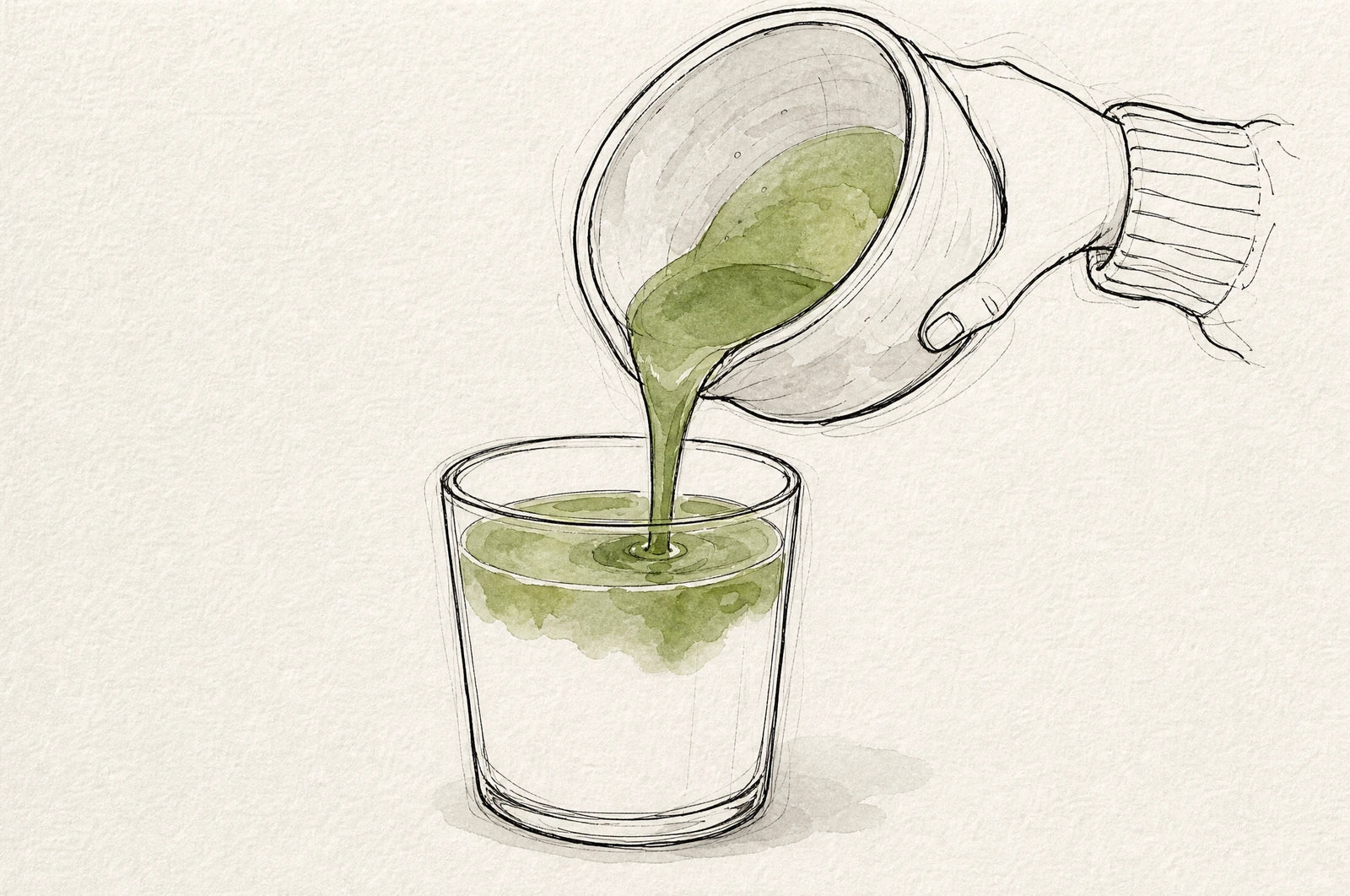
In a latte, the milk rounds off the bitterness and pushes umami and aroma to the back. With too much milk, all that is left is green milk. A café latte is also often sweetened, and then tastes more of sugar and milk than of matcha. In Europe it is usually made mild, while Japanese tea houses let the character of the matcha come through more clearly. In a matcha latte, the ratio of matcha to milk decides how much of that character is left in the glass.
How to try matcha for the first time
Take the first bowl in four steps.
- SmellHold the bowl briefly under your nose. Good matcha smells sweet and fresh.
- Small sipTake only a little into your mouth.
- Let it rest on the tongueWait a moment before you swallow.
- Let it coolAs the bowl cools a little, umami and sweetness come forward.
Try three sips straight, and only then milk. Put the milk into the glass first and pour the matcha over it from the bowl. For your first latte, start at 1:2, which is 5g of matcha whisked with a bamboo whisk in 100ml of water over 200ml of milk. If you want to taste the matcha more clearly, move to 1:1, 5g in 150ml of water over 150ml of milk.
The three MOKU-AN teas compared
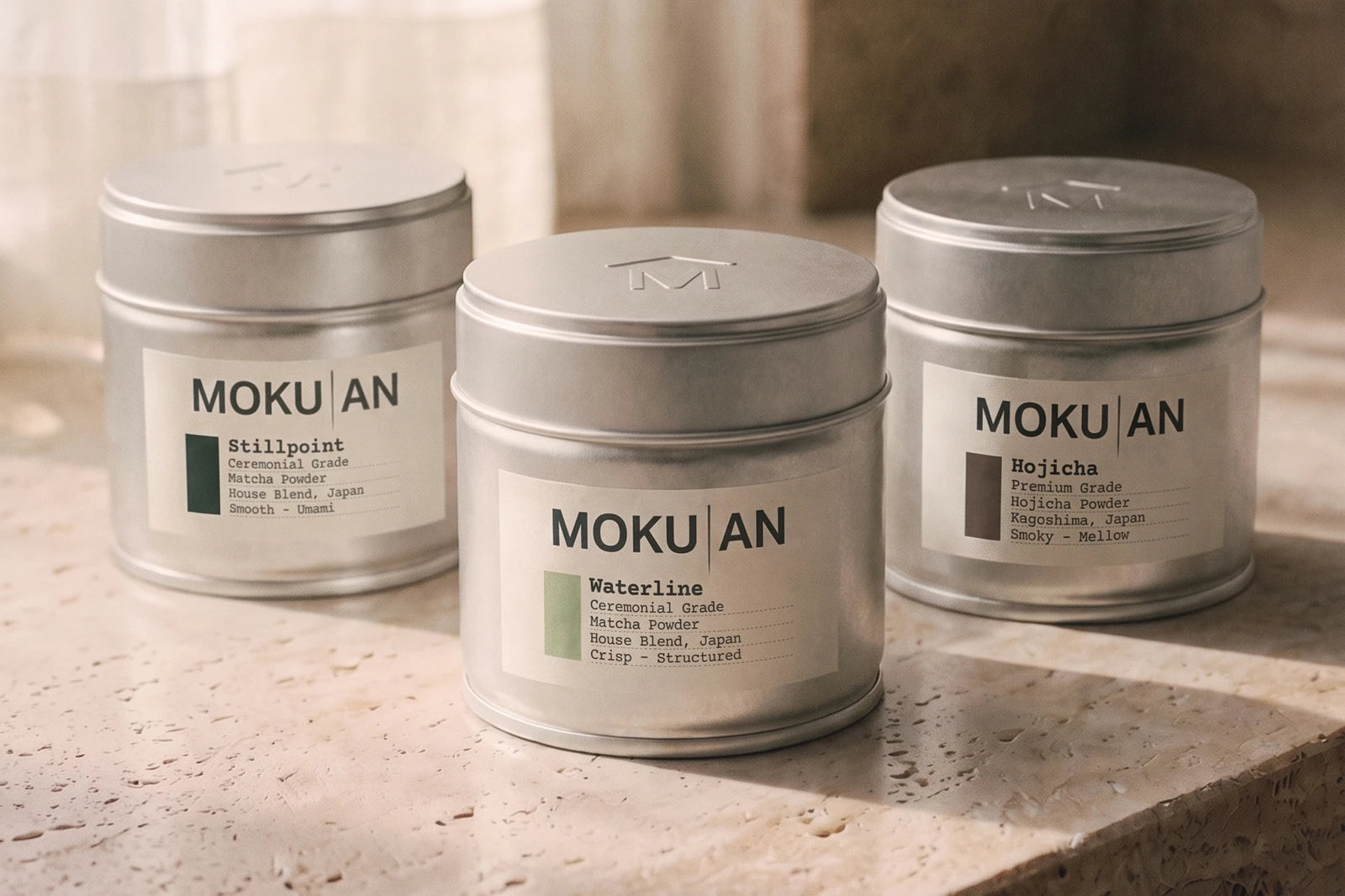
If you don't know which matcha will suit you best, compare our three cans by the four words. Waterline fresh, Stillpoint deep, Hojicha roasted. You make all three the same way, with 2g in 60ml of water at 80°C and 15 seconds of whisking, and only the taste differs.
| Can | Roast | Theanine (umami) | Aroma | Bitterness | Taste |
|---|---|---|---|---|---|
| Waterline | medium | medium | medium | medium | Clean and fresh, a structured finish, keeps its presence in milk |
| Stillpoint | strong | strong | strong | light | Smooth and round, a long umami finish, best straight |
| Hojicha | strong | light | strong | light | Roasted and mellow, no bitterness |
To begin, Waterline suits a first matcha as well as a latte. If you want to get to know umami properly, take Stillpoint. If you worry about bitterness, or want something mellow in the evening, drink hojicha, which tastes roasted rather than green. All three cans are in the matcha collection.
FAQ
Is matcha always bitter?
No. Good matcha has a short, clean bitterness that gives the umami an outline. If the bitterness is hard and lingers, the cause is the water, the amount or the age of the powder.
Is matcha sweet?
Not like sugar. The sweetness sits in the aftertaste, more like chestnuts or steamed sweet potato, and becomes clearer as the bowl cools a little.
Does matcha taste like green tea?
Related, but not the same. For matcha, shaded leaves are ground whole and drunk with the tea, so it has more umami and more body than a brewed sencha.
Does expensive matcha taste better?
Mostly yes, but not because of the price. An early harvest and careful shading bring more umami and less bitterness, and that costs money. You can recognise it by a bright green colour and a sweet, fresh scent. If the label says ceremonial grade, check colour and scent first all the same.
Why does matcha taste different from a freshly opened can?
Matcha loses its aroma to the air once opened. Over time the scent grows quieter, the colour darker and the bitterness harder. A new can shows the difference at once.
All articles on matcha knowledge
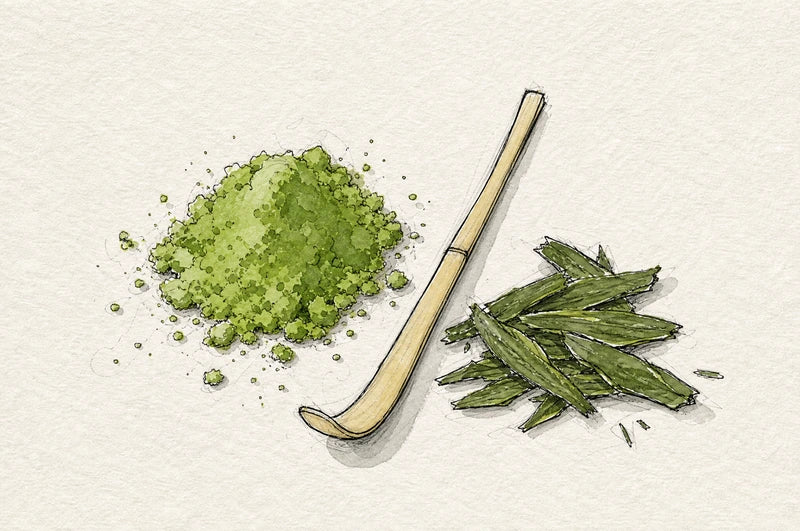 What is matcha? What it's made of, origin and typesMatcha is shade-grown green tea, ground whole. Where it is grown, how it differs from sencha and what usucha and koicha are.
 What is ceremonial grade matcha? How Japan judges qualityCeremonial grade matcha is a trade term for matcha to drink on its own, not a Japanese grade. How tea houses in Japan judge quality and when to pay more.
MOKU-AN, Düsseldorf · Updated 5 October 2026
