


Matcha recipes in grams, hot and iced drinks plus baking
Matcha drinks come down to two amounts. For a latte, use 5g of matcha. For a bowl of plain matcha and for iced matcha without milk, 2g is enough. One level teaspoon holds about 2g, so a latte takes about two and a half. Below you will find these matcha recipes in grams and teaspoons for every hot and iced drink, followed by baking and dessert.
How many grams of matcha for each drink?
Matcha drinks fall into two groups. Plain matcha and iced matcha without milk need 2g. Drinks with milk take 5g, because milk softens the flavour. The amounts hold for every MOKU-AN can.
| Drink | Matcha | Teaspoons (level) | With |
|---|---|---|---|
| Plain matcha (usucha) | 2g | 1 tsp | 60ml water at 80°C |
| Matcha over ice | 2g | 1 tsp | 60ml water at 80°C, ice |
| Hot matcha latte | 5g | 2½ tsp | 150ml water at 80°C, 150ml milk (1:1, for matcha fans) |
| Iced matcha latte | 5g | 2½ tsp | 150ml water at 80°C, 150ml cold milk, ice |
| Dirty matcha (latte with espresso) | 5g | 2½ tsp | as the matcha latte, plus 1 espresso |
| Hojicha latte | 5g hojicha | 2½ tsp | 150ml water at 80°C, 150ml milk |
A teaspoon is only a guide. A set of fine scales is more exact.
Three rules that work for every matcha recipe
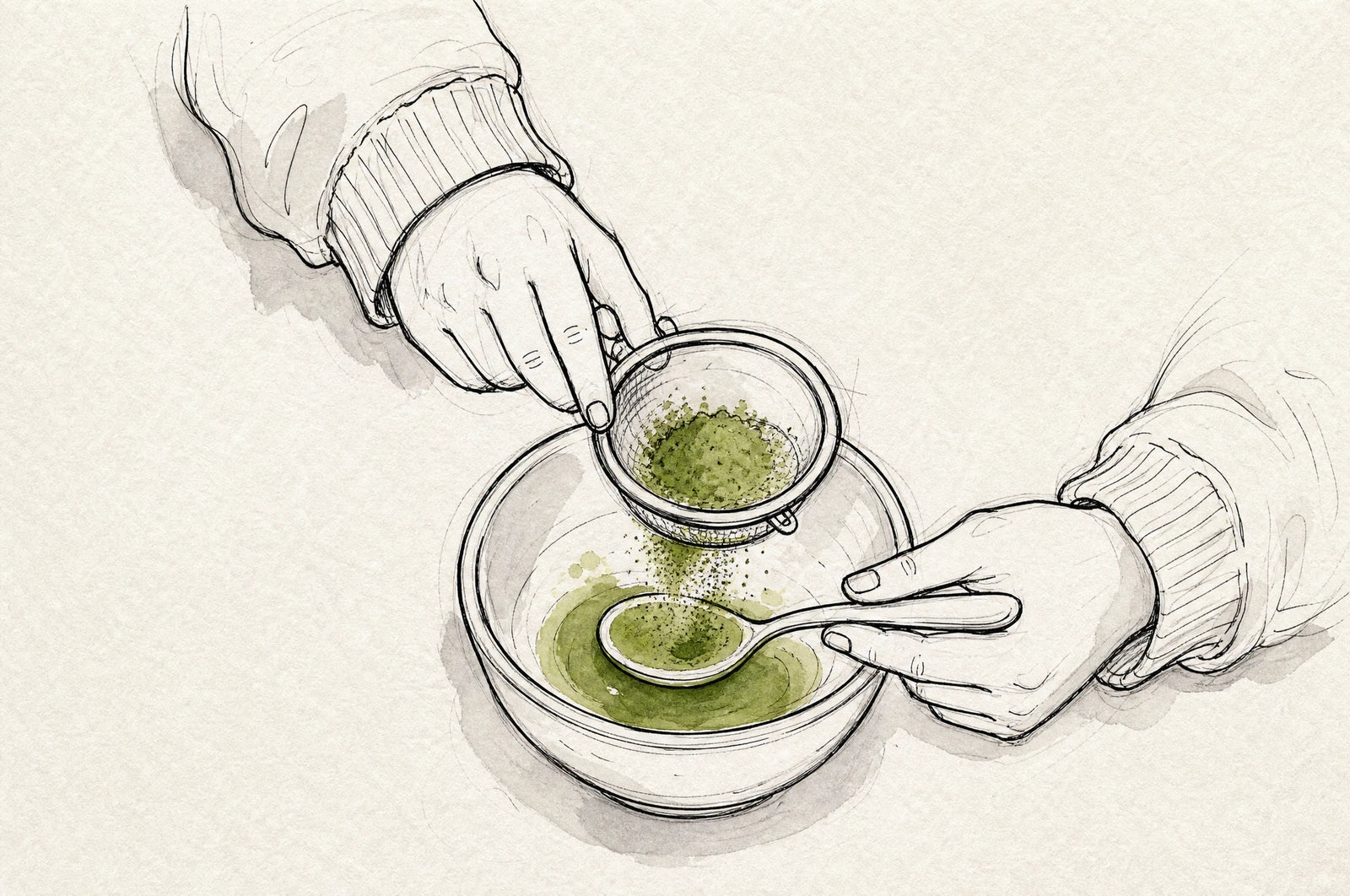
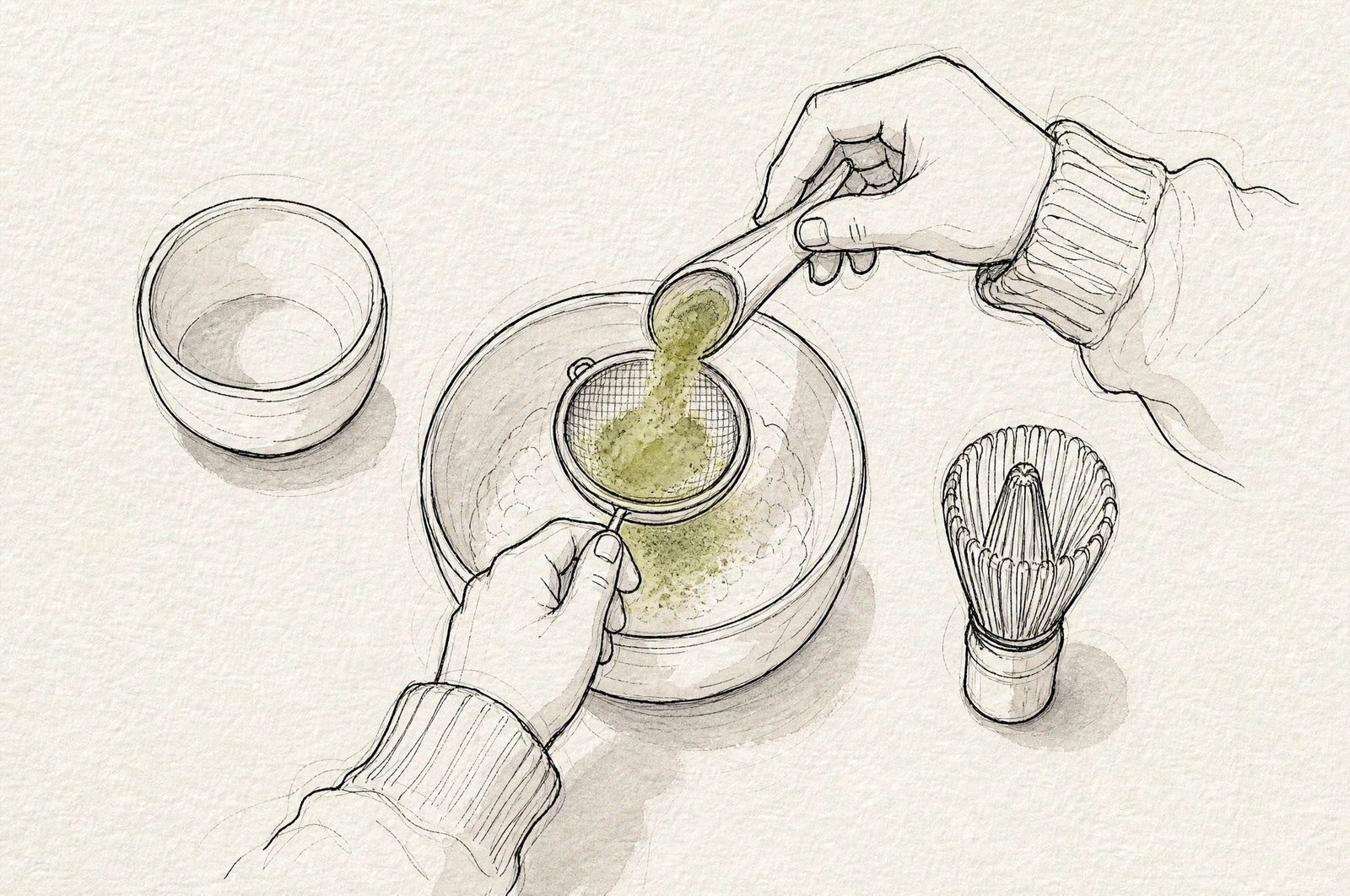
Three things hold for every recipe, drink or bake. You sift the matcha, mix it to a paste with a little liquid first and use it straight away. Sifting stops lumps, the paste spreads the powder evenly, and working quickly keeps the colour, which fades while the powder settles. One tea house says outright in its cheesecake and matcha cream recipes that the matcha is first mixed to a paste with a little hot water. Matcha does not dissolve, it only spreads through the water and sinks again, which is why it is whisked with a bamboo whisk.
Hot matcha drinks, from latte to hojicha latte
| Drink | Matcha | With | Order |
|---|---|---|---|
| Hot matcha latte | 5g | 150ml water at 80°C, 150ml milk, warmed | milk into the glass, whisked matcha poured over |
| Plain matcha (usucha) | 2g | 60ml water at 80°C | whisk for 15 seconds in an M shape |
| Dirty matcha | 5g | as the matcha latte, plus 1 espresso | milk, whisked matcha, espresso last |
| Hojicha latte | 5g hojicha | 150ml water at 80°C, 150ml milk, warmed | as the matcha latte, with hojicha instead of matcha |
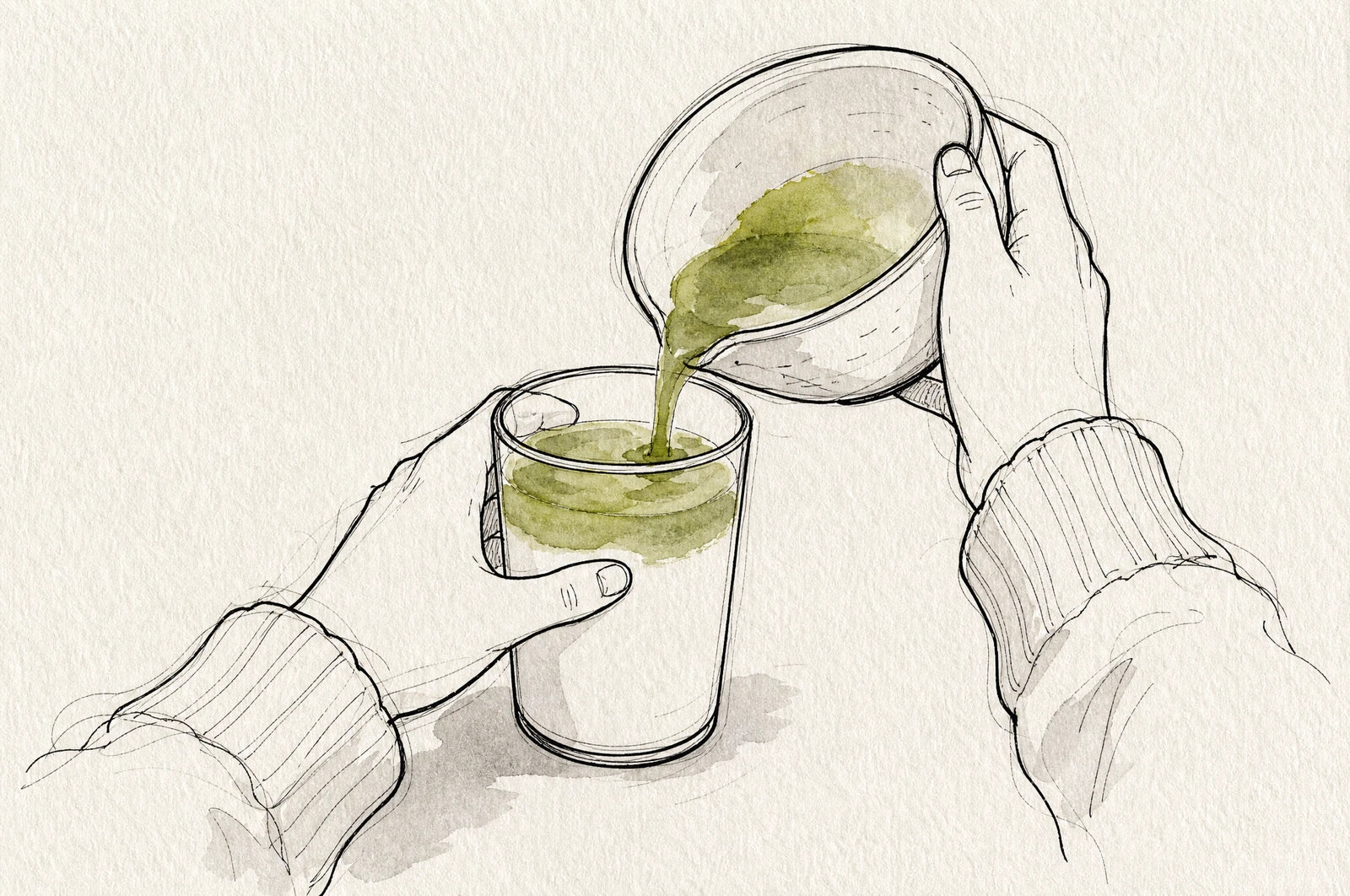
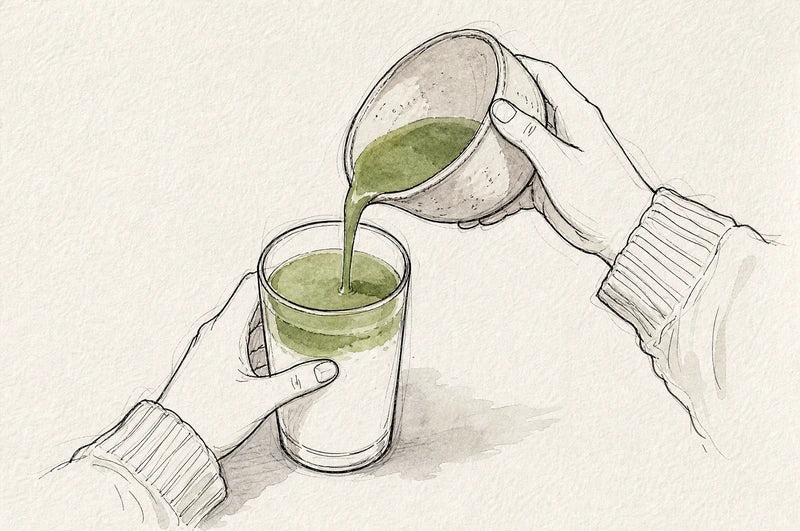
In a matcha latte the milk goes into the glass first and the matcha is poured over from the bowl. If you drink it plain, whisk it for 15 seconds in an M shape.
A dirty matcha is a matcha latte with an espresso on top, and the order in the glass stays the same. For the hojicha latte you use the same amounts, only with the powder of hojicha, a roasted green tea you whisk like matcha.
Iced matcha recipes, with or without milk
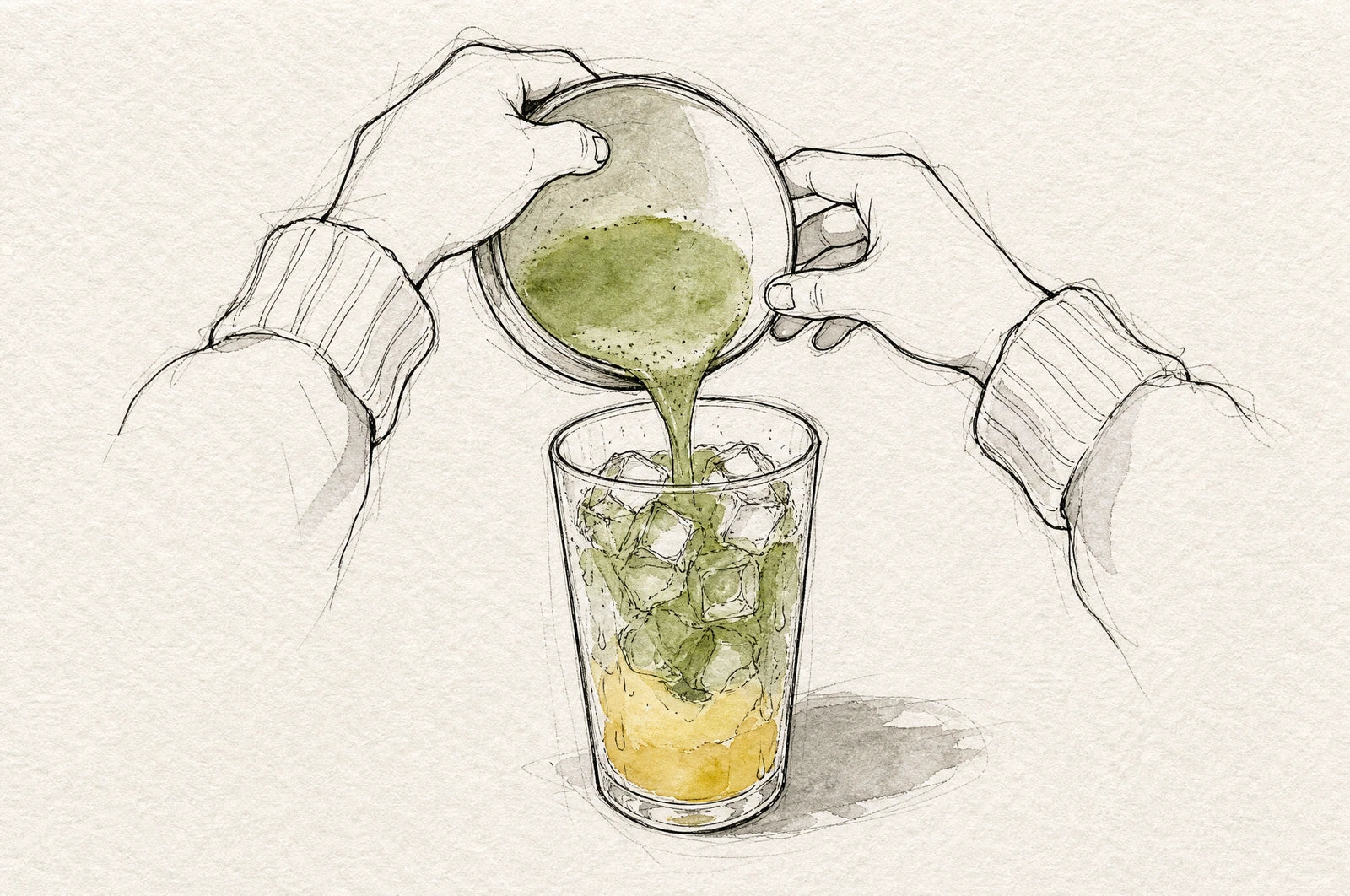
Matcha over ice needs no milk at all. Iced or hot, 2g in 60ml of water is enough. Whisk the matcha with water at 80°C and pour it over the ice afterwards. The flavour stays as it is when hot, only colder.
Fruit turns the drink into a layered glass. Put fruit puree, mango for example, in the bottom, add ice on top and pour the matcha in from above. How much puree you use depends on how sweet the fruit is. With strawberries, milk and ice it becomes the strawberry matcha latte, and with milk and ice but no fruit it is the iced matcha latte.
Matcha with cake, like coffee with cake
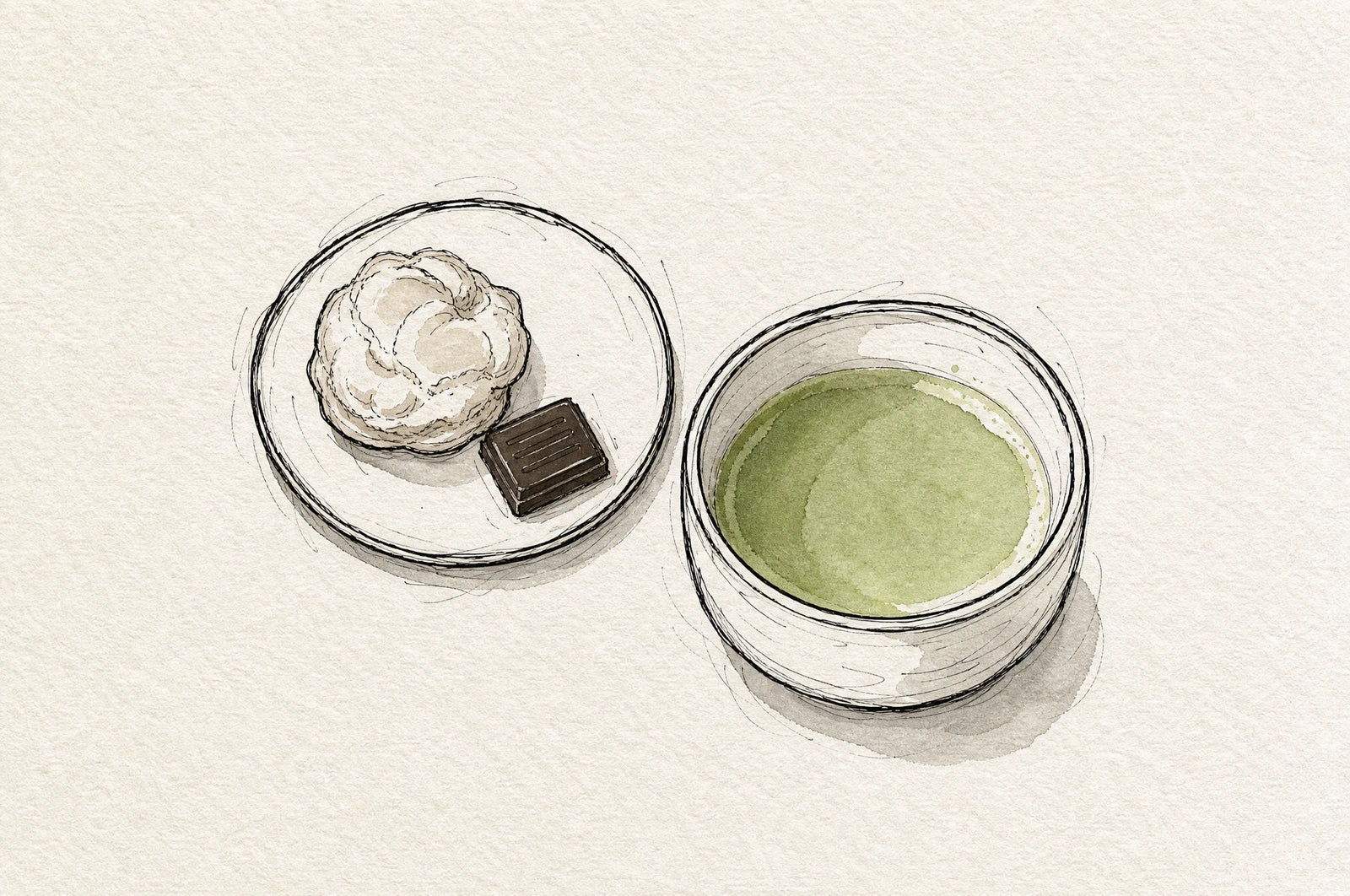
Like coffee with cake, matcha in Japan sits beside the sweets, not in the batter. The matcha you pick depends on what is on the plate.
| Sweet | The matcha to pick | Why it works |
|---|---|---|
| Cream puff | a little less matcha powder | light against heavy cream |
| Cookies | a light matcha with some bitterness | enjoyed like coffee or tea, even from a mug |
| Chocolate | a matcha with astringency | meets sweet chocolate |
| Cheesecake or strawberry cake with cream | a matcha that suits dairy | cheese and cream are mild |
| Canelé | a matcha with bitterness | its bite suits the sweet rum |
Start from a bowl of usucha, 2g in 60ml, and adjust the strength to the sweet, stronger or lighter. With sweets full of cream, use a little less matcha powder and the cup tastes milder. The pairings work because sweetness and bitterness balance each other, just as the flavour of matcha itself is built from umami and bitterness.
At the tea ceremony the sweet is usually eaten first and the matcha drunk afterwards, unlike coffee and cake, where both come to the table together. At MOKU-AN, Stillpoint goes with sweets, round and with a long umami finish.
Matcha baking and dessert recipes
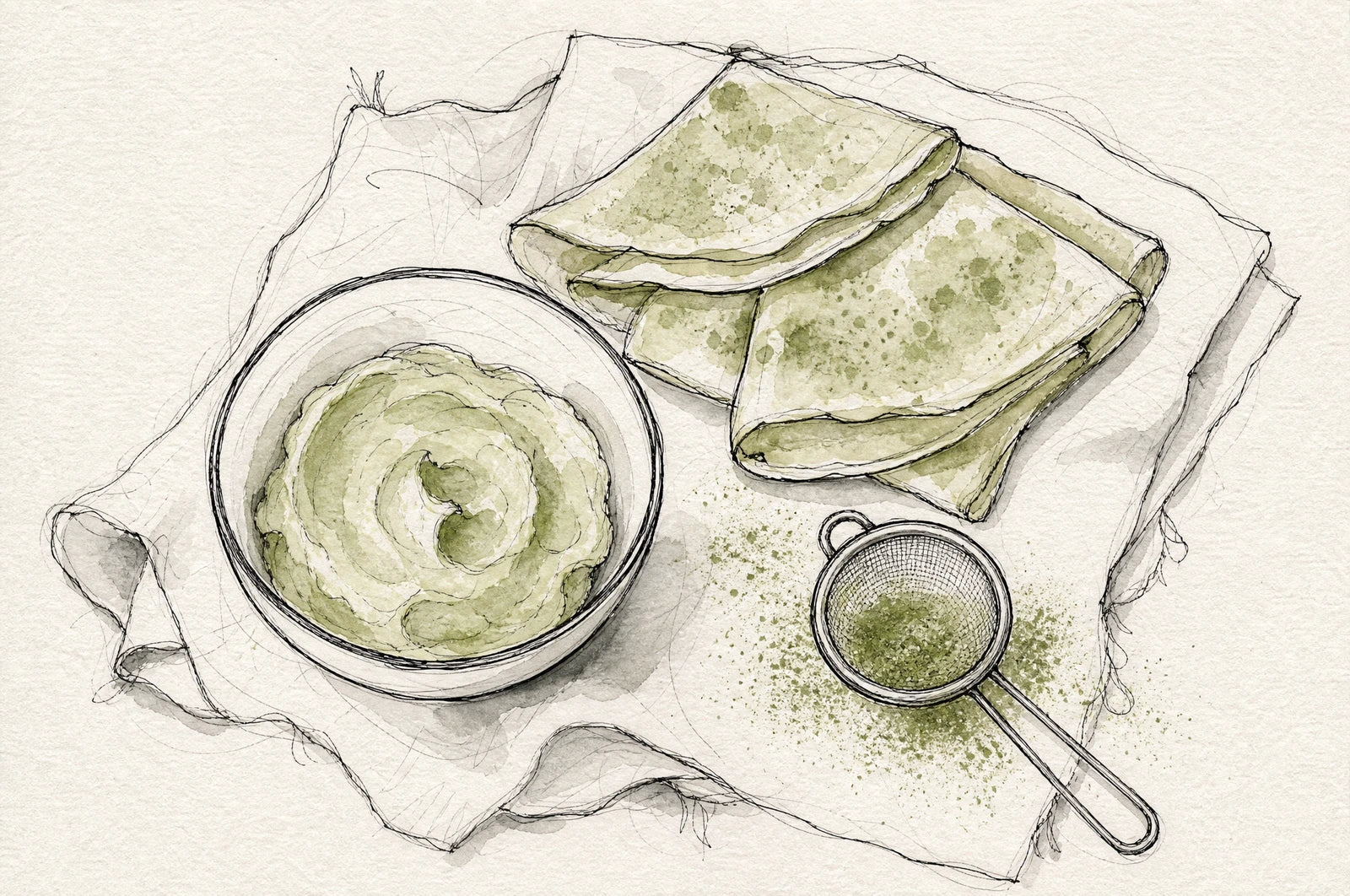
If you do want matcha in the batter, follow the amounts the tea houses use. Nakamura Tokichi's cheesecake recipe calls for 8g of matcha to 200g of cream cheese. In its other recipes the tea house uses 1 to 2g to 100ml for whipped cream, 4g for crêpes and 10g for doughnuts, each to 100g of flour. The amounts here follow that range.
| Recipe | Matcha | All other ingredients |
|---|---|---|
| Whipped matcha cream | 2g | 100ml whipping cream (ideally 35% fat, at least 30%), 10 to 15g sugar, 1 tsp hot water |
| Matcha crêpes | 4g (2 tsp) | 100g plain flour, 30g sugar, 2 eggs, 300ml milk, 30g melted butter |
| Matcha cheesecake | 8g | Base: 80g digestive biscuits, 40g melted butter. Filling: 200g cream cheese, 70g sugar, 2 eggs, 100ml whipping cream, 8g plain flour, 2 tbsp hot water |
The whipped matcha cream works as a topping or a filling.
- Make the paste. Sift 2g of matcha and mix it to a paste with 1 tsp of hot water.
- Whip. Whip the paste with 100ml of whipping cream and 10 to 15g of sugar over a bowl of iced water until soft peaks just hold and slowly fold over.
The batter for the matcha crêpes makes about 15 crêpes.
- Sift. Sift 4g of matcha together with 100g of plain flour.
- Mix the batter. Mix it with 30g of sugar, 2 eggs, 300ml of milk and 30g of melted butter, and rest the batter for 30 minutes in the fridge.
- Cook. In a non-stick pan over medium to low heat, cook one ladle of batter at a time in a thin layer.
The matcha cheesecake is a baked cheesecake on a biscuit base.
- Base. Crush 80g of digestive biscuits, mix them with 40g of melted butter and press them into the tin.
- Paste. Mix 8g of matcha with 2 tbsp of hot water to a smooth paste.
- Filling. Beat 200g of cream cheese with 70g of sugar, beat in the 2 eggs one at a time, then add 100ml of whipping cream and the paste. Fold in 8g of sifted flour last.
- Bake. Pour the filling onto the base and bake the cake at 160°C for about 40 to 45 minutes.
- Chill. Let the cake cool, then chill it in the fridge for at least 3 hours.
Do you need a special matcha for baking?
No, you do not need a separate matcha for baking. Nakamura Tokichi uses its top grade for cheesecake and its standard grade for crêpes and parfait. The tea house sells no separate baking matcha and picks the grade to suit the recipe. For milk drinks, light varieties with some bitterness suit the sweetness of the milk.
From the matcha collection, Waterline suits lattes and baking because it holds its own beside milk and flour. Stillpoint is the can for plain matcha, iced matcha and as a companion to sweets. Hojicha brings a roasted aroma to the hojicha latte and to baking.
FAQ
How many grams of matcha is one teaspoon?
One level teaspoon of matcha weighs about 2g. The 5g for a latte is therefore about 2½ teaspoons. Matcha is light and airy, so do not press the powder down. Digital scales are more exact.
Can you drink matcha without milk?
Yes. Plain, use 2g in 60ml of water at 80°C, and iced, pour the whisked matcha over ice. Without milk, the sweetness and bitterness of the matcha come through more clearly.
Why does matcha turn brown in baking?
Heat, light and oxygen break down the green of matcha. Sift the matcha and mix it to a paste with hot water first, which one tea house says keeps the green vivid. Eat the bake fresh if you can.
Can you mix matcha with coffee?
Yes, as a dirty matcha. Make a matcha latte and put an espresso on top. The order in the glass is milk, whisked matcha, espresso last.
What goes with matcha served plain?
Plain matcha goes with waffles, chiffon cake and cheese, bitter chocolate and candied orange peel, for example, or seasonal fruit, dried fruit and nuts. Adjust the strength to the sweet, and with cakes full of cream use a little less matcha powder.
More matcha recipes
MOKU-AN, Düsseldorf · Updated 8 October 2026
