


What is hojicha? Roasted green tea, taste and how to make it
Hojicha is Japanese green tea whose leaves or stems are roasted at high heat after steaming and drying. The roasting turns the tea brown, takes much of the bitterness out and brings up a warm, roasted aroma that recalls roasted nuts, with no sweetness. In Japan, hojicha tea is usually brewed as loose leaf in a pot, while MOKU-AN's Hojicha is milled so fine that you can whisk it like matcha, with 2g, 60ml of water at 80°C and 15 seconds.
What is hojicha made of?
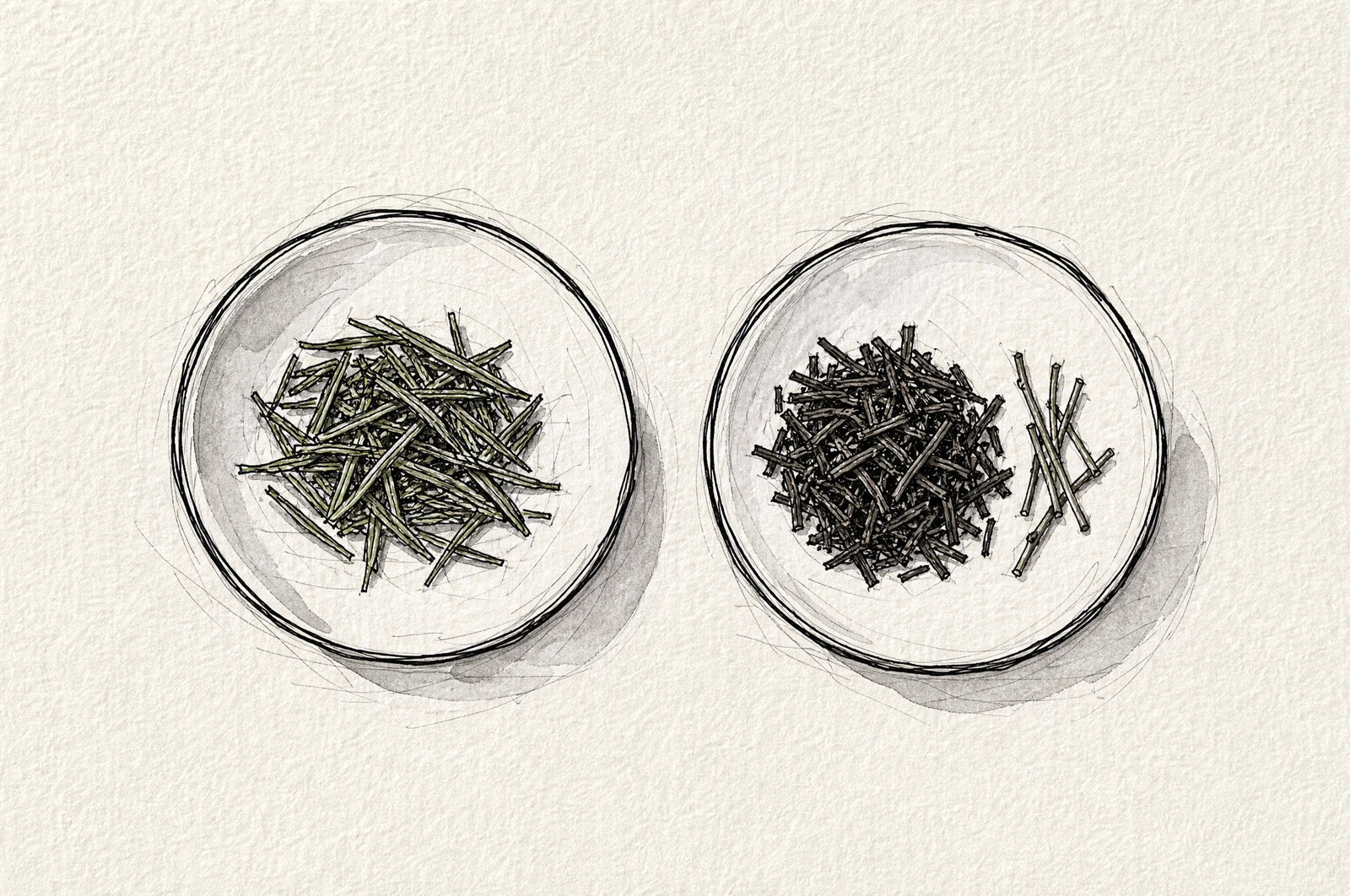
The name (pronounced ho-jee-cha) means roasted tea, and that is exactly what it is. It is made from sencha or bancha leaves, or from the stalks of the tea plant, called kuki in Japanese. The Kyoto tea house Fukujuen explains on the page for its tea workshop in Uji that the tea is roasted at around 130°C or more until the roasted aroma rises, then cooled straight away.
You will often read that hojicha is made from low-grade leaves. Nakamura Tokichi (in Japanese) in Uji (since 1854) sees it differently. The better the hojicha, the lighter the roast, the more gentle umami is left, the more depth the aroma has and the paler the cup. The brown colour comes from roasting, not from oxidation, so hojicha is roasted, not fermented, and it is not a black tea.
Hojicha vs matcha, what is the difference?
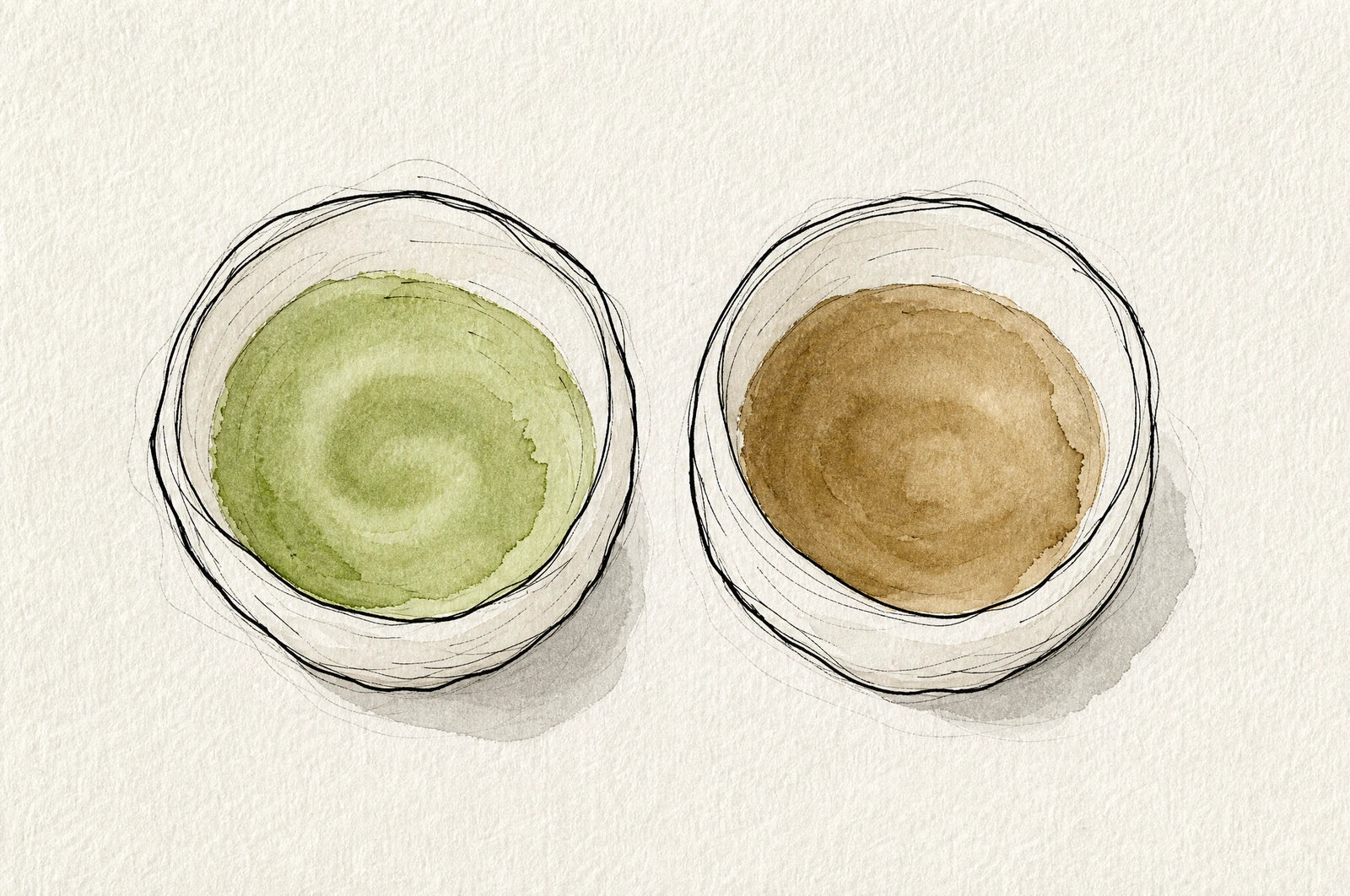
Both come from the tea plant Camellia sinensis, and only the route to the cup differs.
| Matcha | Hojicha | |
|---|---|---|
| Leaf | Tencha, shaded before harvest | Sencha or bancha leaves and stalks, grown in full light |
| Processing | Steamed, dried, ground | Steamed, dried, roasted |
| Colour | Bright green | Brown |
| Taste | Umami and bitterness | Roasted aroma, little bitterness |
| Form | Always a powder | Usually loose leaf, a powder at MOKU-AN |
| Caffeine | Contains caffeine | Contains only a little caffeine |
| Water temperature | 80°C for whisking | Leaf brewed at 100°C, powder at 80°C |
Matcha is ground from shaded leaves, while hojicha is made from roasted tea, and MOKU-AN has both as powders in the matcha collection.
What does hojicha taste like?
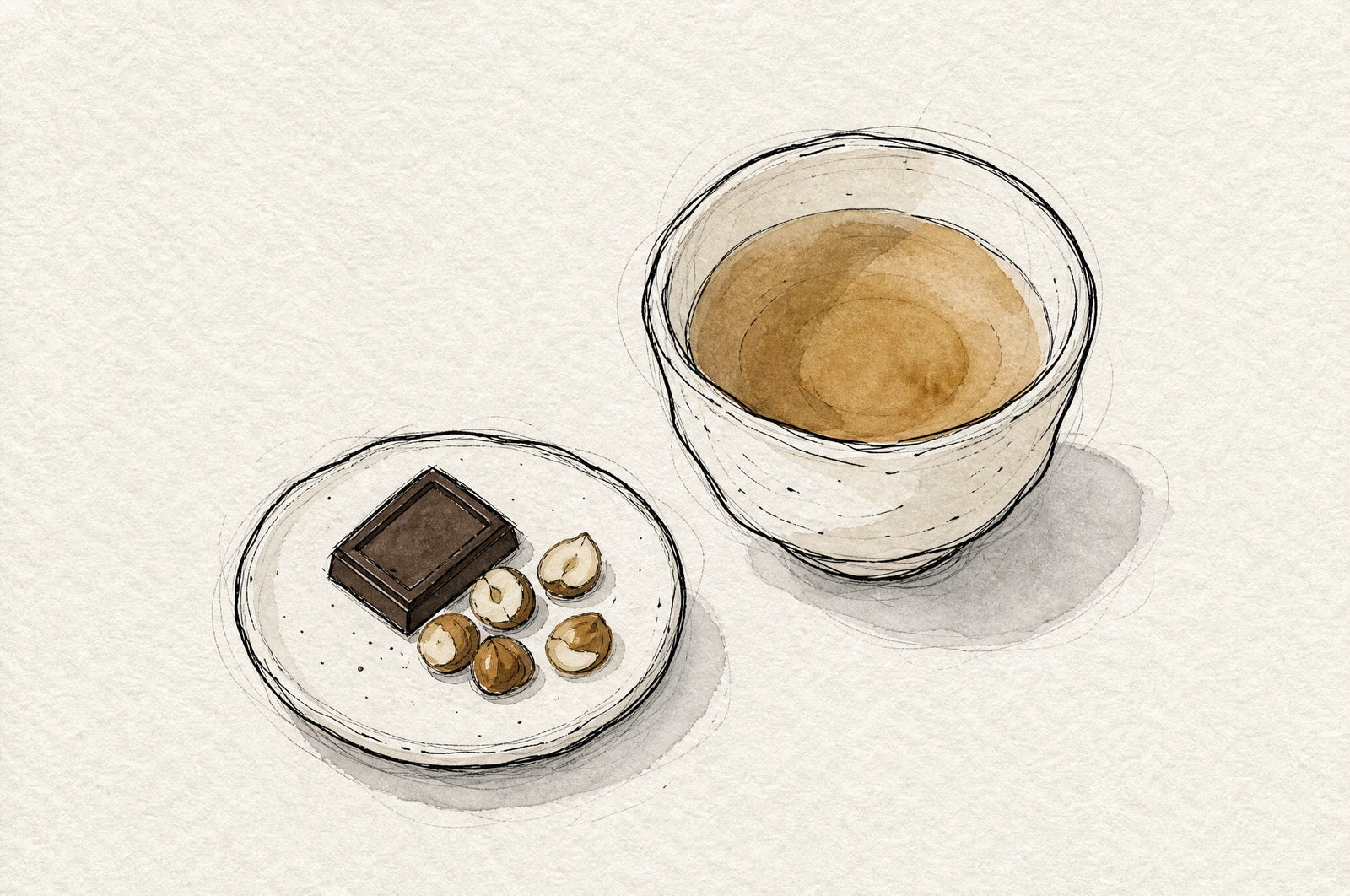
As with matcha, we sort the taste into four areas, roast, umami, aroma and bitterness. With hojicha, the roast carries the flavour, not the bitterness. A good hojicha smells roasted, has a light aftertaste and only a hint of bitterness and umami.
- Roast. This is the main event, and the closest comparisons are roasted hazelnuts and toast.
- Umami. It is only faintly there. In a good hojicha you notice it only when you look for it, and too much would make the tea heavy.
- Aroma. The smell of freshly picked leaves disappears in the roasting. A warm, roasted scent with no sweetness takes its place, close to nuts and dark chocolate. Unlike the taste of matcha, which young leaves shape, in hojicha the roast carries the aroma.
- Bitterness. There is very little of it. The high heat takes much of the bitterness and astringency out of hojicha, so it tastes clean and light.
How to make hojicha, loose leaf or powder
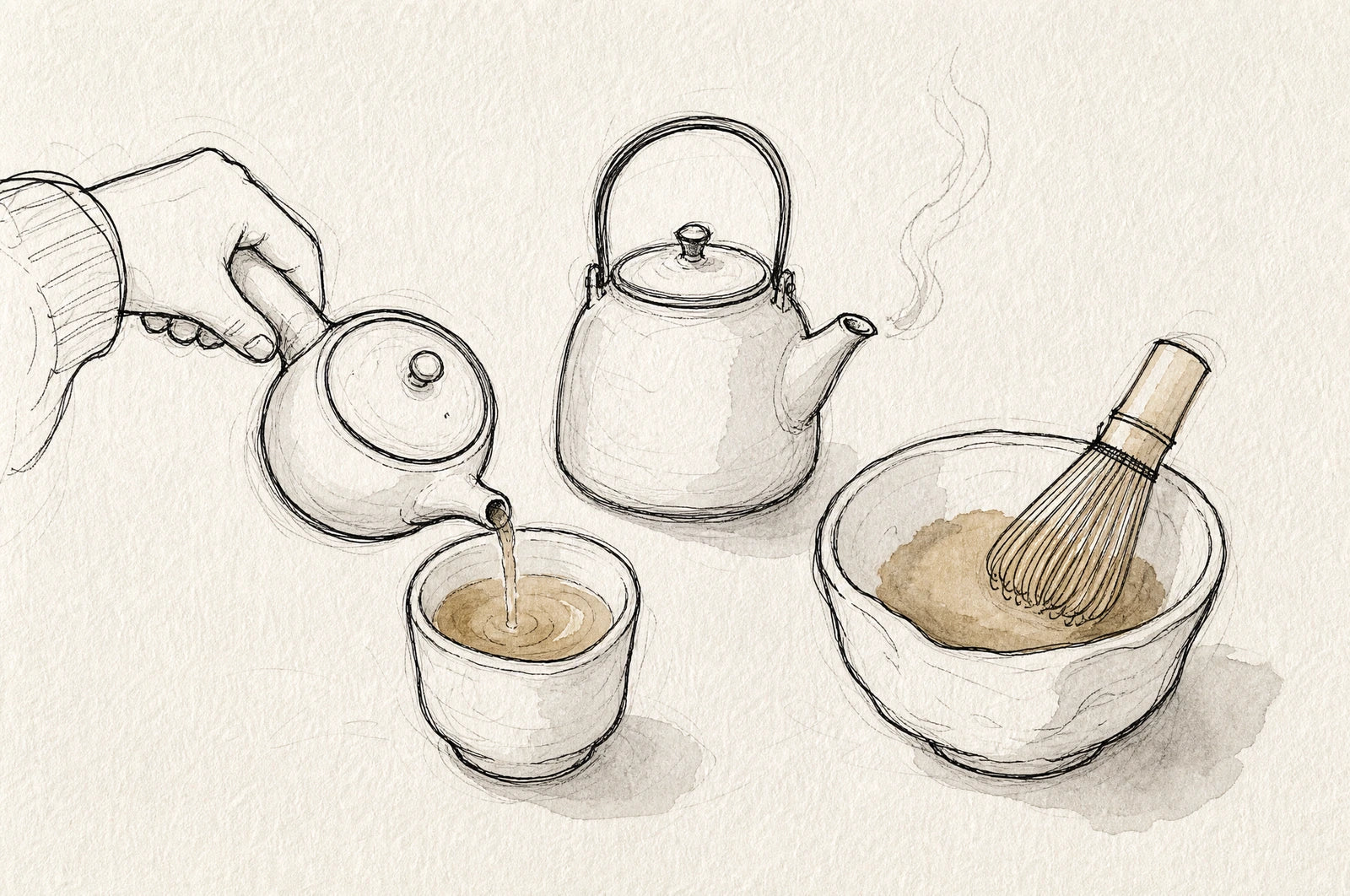
There are two ways to make hojicha, loose leaf goes in the pot and powder goes in the bowl.
| Method | Amount | Water | Temperature | Time |
|---|---|---|---|---|
| Leaf in the pot | 10g | 240 to 300ml | 100°C | 30 to 40 seconds |
| MOKU-AN, powder in the bowl | 2g | 60ml | 80°C | 15 seconds of whisking |
With loose leaf you drink only the infusion. To release the roasted aroma, loose leaf needs water at a full boil, and hojicha does not turn bitter easily even then. With the powder you drink the whole leaf and the aroma is already there. We therefore treat the powder like matcha and whisk it at 80°C, which keeps the foam and the mouthfeel consistent. The routine of sifting, adding water and whisking for 15 seconds in an M shape is the same as when whisking matcha, and if you have no whisk, the MOKU-AN Matcha Shaker gets you there easily.
What is hojicha powder, and why can you whisk it like matcha?
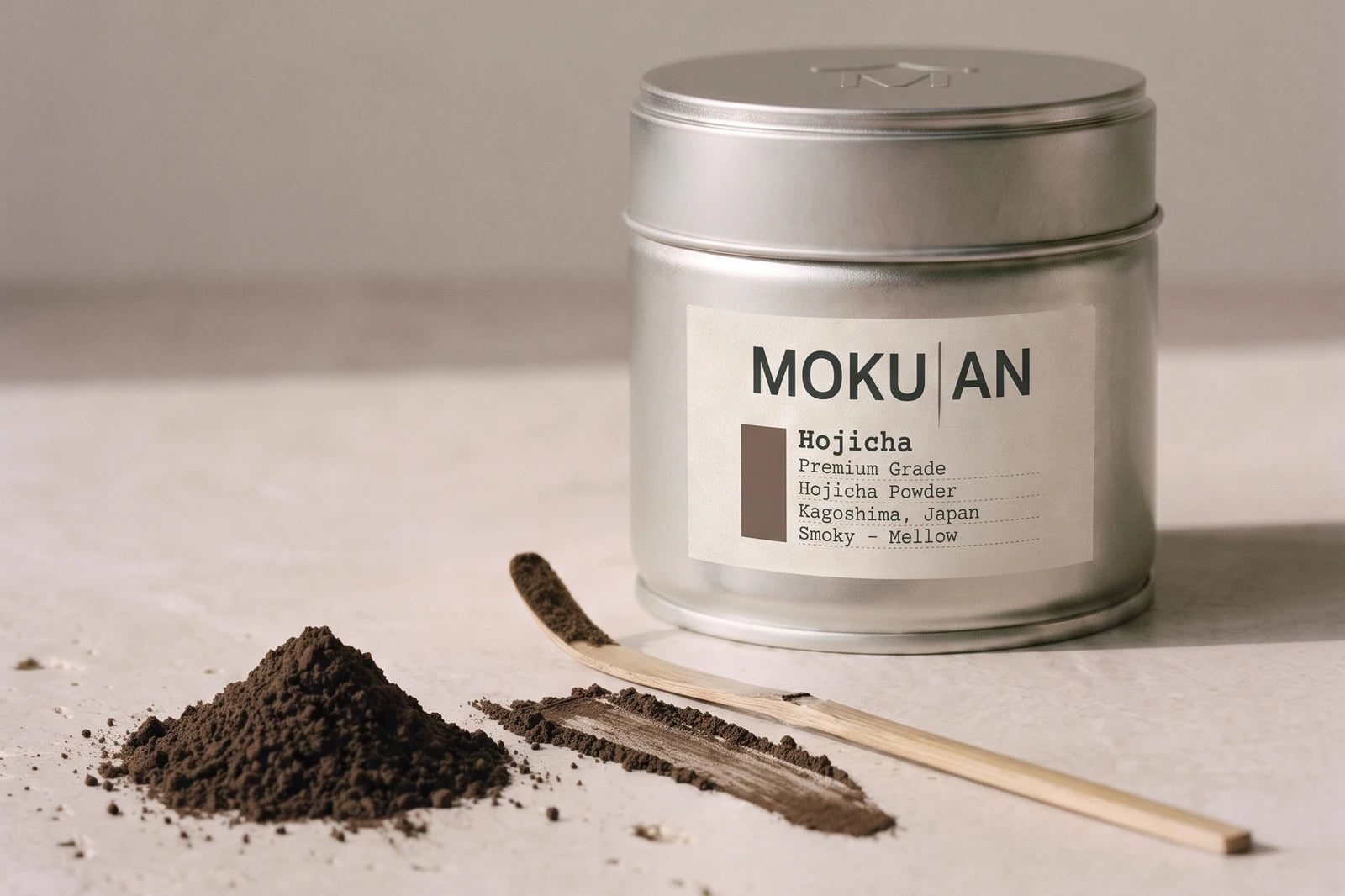
Hojicha powder is roasted green tea ground whole. Roasted tea is normally brewed rather than whisked, and even at the big tea houses in Kyoto and Uji hojicha usually comes as loose leaf or in teabags. The family business behind our Hojicha, founded more than a hundred years ago and now in its fourth generation, has built a line of its own for milling tea, and that is what lets a roast this deep be ground fine enough to drink the way you drink matcha. MOKU-AN hojicha powder is Premium Grade, single origin from Kagoshima, and it is 100% roasted green tea.
Hot hojicha, iced hojicha and the latte
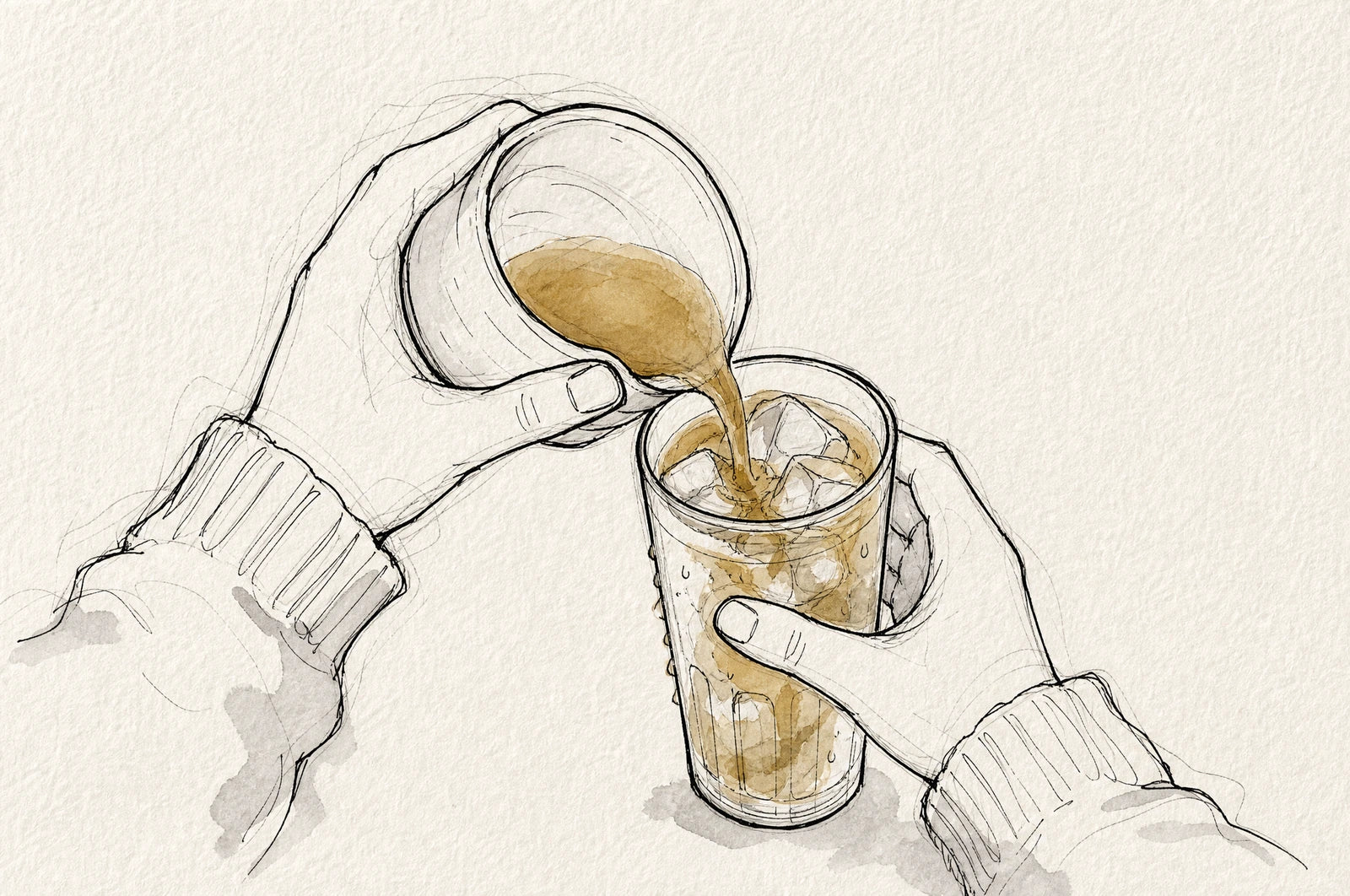
The powder works hot, iced and with milk. The amounts are MOKU-AN's own.
| Method | Amount | How |
|---|---|---|
| Hot | 2g, 60ml, 80°C | Whisk for 15 seconds, drink from the bowl |
| Iced | 2g, 60ml, 80°C | Whisk the same way, pour over a glass of ice |
| Hot latte 1:1, roast-forward | 5g, 150ml, 80°C, plus 150ml of milk | Warm milk into the glass first, hojicha from the bowl on top |
Loose-leaf hojicha is good hot or cold and suits a flask for the road.
Most people meet hojicha first as a latte in a café, while in Japan it is poured as loose leaf from a pot. For our latte the order is the same as for matcha, milk into the glass first, hojicha on top. If you like the roast to come through, go 1:1, which is 5g whisked in 150ml of water over 150ml of milk. For a first try, 1:2 is 5g whisked in 100ml of water over 200ml of milk. How strong a hojicha latte turns out depends mostly on the ratio of powder to milk.
When do people in Japan drink hojicha?
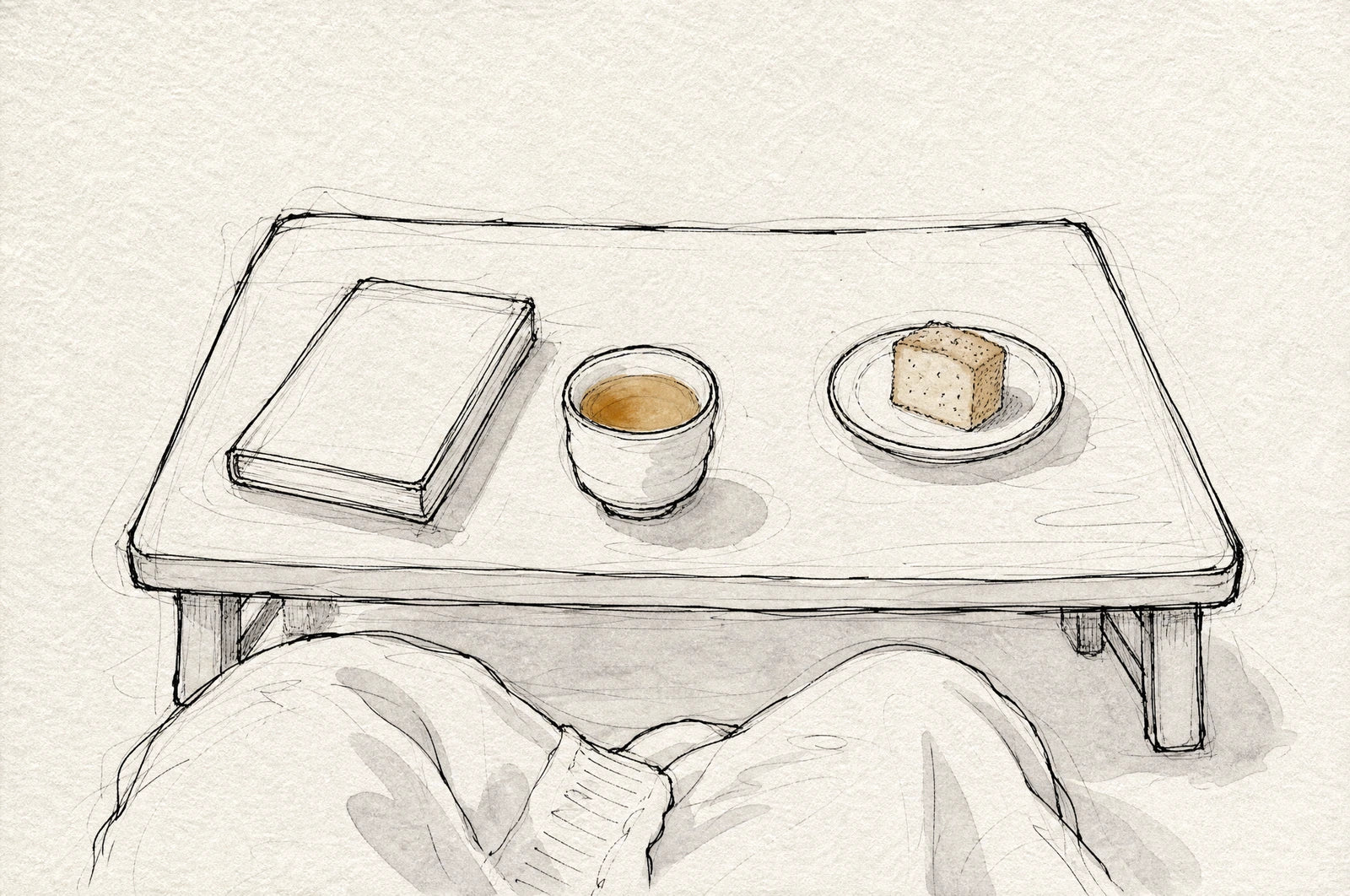
In Japan hojicha is the tea for every day. People keep it in the cupboard, for the moment when you cannot decide what to drink, and have it with meals, with sweets, with a square of chocolate and as a late-evening cup, chilled for a thirst.
At home that translates easily, a cup instead of the afternoon coffee, as hojicha in the evening after dinner or with coffee and cake.
FAQ
Does hojicha have caffeine?
Hojicha contains only a little caffeine, clearly less than matcha. It is mostly made from later-harvest leaves and stalks, and roasting takes out part of the caffeine. In Japan, hojicha is also popular as a cup in the evening.
Is hojicha green tea or black tea?
Hojicha is green tea. The fresh leaves are steamed first, which stops oxidation, then dried and only after that roasted. The brown colour comes from the roasting and not from fermentation as in black tea.
How do you pronounce hojicha?
It is pronounced ho-jee-cha. Hōjicha with a macron and houjicha are other spellings of the same tea.
Can you make hojicha powder like matcha?
Yes, the same way as when whisking matcha. Sift 2g of powder into the bowl, add 60ml of water at about 80°C and whisk for 15 seconds in an M shape. Without a whisk, the MOKU-AN Matcha Shaker gets you there easily.
MOKU-AN, Düsseldorf · Updated 6 October 2026
