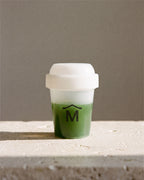

How to make matcha without a whisk, 3 ways step by step
The easiest way to make matcha without a whisk is a small shaker of about 100ml. Put in 2g of matcha and 20ml of water, shake for 20 seconds, then top up the concentrate with 40ml of water to drink it straight or 60ml of milk for a latte. A protein shaker with a spring ball and a milk frother in a tall cup work too, though none of the three gives foam quite as fine as a bamboo whisk.
Drunk straight, that matches the classic bowl you make with a bamboo whisk, 2g of matcha in 60ml of water.
Can you make matcha without a whisk?
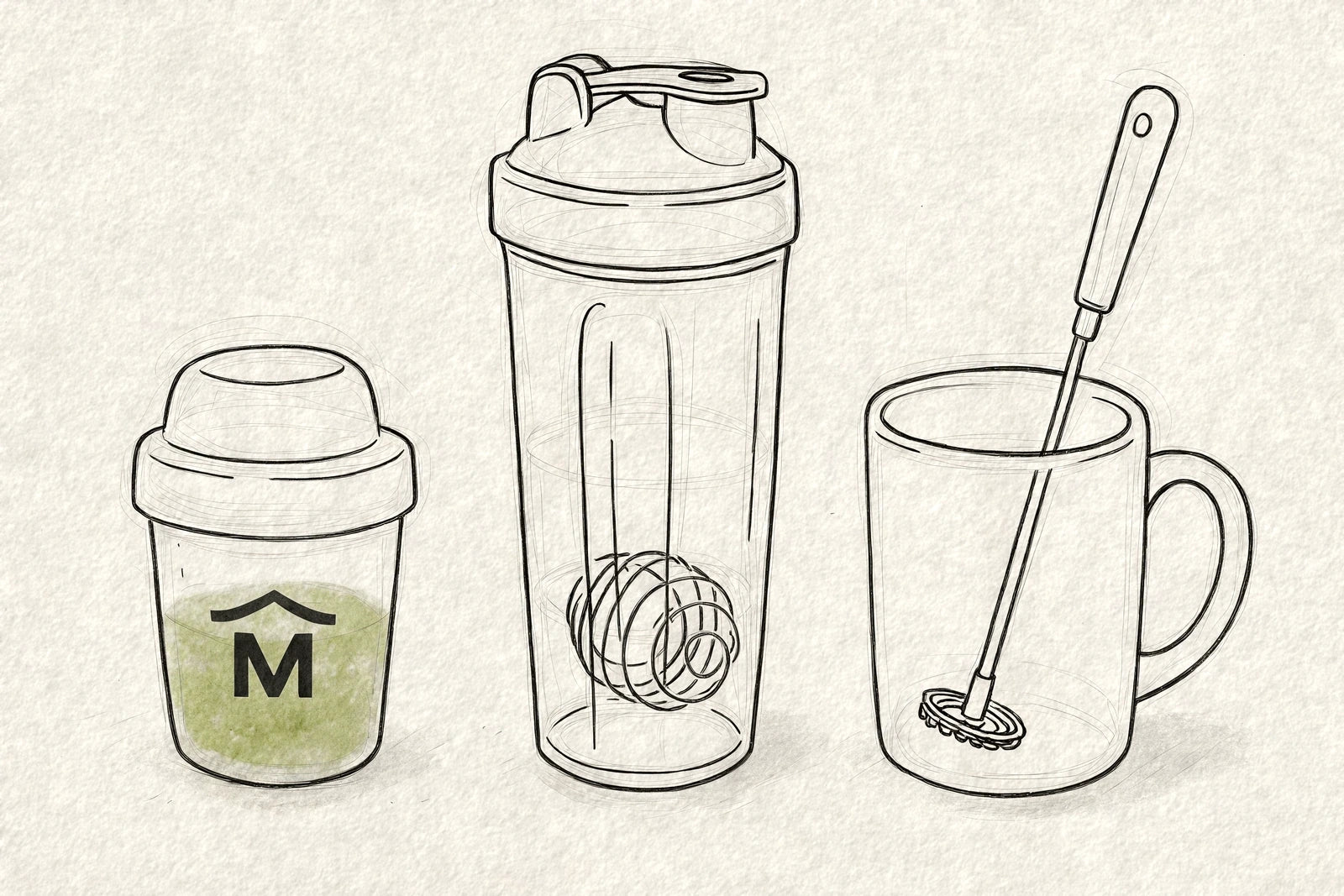
Yes. A whisk spreads the powder through the water before it can clump, and that is all a substitute has to do. You need speed and something that breaks the powder apart, which is the fin in the base of the shaker, the spring ball in a protein shaker and the small spinning head of a milk frother.
Matcha doesn't dissolve, whichever tool you use. The fine particles are only spread through the water and sink again once the drink stands still, so drink it straight away.
The table puts the three methods side by side, with a bowl and whisk in the last row as the yardstick.
| Tool | Amount | Temperature | Good for |
|---|---|---|---|
| Shaker (about 100ml) | 2g, 20ml of water up to the line, then 40ml of water or 60ml of milk | warm or cold, never boiling | On the go, cold, one serving |
| Protein shaker with a spring ball | Same ratio as the bowl, 2g to 60ml of water | room temperature or cold | Several servings |
| Milk frother (handheld) | Same ratio as the bowl, 2g to 60ml of water | about 80°C | At home, also for a 3g latte |
| Bamboo whisk for comparison | 2g to 60ml of water | about 80°C | The finest foam, straight |
How do you make matcha in a shaker?
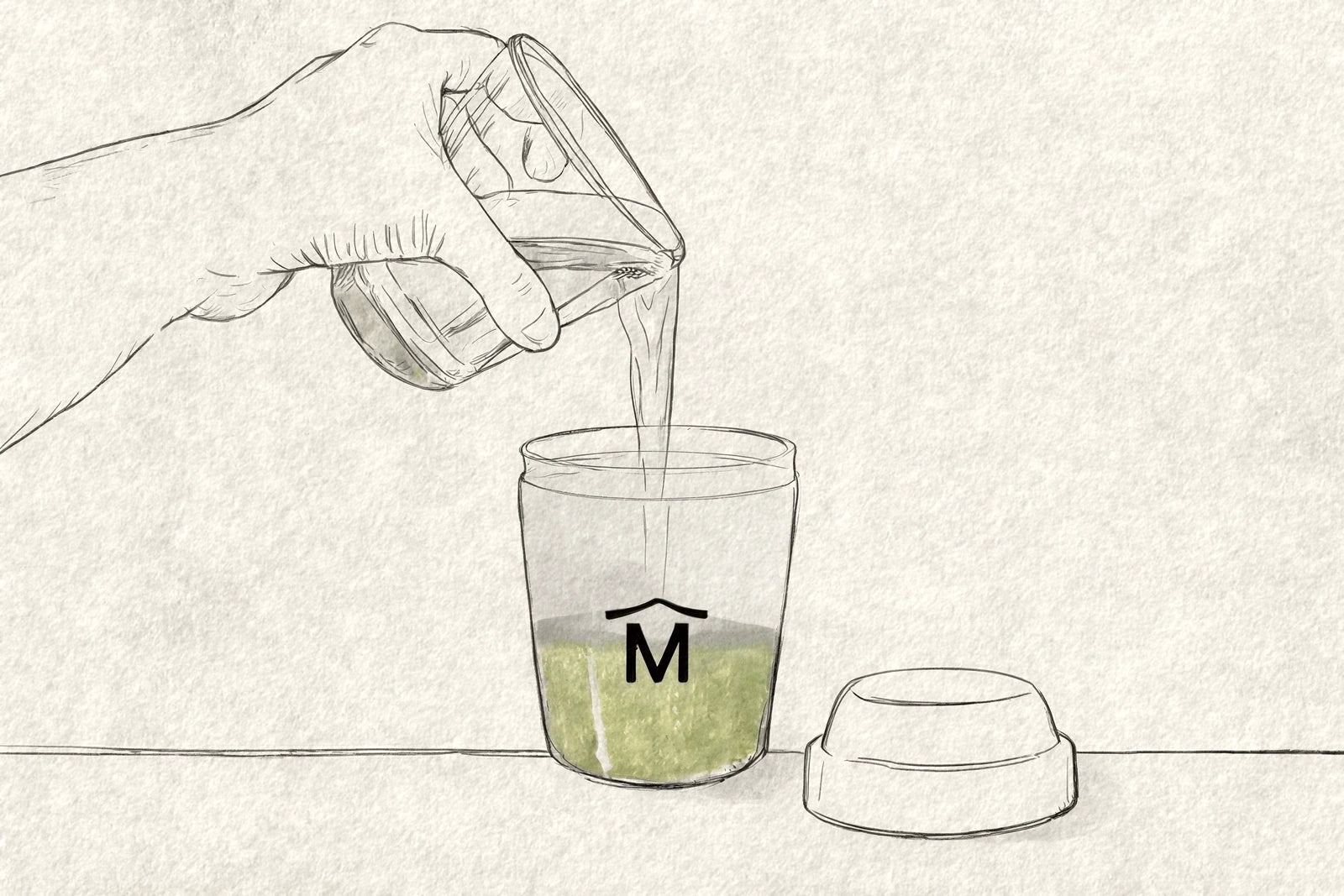
A shaker makes matcha in four simple moves.
- Add the matcha. Put 2g of matcha in the shaker. There is no need to sift it.
- Add water to the line. Pour in warm or cold water up to the line, which is 20ml. Never use boiling water.
- Shake. Put the lid on and shake it up and down for 20 seconds. What comes out is a concentrate.
- Top up. Add 40ml of hot or cold water to drink it straight, or 60ml of milk for a latte.
Why 20ml first? A little water lets you spread the powder thoroughly before the rest goes in, so hardly any clumps form. The tea research institute of Kyoto Prefecture works the same way for a bowl, pouring in only a small part of the water first and mixing the powder into it so that no clumps form.
Matcha without a sieve works in a shaker because the fin in the base does the job of the whisk tips as you shake, breaking the powder apart before it can clump. The shaker is only palm-size and easy to drive from the wrist, which is why 20 seconds is enough.
Drunk straight, this is a usucha, the name for the thin bowl in Japan. The 20ml and the 40ml add up to 60ml for 2g of matcha. The tea house Gion Tsujiri in Kyoto describes a bowl in much the same way, about 2g of matcha, sifted, with 60 to 70ml of water.
The latte from the shaker is a small cup, 2g in 80ml altogether. For a full-size matcha latte in a glass you use 3g instead.
The MOKU-AN Matcha Shaker holds about 100ml, is palm-size and made for one serving. If you want a can of matcha with it, there is the Shaker Set with a can of matcha. Rinse the shaker with warm water straight after use, wash it by hand and never use boiling water.
Can you make matcha in a protein shaker?
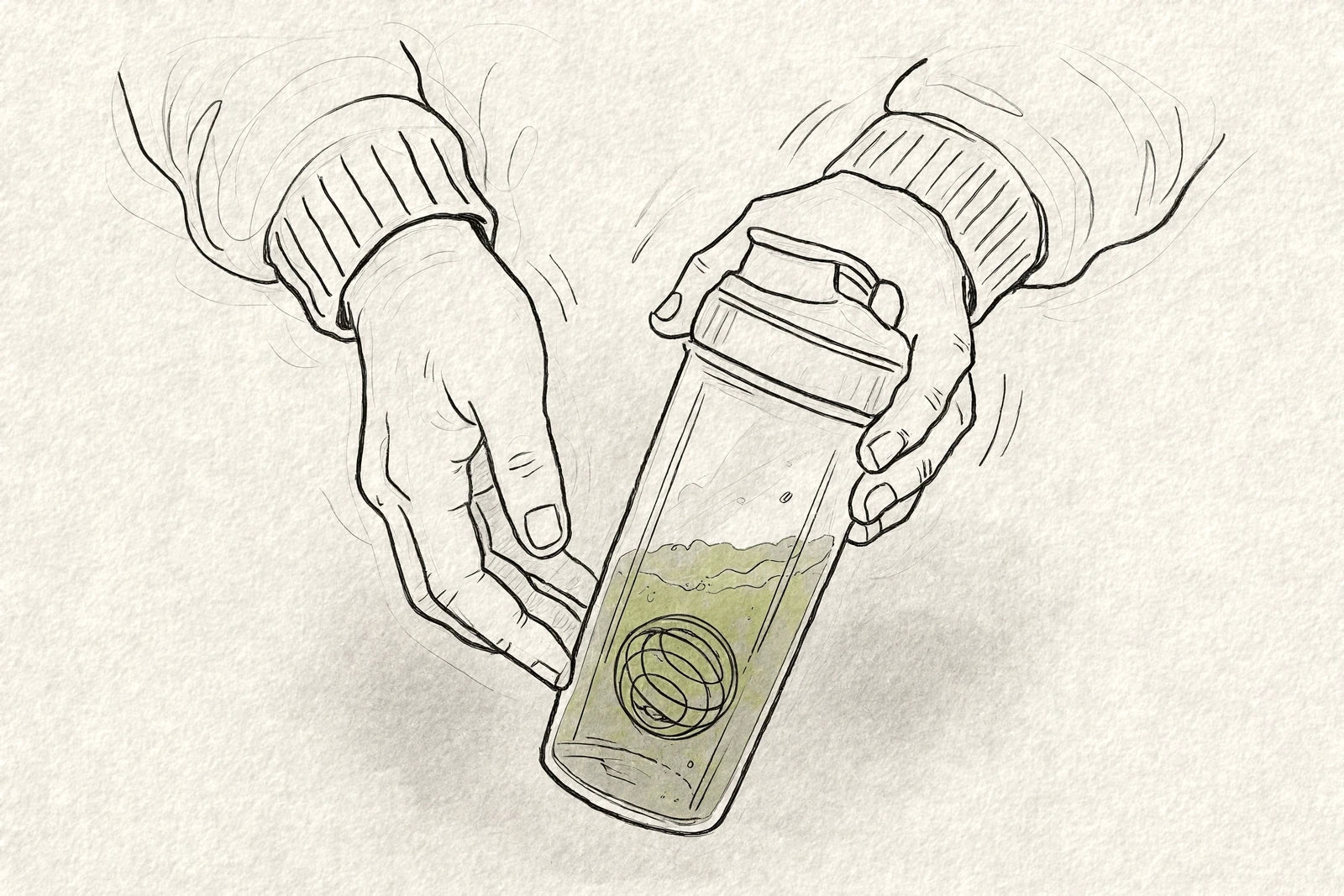
Yes. The spring ball beats through the powder as you shake and spreads it through the water. Use room-temperature or cold water. With hot or warm water, pressure builds up inside the closed shaker and the lid can pop open. Protein shaker makers warn about exactly this.
A protein shaker is much bigger than the small matcha shaker, so there is no separate amount here. Keep to the ratio of the bowl, 2g of matcha to 60ml of water, and shake until the powder is evenly spread.
If you want your matcha warm, open the lid and pour it into a cup. Top it up there with hot water or warmed milk, and never put anything hot into the closed shaker. A protein shaker is best when you make several servings at once, and the foam stays coarser than with a whisk.
How do you make matcha with a milk frother?
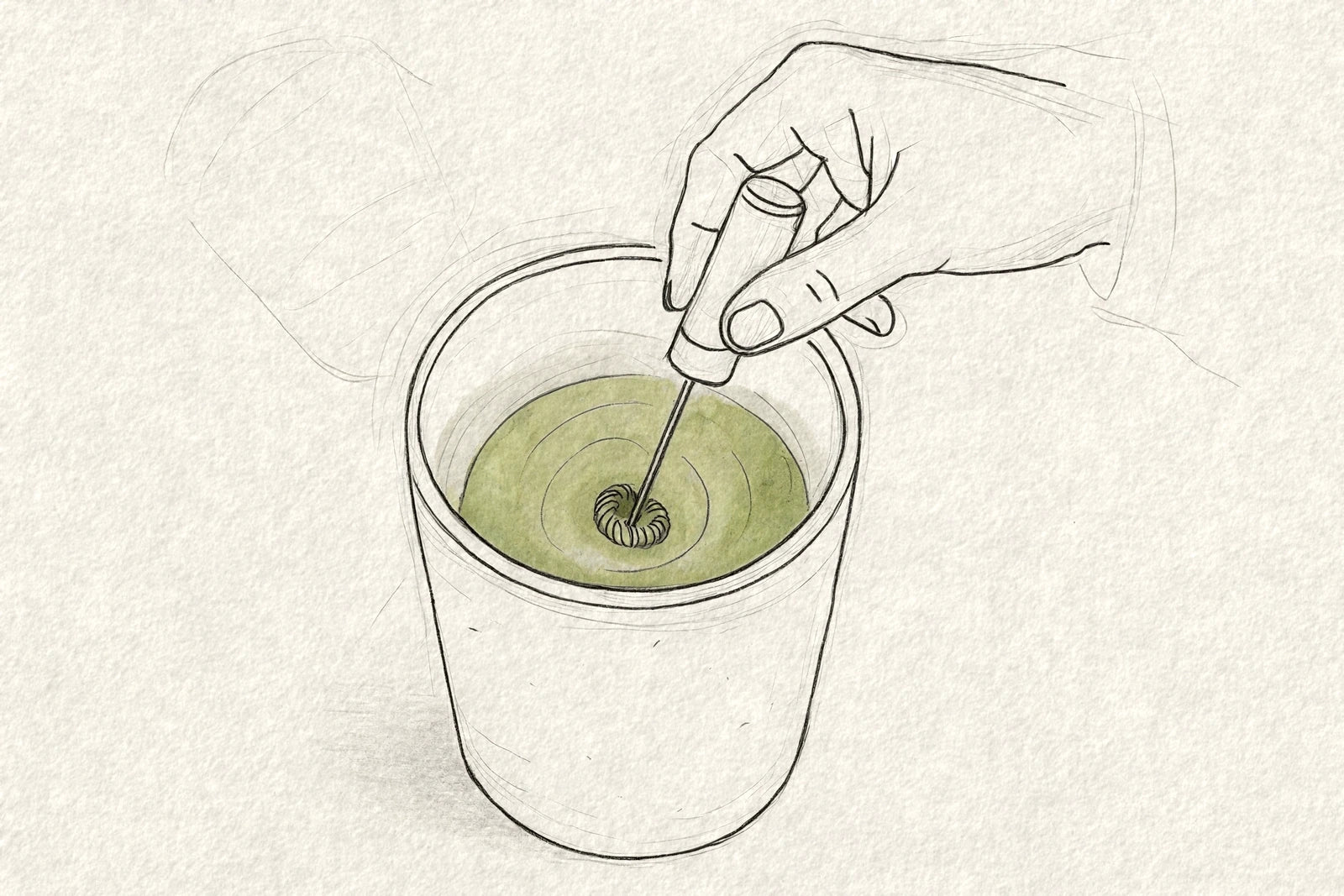
A milk frother makes matcha quickly, as long as the cup is tall enough.
- Add the matcha. Put matcha in a tall, narrow cup, in the same ratio as the bowl, 2g to 60ml of water.
- Pour in the water. Pour in the water at about 80°C. Boiled and rested for a minute is enough.
- Sink it, then switch on. Lower the frother deep into the liquid first and only then switch it on, until the powder has spread and foam stands on top.
- Switch off, then lift out. Turn the frother off before you lift it out. Otherwise it splashes.
The minute's wait is worth it, because water that is too hot makes matcha bitter.
For a latte, use the usual amounts, 3g of matcha in 60ml of water and 60ml of milk. Hot, the milk goes in after, iced, it goes into the glass first. Oat, soy or dairy, which kind of milk works in the latte is a matter of taste.
A frother is quick, but not a full replacement for a whisk. The foam comes out coarser, and in a shallow bowl it splashes.
Why does matcha clump without a whisk?

Clumps are a property of the powder, not a sign of bad matcha. They form on their own in the dry powder and don't dissolve in hot water, as a tea house in Kyoto explains too.
Pour hot water over dry powder all at once and the outside cakes together while dry powder stays trapped inside. That is why a little water goes in first, the 20ml up to the line in the shaker. The table shows what goes wrong most often without a whisk.
| Problem | Cause | How to avoid it |
|---|---|---|
| Clumps in the shaker | All the water went in at once | Water up to the line first, 20ml, then top up |
| Protein shaker lid pops open | Hot or warm water in the closed shaker | Shake with room-temperature water, then top up hot in a cup |
| Splashing when frothing | A shallow cup, or switched on before sinking it | A tall cup, sink first then switch on, and switch off before lifting out |
| Dry clumps in the cup | Hot water poured over the dry powder all at once | A little water first, then the rest |
Is matcha as frothy without a whisk?
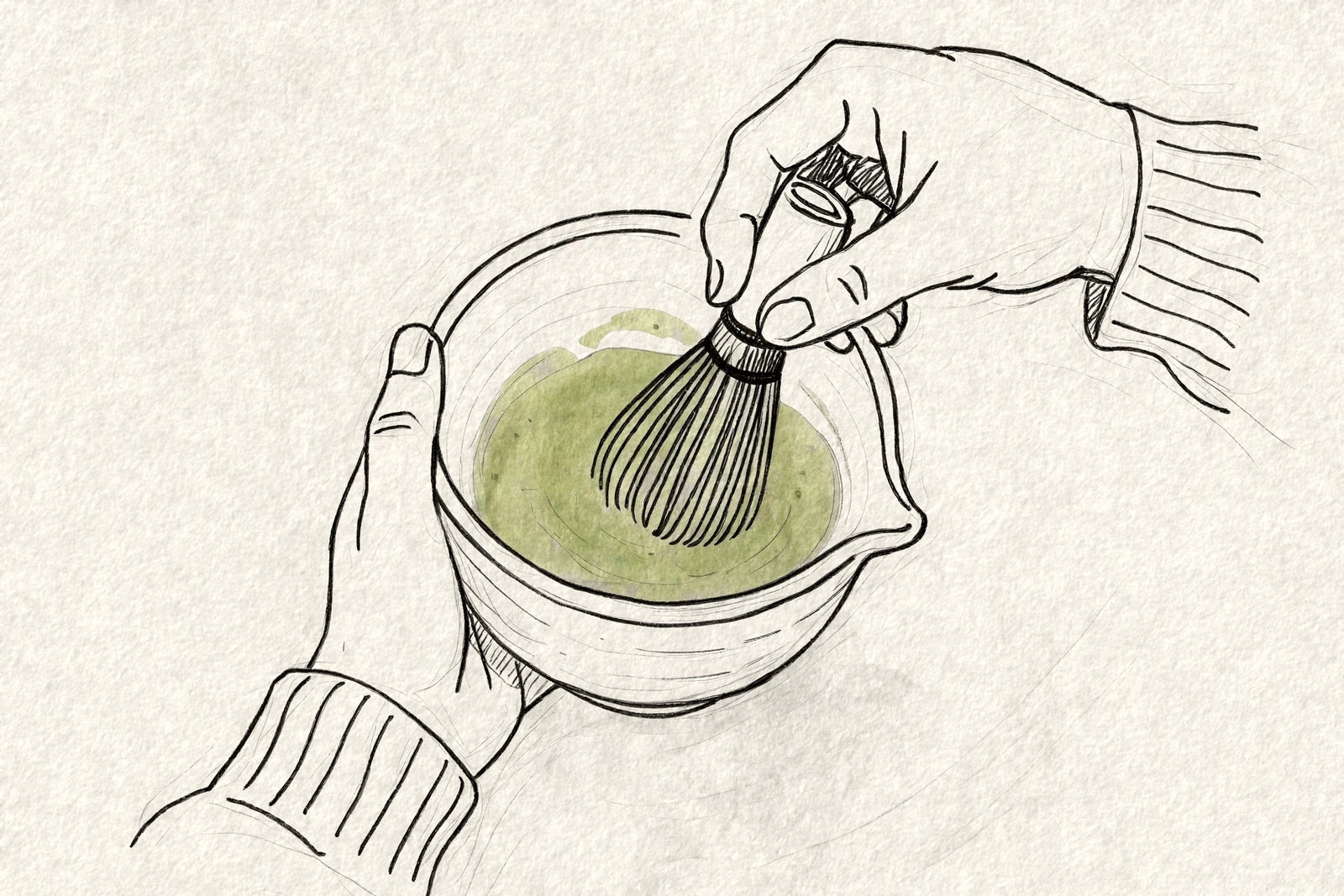
Not quite. A whisk gives the finest foam, and a shaker or frother makes it a little coarser. For an everyday cup and for lattes it is plenty. Above all it shows that the powder has spread evenly through the water.
A whisk moves fast from the wrist and glides slowly over the surface at the end, which is why its foam is so fine. For every day the shaker does the job, and if you want the finest foam, it is worth learning how to make matcha in a bowl with a bamboo whisk.
FAQ
What can you use instead of a matcha whisk?
Three things work well, a small shaker, a protein shaker with a spring ball and a milk frother in a tall cup. The protein shaker only takes room-temperature or cold water. The handiest alternative is the shaker.
Can you shake matcha instead of whisking it?
Yes. Shaking spreads the powder through the water just as whisking does. In the MOKU-AN shaker the fin in the base does the job of the whisk tips. The foam stays a little coarser than with a whisk.
How long do you shake matcha for?
In the shaker, 20 seconds is enough, because it is small enough to drive from the wrist. In a protein shaker, shake until the powder is evenly spread. A milk frother isn't shaken, it simply runs until the powder has spread.
Why do you need to froth matcha?
Matcha doesn't dissolve, the fine particles are only spread through the water. Frothing spreads them evenly, and the foam shows it has worked. The particles then settle again, so drink the matcha straight away.
Can you stir matcha with a spoon or a regular whisk?
You can, but it isn't ideal. A spoon moves the powder too slowly and clumps are likely to stay. A kitchen whisk has far fewer wires than a matcha whisk, which a tea house in Kyoto sells with 80 or 100 tines, and the foam comes out coarser. You are better off with a small shaker, a protein shaker or a milk frother.
More on preparing matcha
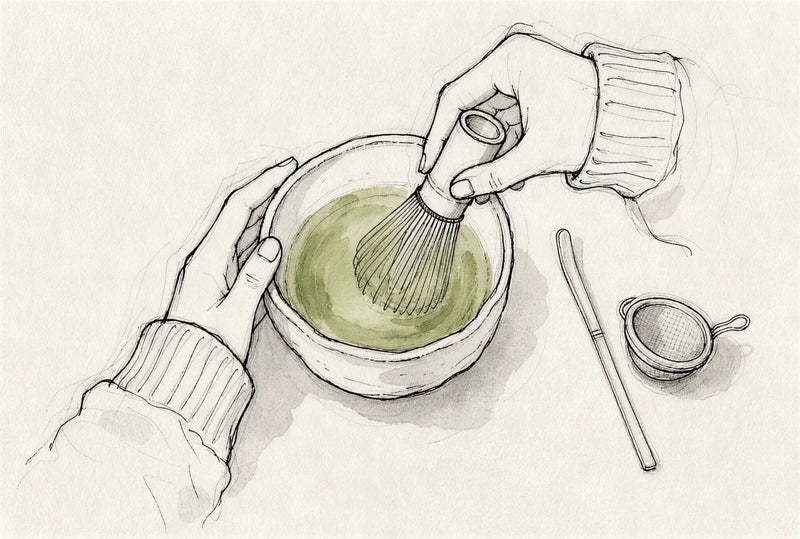 How to make matcha at home, step by step2g of matcha, 60ml of water at 80°C, 15 seconds of whisking. How to make matcha at home with a bamboo whisk, straight or as a latte.
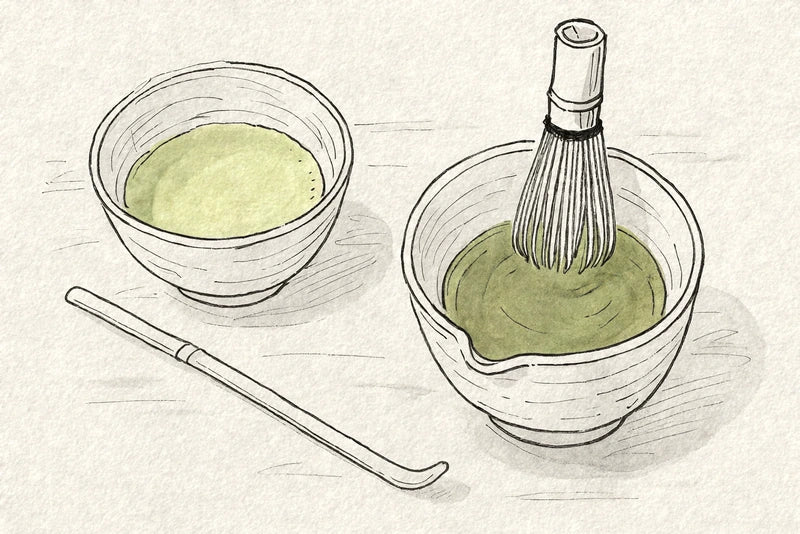 Usucha vs koicha, how thin and thick matcha differUsucha is thin matcha, 2g in 60 to 70ml, whisked to a foam. Koicha is thick, 4g in 30 to 40ml and kneaded slowly. Tea house amounts, koicha step by step.