
Usucha vs koicha, how thin and thick matcha differ
Usucha and koicha are the two classic ways to prepare matcha, and the difference is the amount. For usucha, thin tea, you whisk 2g of matcha with 60 to 70ml of water at 80°C into a foam. For koicha, thick tea, you slowly knead twice the powder with just 30 to 40ml into a glossy, syrupy tea. The bowl you know from how to make matcha with a whisk is usucha.
What is the difference between usucha and koicha?
Usucha is thin matcha and koicha is thick matcha, and the amounts of powder and water are what make it so. The names say the same thing, "thin tea" and "thick tea". Japanese also has its own word for each movement, "tateru", to whisk, for usucha and "neru", to knead, for koicha. Usucha is whisked, koicha is kneaded.
Usucha vs koicha at a glance
| Usucha | Koicha | |
|---|---|---|
| Meaning | thin tea | thick tea |
| Movement | whisked briskly in an M shape | kneaded slowly, no foam |
| Texture | light, fine foam | thick and glossy, like runny honey |
| Flavour | fresh, a light bitterness | dense umami, hardly any bitterness in a good matcha |
| In the tea ceremony | each guest gets their own bowl | one bowl shared between several guests |
| Matcha quality | any good drinking quality | higher grades |
| Caffeine per bowl | about 64mg | about 128mg |
Caffeine according to the Standard Tables of Food Composition in Japan (2020, 8th revised edition, MEXT).
Because a bowl of koicha holds more powder and less water, texture and flavour differ a lot too. Matcha's flavour profile of umami and bitterness stays the same, it just shows up at a different density. Usucha tastes fresh with a light bitterness, koicha dense in umami, like cocoa mass.
Usucha vs koicha ratio, how much matcha and water?
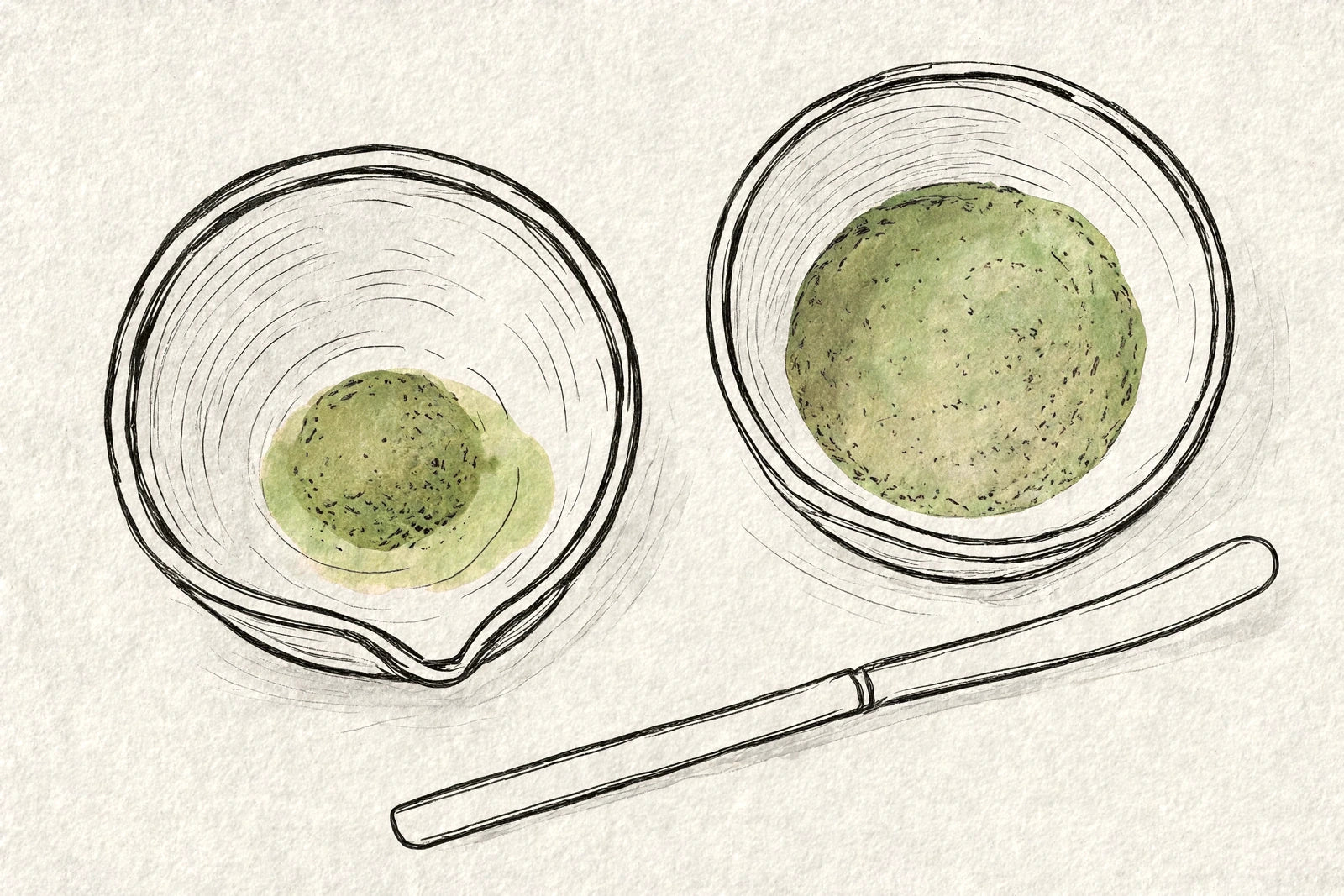
For koicha you use twice the matcha and half the water of usucha. A bowl of usucha takes 2g in 60 to 70ml. A bowl of koicha takes 4g in 30 to 40ml. Both use water at 80°C. That is the matcha to water ratio in a nutshell.
Amounts for one bowl
| Usucha | Koicha | |
|---|---|---|
| Matcha | 2g, about one level teaspoon | 4g, about two level teaspoons |
| Water | 60 to 70ml | 30 to 40ml |
| Temperature | 80°C | 80°C |
| Time | whisk for 15 seconds | knead slowly until the tea turns glossy |
The range in the water comes from the tea houses themselves. For usucha a tea house in Kyoto uses 60ml and one in Uji 70ml. For koicha the same two use 30 and 40ml. On the powder they agree. The Urasenke tea school gives about 3.75g per person for koicha. For usucha it is about 1.8g, so again roughly half.
On temperature the two tea houses agree, 80°C for usucha and koicha alike. For usucha we stay at 2g in 60ml, as in all our recipes for straight matcha.
How to make koicha, step by step
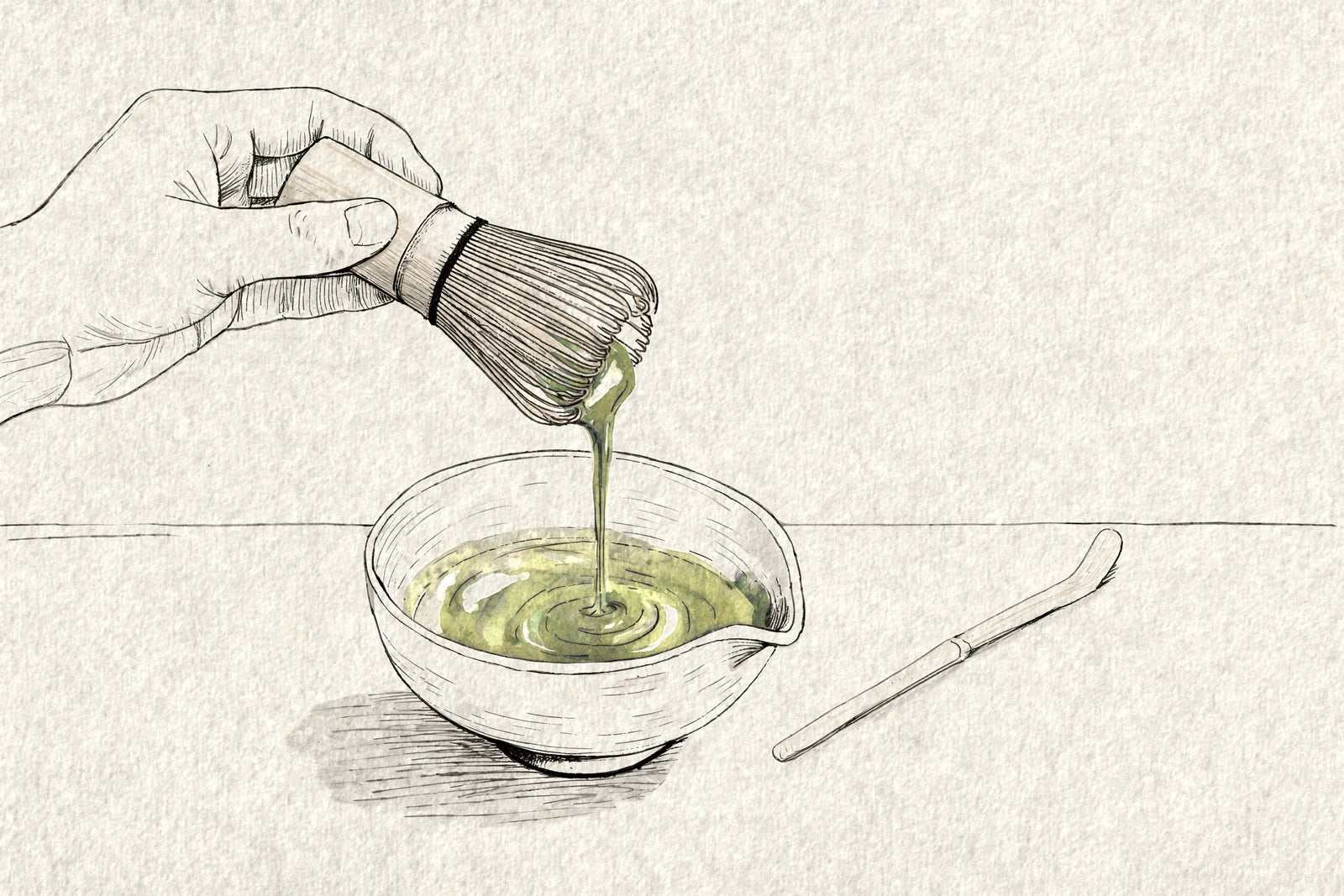
With koicha the rule is knead, don't whisk. The whisk stays on the bottom of the bowl and pushes the powder slowly through the water until a glossy, syrupy tea forms. You need 4g of matcha, 30 to 40ml of water at 80°C, a bowl, a bamboo whisk and a tea strainer.
- Prepare. Warm the bowl with hot water, pour it out and dry the bowl. Dip the bristles of the whisk briefly in the hot water too.
- Sieve. Sift the 4g of matcha through a tea strainer into the bowl. Koicha clumps easily, and sieved powder makes a smoother tea.
- A little water. Pour in only about 20ml of water at 80°C to begin with.
- Knead. Set the bristles on the bottom of the bowl and knead slowly from left to right. No foam should form.
- Add more. Add 10 to 20ml of water so that it comes to 30 to 40ml in total, and keep kneading until the tea has the thickness you want.
- Finish. The koicha is ready when it is a vivid green, glossy and thick enough to flow slowly.
Tea houses go about it in different ways. A tea house in Kyoto pours in all 30ml at once and kneads slowly for 15 seconds. Fukujuen pours in 20ml first and adds 15 to 20ml afterwards. We pour in two portions because it makes the thickness easier to control. You don't need a separate whisk for this.
Which matcha is good for koicha?
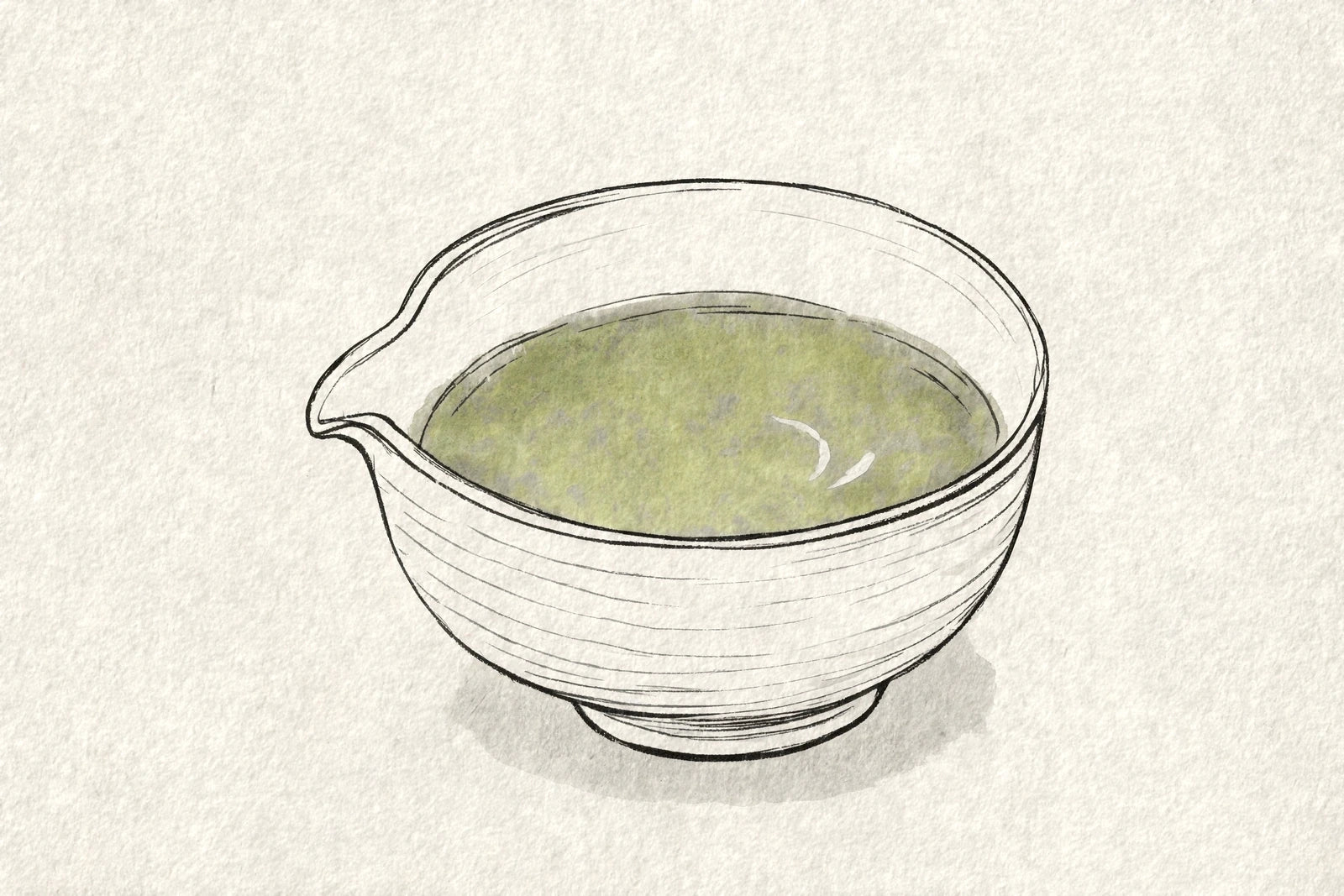
A matcha of higher quality is the one for koicha. The thicker the tea, the more clearly you taste the quality. A tea house in Uji explains that with simpler grades bitterness and astringency come to the front at this density, while the higher grades suit koicha and usucha alike.
Among the types of matcha, usucha and koicha are not grades of their own, they describe how the tea is prepared. In western shops the tin usually carries the label ceremonial grade, while in Japan tea specialists also sort matcha by whether it is meant for koicha. A tea house in Kyoto gives a rule of thumb, "mukashi" in the name for koicha and "shiro" for usucha, though it differs from one tea school to another.
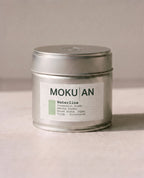
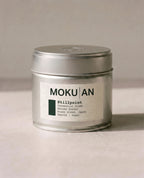
At MOKU-AN you can make koicha with Waterline, using 4g in 30 to 40ml. Stillpoint works for koicha just as well.
When do you drink usucha and when koicha?
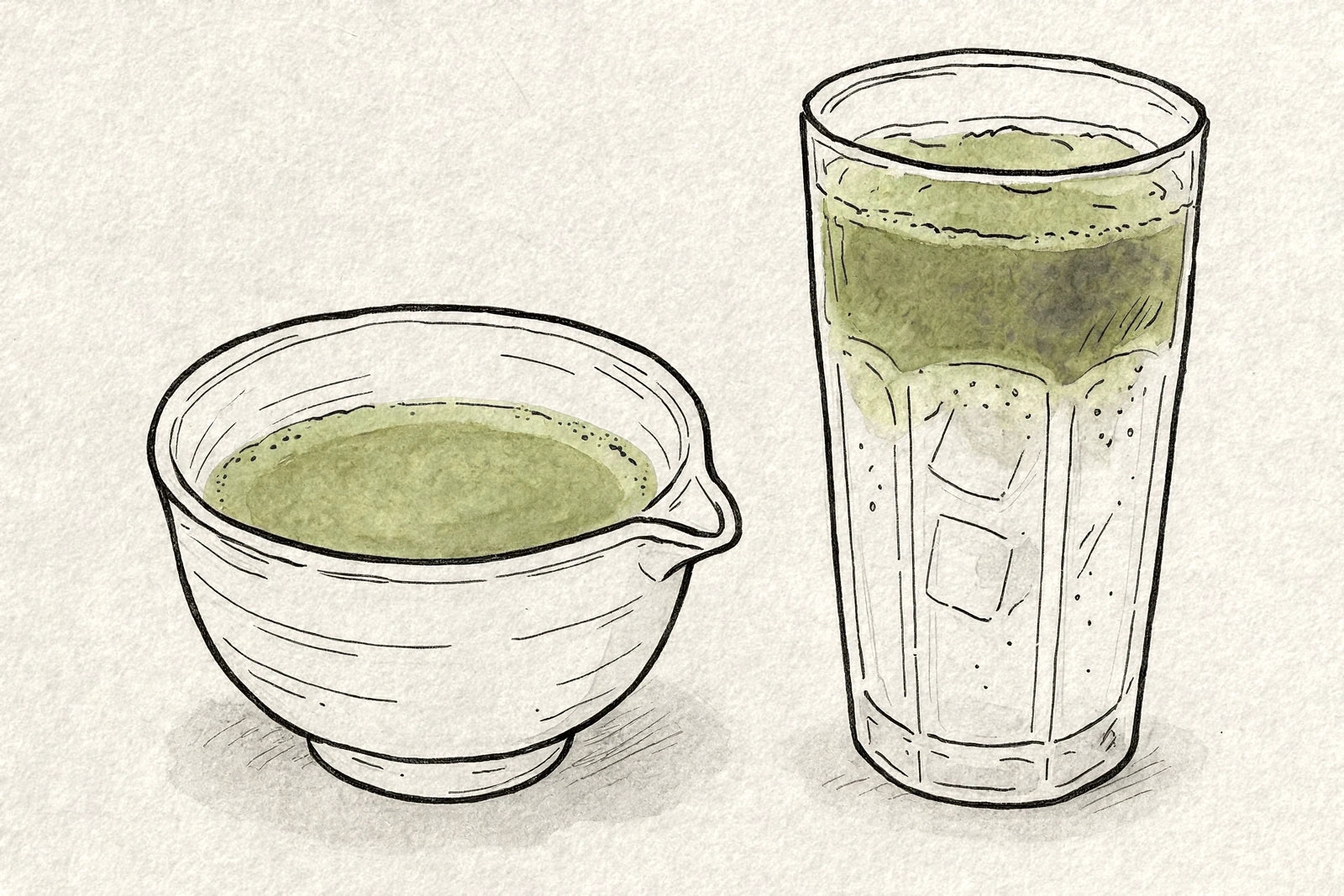
In the tea ceremony koicha is served in one bowl shared between several guests, and the mood is formal. Each guest gets their own bowl of usucha, and the mood is more relaxed. For every day it is usucha, and it works without a whisk too. Usucha for every day, koicha for a special moment.
The base of a matcha latte is whisked from 3g in 60ml of water. That makes it a little stronger than a usucha, so it doesn't get lost next to the milk. A bowl of koicha, 30 to 40ml, would fit in an espresso cup. You drink it in small sips.
If you are new to this, start with the classic bowl of 2g in 60ml and try koicha later.
FAQ
Can you make koicha with any matcha?
You can, but simpler grades turn bitter quickly at this thickness. That is why tea houses in Japan recommend the higher grades for koicha and use the simpler ones for usucha.
Do you need a special whisk for koicha?
No. A tea house in Kyoto shows koicha with the same bamboo whisk as usucha. What matters is the movement, kneading slowly on the bottom instead of whisking fast.
Is regular matcha usucha?
Yes. The bowl of 2g in 60ml that most recipes call for is usucha. You mostly meet koicha in the tea ceremony and with enthusiasts who like matcha straight and strong.
More on preparing matcha
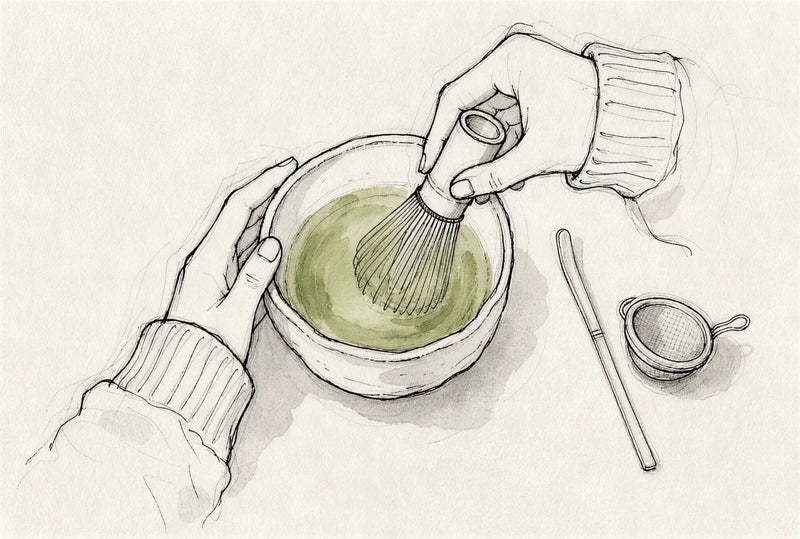 How to make matcha at home, step by step2g of matcha, 60ml of water at 80°C, 15 seconds of whisking. How to make matcha at home with a bamboo whisk, straight or as a latte.
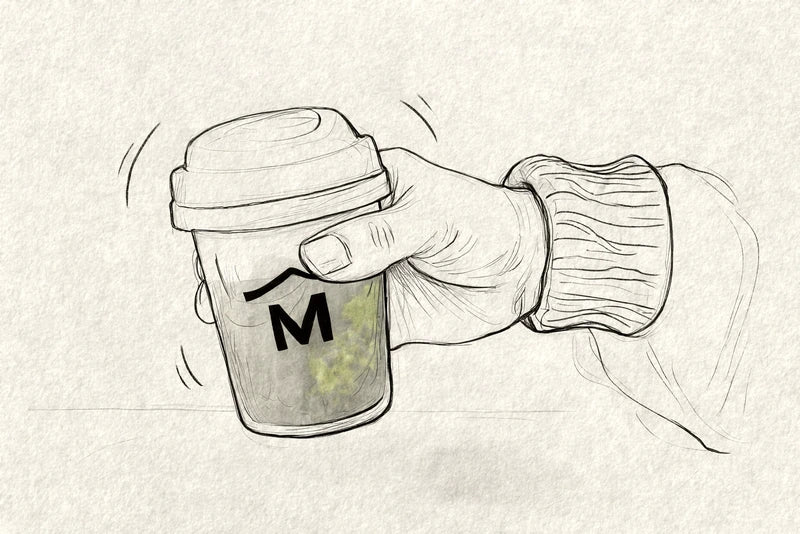 How to make matcha without a whisk, 3 ways step by stepWithout a whisk, shake 2g of matcha with 20ml of water for 20 seconds, then add 40ml of water or 60ml of milk. Plus protein shaker and frother methods.