
How is matcha made? 8 steps from shaded field to powder
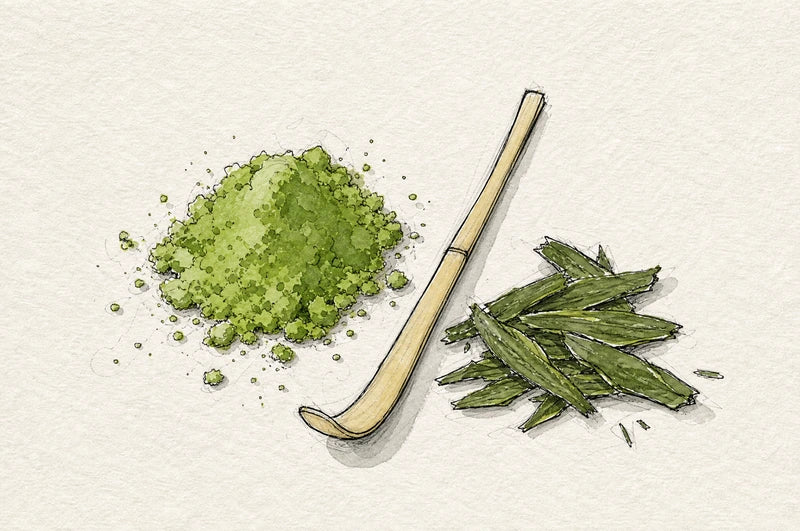
Matcha is made from the leaves of tea bushes kept in shade for about 20 to 30 days before harvest. The young leaves are steamed, dried without rolling and stripped of stems and veins, and only this leaf, tencha, is ground into matcha. Skipping the rolling is what separates matcha from sencha and gyokuro.
In the end you drink the whole leaf, which is what sets matcha apart from other green tea. At home, a bowl starts with 2g whisked in 60ml at 80°C.
What are the 8 steps of making matcha?
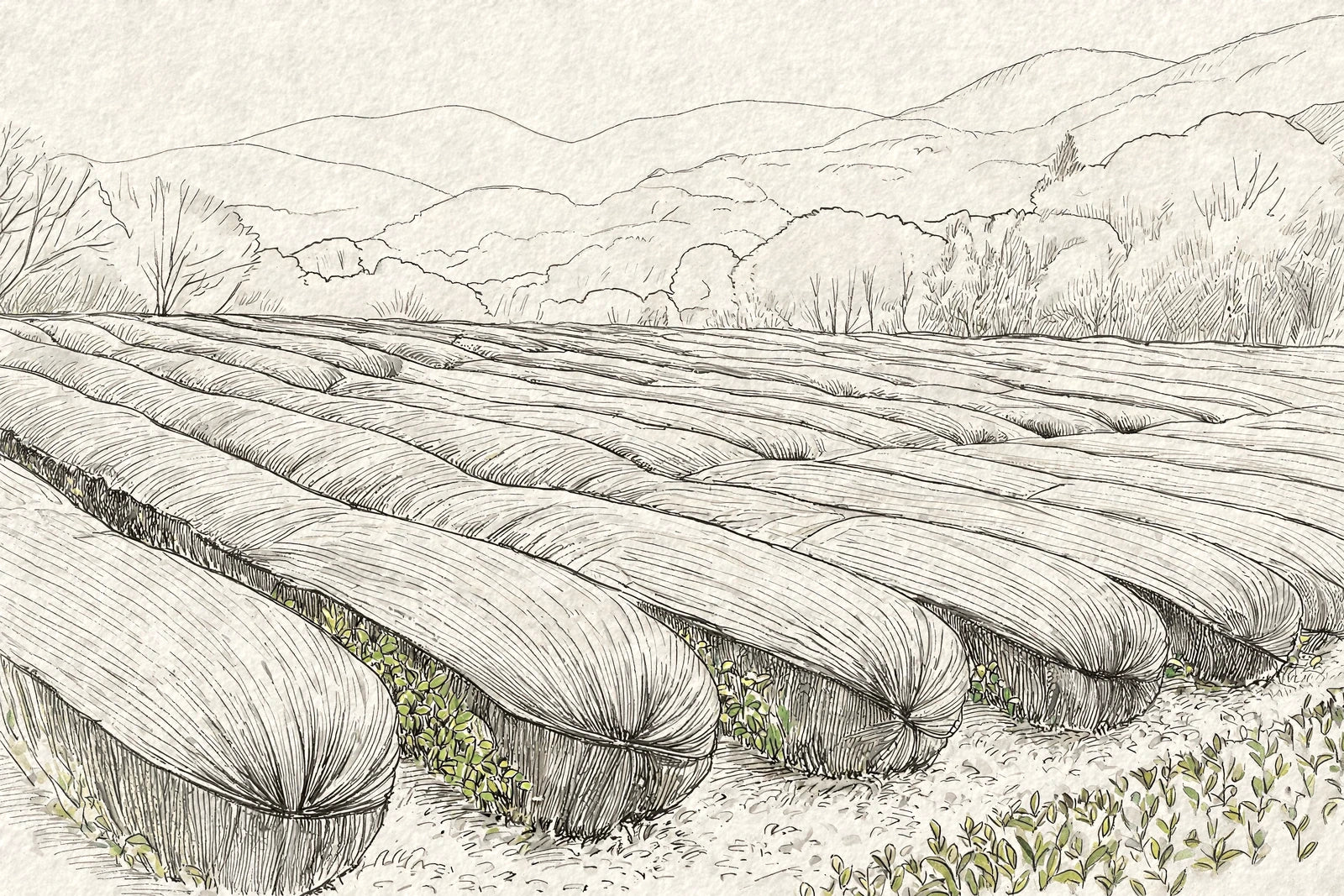
Making matcha takes eight steps, from shade in the field to powder.
- Shading. From April the tea bushes stand under nets or mats for about 20 to 30 days.
- Harvesting. Picking happens mainly in spring, with the best lots picked by hand.
- Steaming. The leaves go into the steam as fresh as possible, so they do not oxidise.
- Drying. They dry without rolling, in hot air in the tencha oven.
- Sorting. The leaves are cut, stems and veins taken out, and the rest sieved. That is tencha.
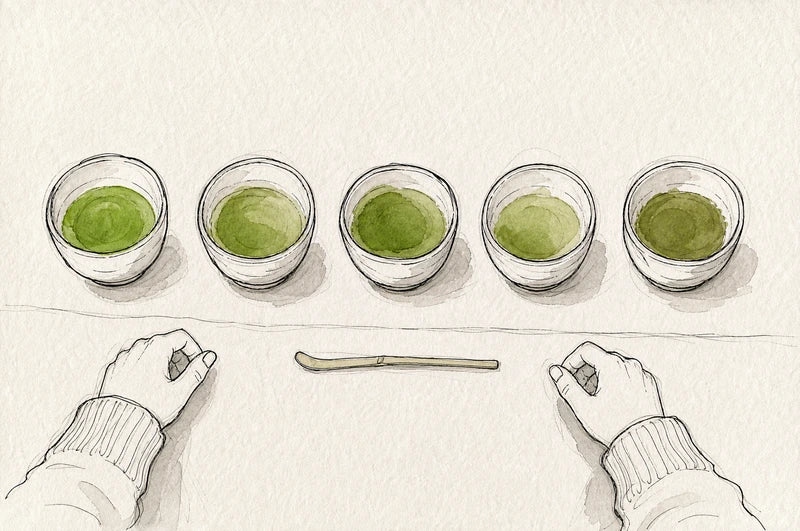
- Tasting and blending. Experienced tasters grade each lot and put them together into one blend.
- Storing. The tencha rests cool and dry until it is needed.
- Milling. Only then is it milled into a powder of a few micrometres.
Matcha differs from other green tea in two places, the shade before harvest and the drying without rolling.
Why is matcha shaded, and how much light is blocked?
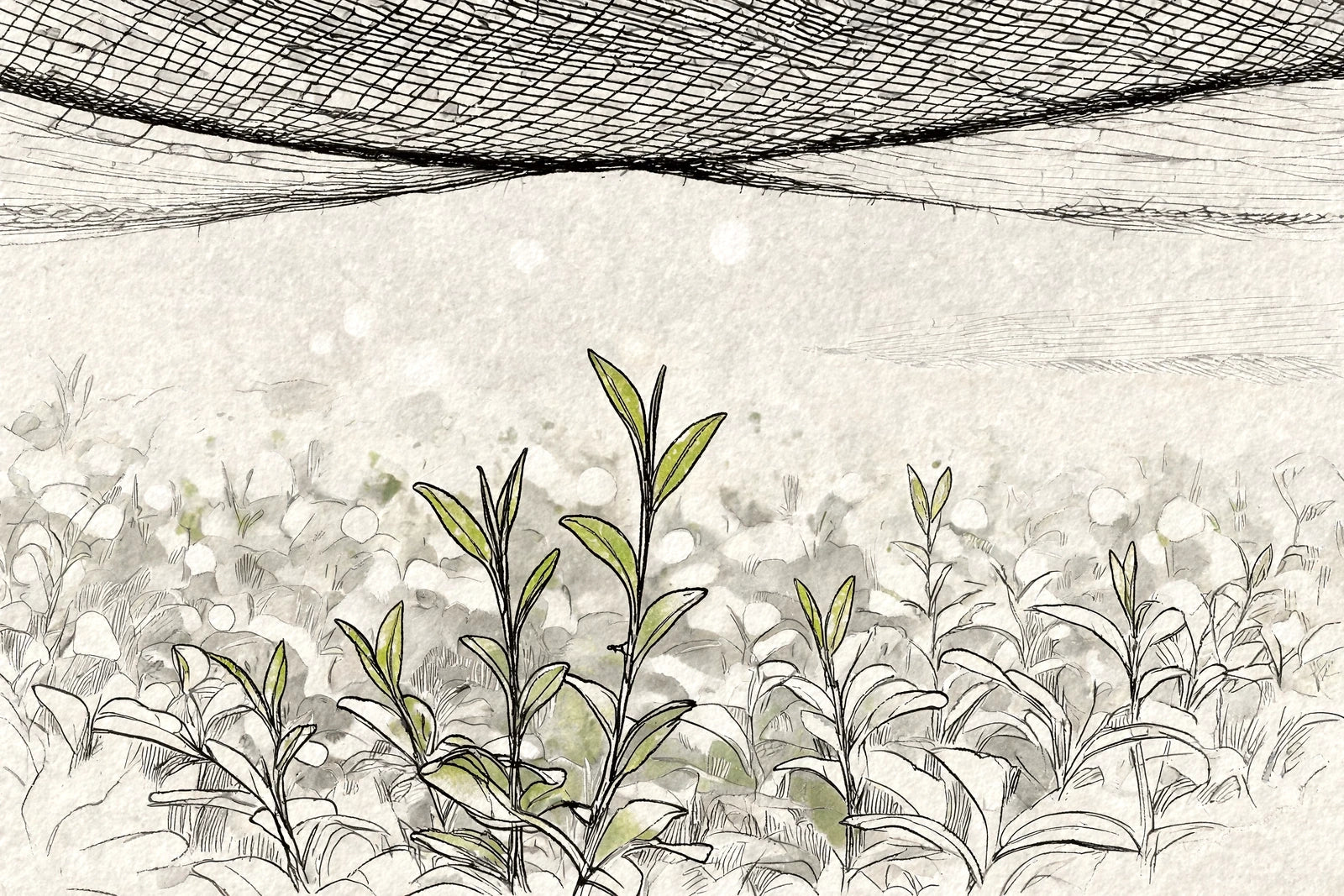
How matcha is grown starts with shade. Shading begins in April, at the latest when the new shoots open their first one or two leaves. The bushes then stay covered for about 20 to 30 days until harvest.
Without sun, the amino acids in the growing leaf fall more slowly and the catechins rise more slowly. The leaf keeps more umami and less bitterness, two sides of how matcha tastes, and it develops the scent of shaded leaves.
How dark it gets under the net is a matter of degree. A guide from Japan's agricultural research body (NARO) gives a black net with 85% shading as its example. A trial in Shizuoka compared what stronger shading changes.
| Shading | Yield of the first harvest, kg per 1,000m² | Scent and taste in the test |
|---|---|---|
| 85% | 751kg | Reference value |
| 95% | 665kg | better than at 85% |
| 98% | 607kg | better than at 85% |
Trial by a public research centre of Shizuoka Prefecture with the Tsuyuhikari variety, shaded directly on the bushes.
At 95 and 98%, scent and taste scored better than at 85%, but the harvest was smaller. For Tsuyuhikari, the centre considered 95% or an early start of shading useful to make the most of the variety's good colour, and 85% or a late start where yield weighs more. How much shade a field gets is therefore a trade-off between quantity and quality.
How are tea fields shaded, on a trellis or directly on the bushes?
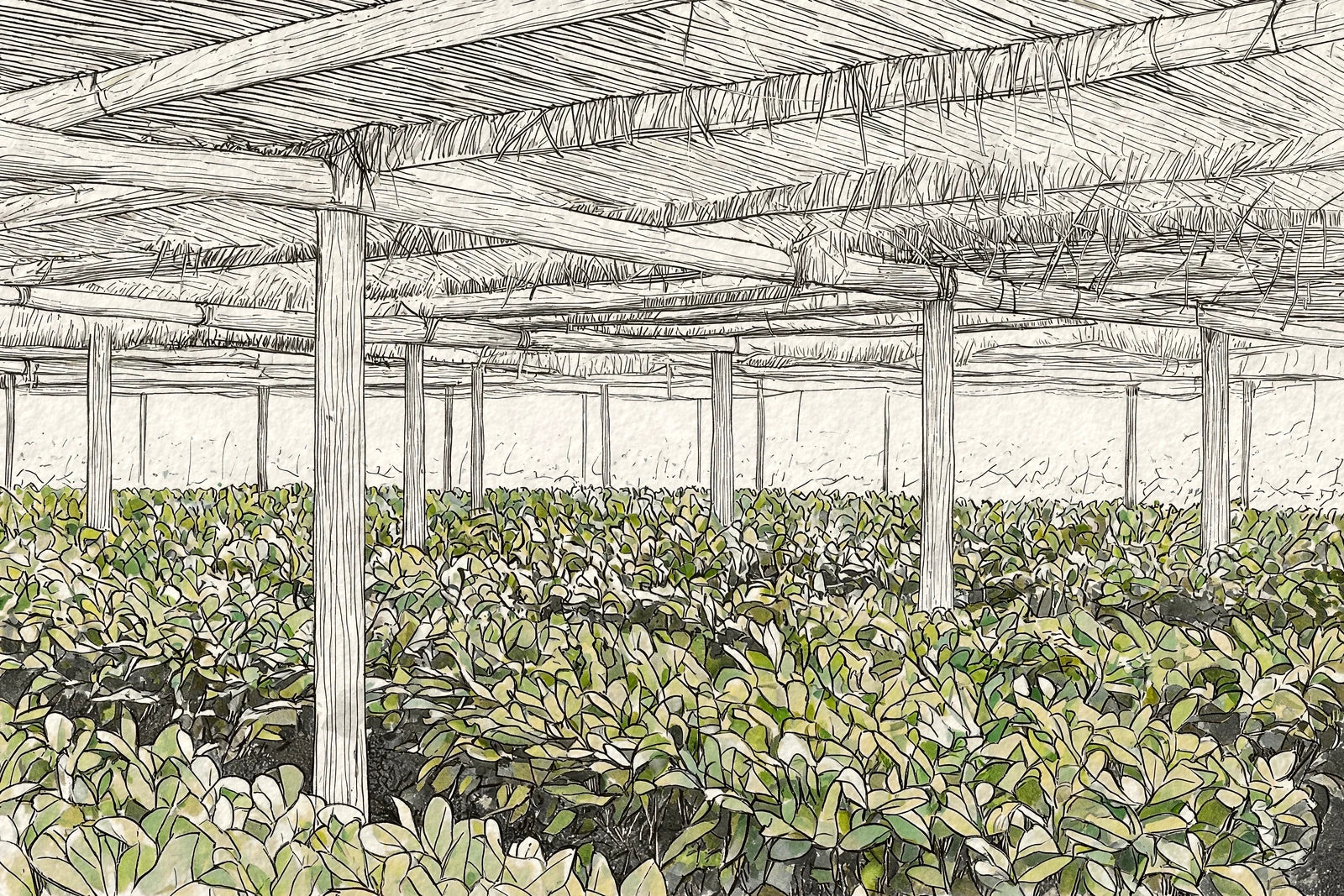
With tana, a trellis about 2m high is built over the field. Reed screens and straw lie on top, today often a black synthetic net as well. It is the traditional way for high-grade tencha and gyokuro, and building it is expensive.
With jikagake, the black net lies directly on the tea bushes. The guide gives 85% shading for it and 20 days or more for the first harvest. According to the research centre in Shizuoka, this is the usual method for tencha there.
Both ways give shade, and they differ in effort.
| Tana, trellis | Jikagake, directly on the bushes | |
|---|---|---|
| Structure | trellis about 2m high over the field | net lies directly on the tea bushes |
| Material | reed screens and straw, today also black synthetic net | black net, 85% shading in the guide |
| Effort | high cost to build | no trellis needed |
| Where common | traditionally for high-grade tencha and gyokuro | the usual method for tencha in Shizuoka |
When and how are matcha leaves harvested?
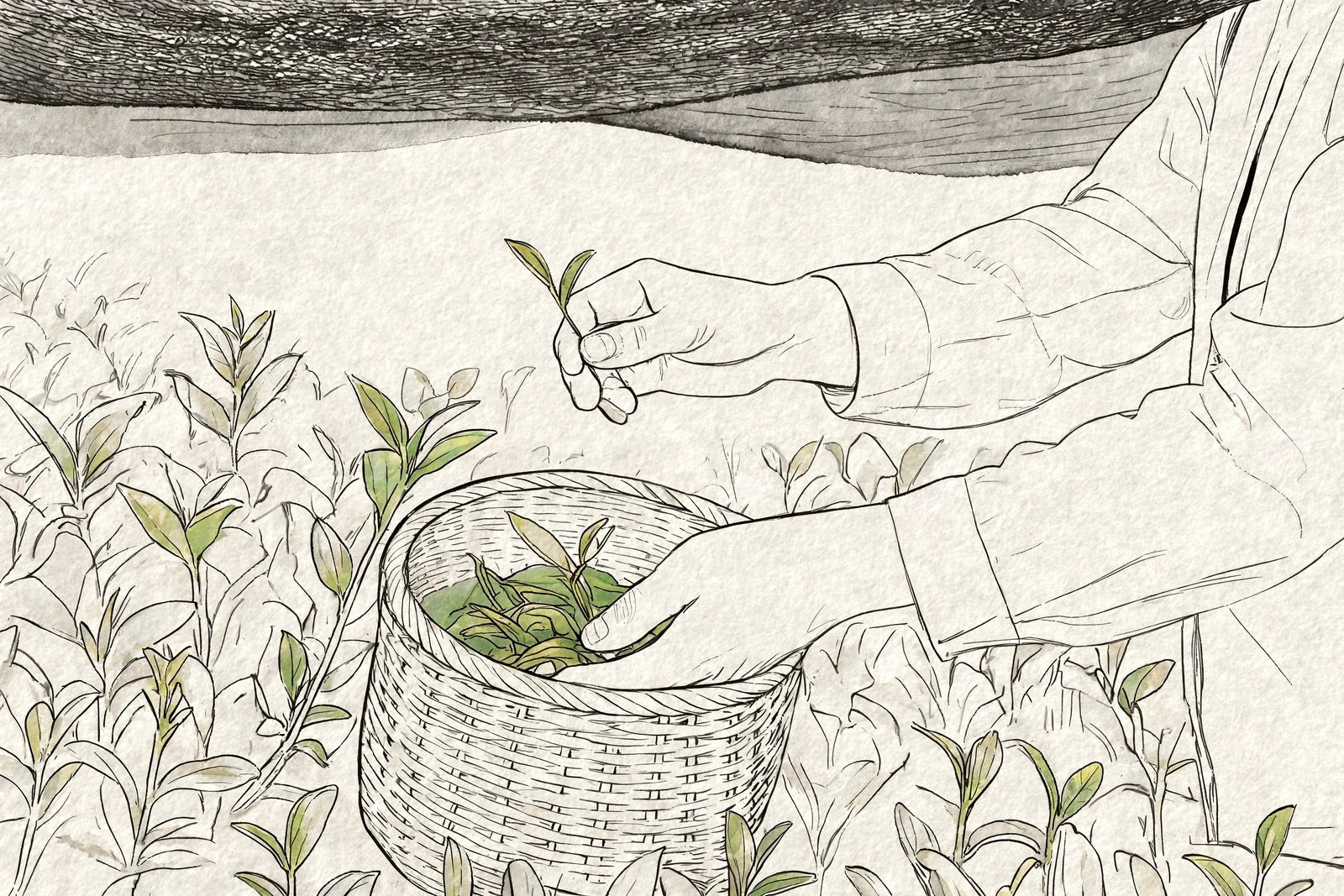
Matcha comes mainly from the first harvest in spring. In Nishio in Aichi Prefecture, according to the local tourism association, the fields are covered from mid-April and picked by hand in mid-May.
The best lots are picked by hand, and the rest are harvested by machine. A tea shop in Uji counts hand-picked tencha as high-grade. There is also a second harvest of tencha, as statistics from Japan's agriculture ministry show.
Length of shading, time of harvest and hand picking are separate choices, and a tea shop combines them differently for each blend. A ceremonial grade matcha is therefore not automatically hand-picked.
What is tencha, and why is it not rolled?
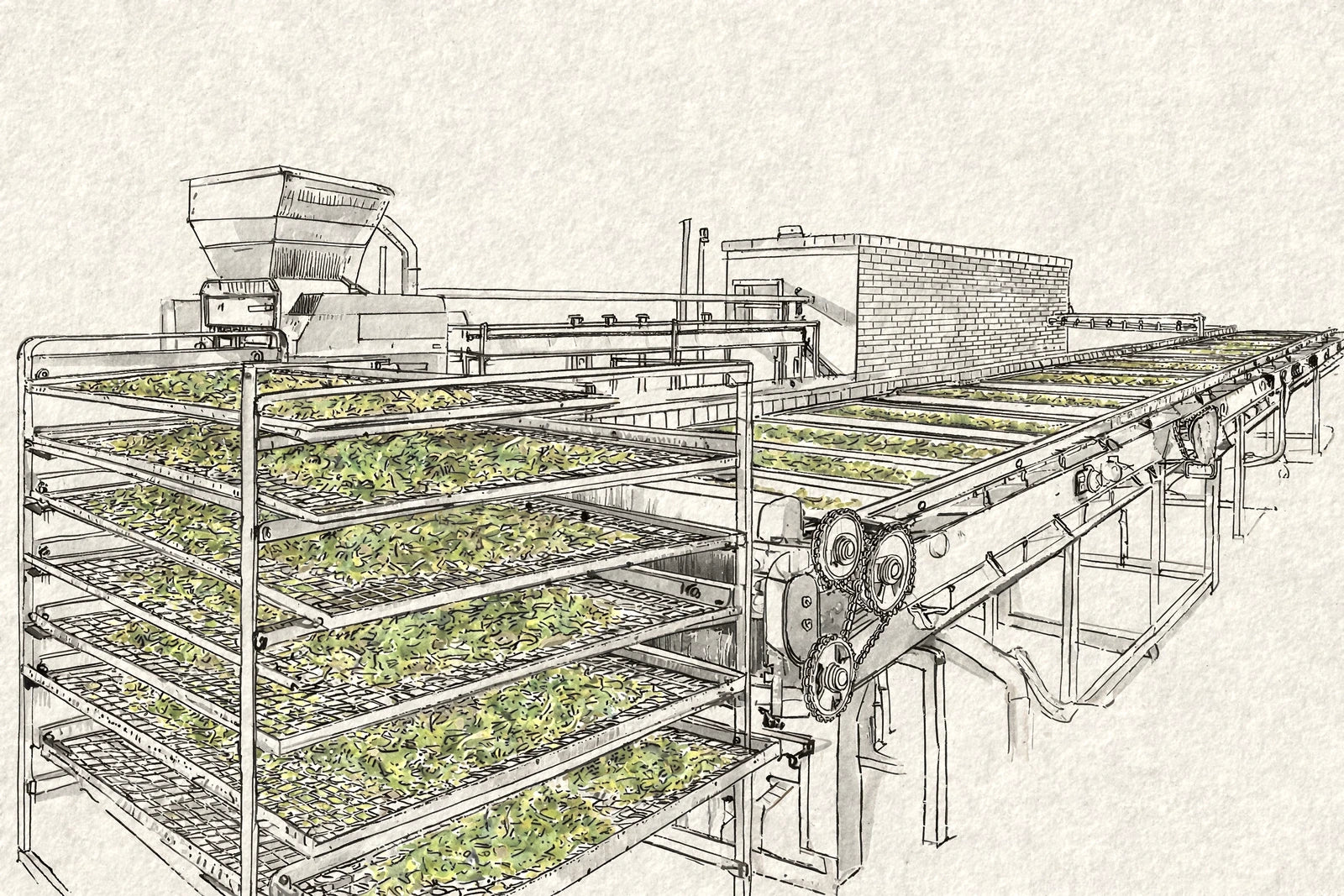
Tencha is the leaf grown in shade, then steamed and dried without rolling. Steaming happens as fresh as possible after picking. The steam stops the enzyme that would otherwise oxidise the leaves, and the green stays. If the leaves oxidise instead, the result is black tea or oolong.
Instead of being rolled, the leaves dry flat in hot air, in the tencha oven. By the definition of the Japanese tea association, the leaves usually run through a drying chamber on three to five conveyors stacked on top of each other and dry in radiant heat and hot air. Sencha is rolled while it dries, and gyokuro, which grows in shade like tencha, is rolled too.
Tencha needs its own equipment. Some growing regions such as Nishio and Kagoshima have set themselves up for it. In Nishio, according to the local tourism association, more than 96% of the tea is tencha. In Kagoshima, the largest producer, one grower has its own plant for it.
How is tencha sorted and blended?
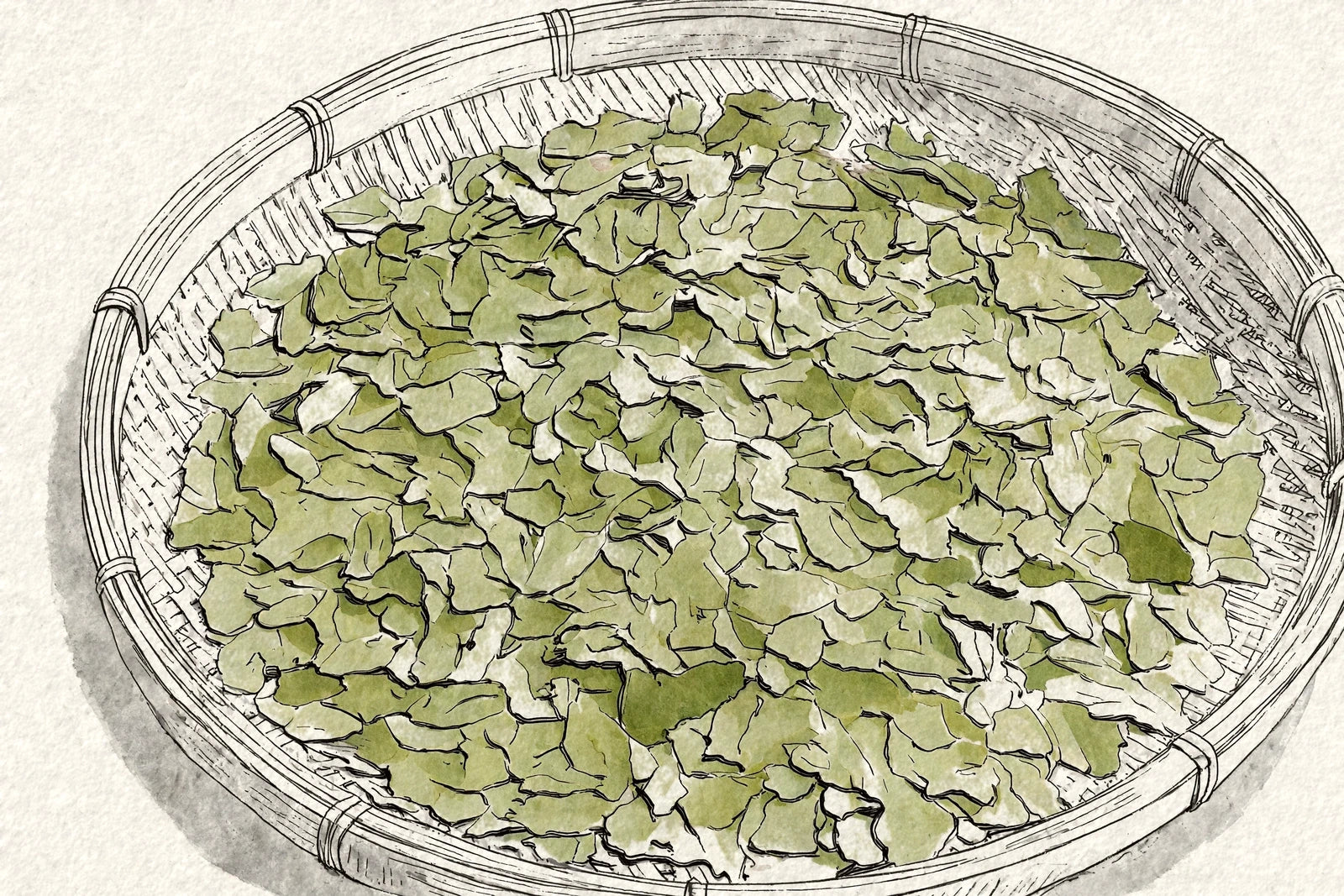
Freshly dried, coarse tencha holds about 3 to 4% water, according to the tea research institute of Saitama Prefecture. Four steps follow.
- Cutting. The coarse tencha is cut into smaller pieces.
- Separating. Stems and veins are taken off the leaf.
- Sieving. A sieve takes out powder that is too fine.
- Colour sorting. A machine sorts by colour and, where needed, picks out leaves with a pale underside and leaves that have turned yellow.
Older leaves that are not young shoots are taken out here too. A tea shop in Uji describes how experienced tasters grade each lot in a room of their own before it is put together into one blend.
In blending, the tea house balances lots from several tea gardens so that a blend tastes the same every year.
When is tencha ground into matcha powder?
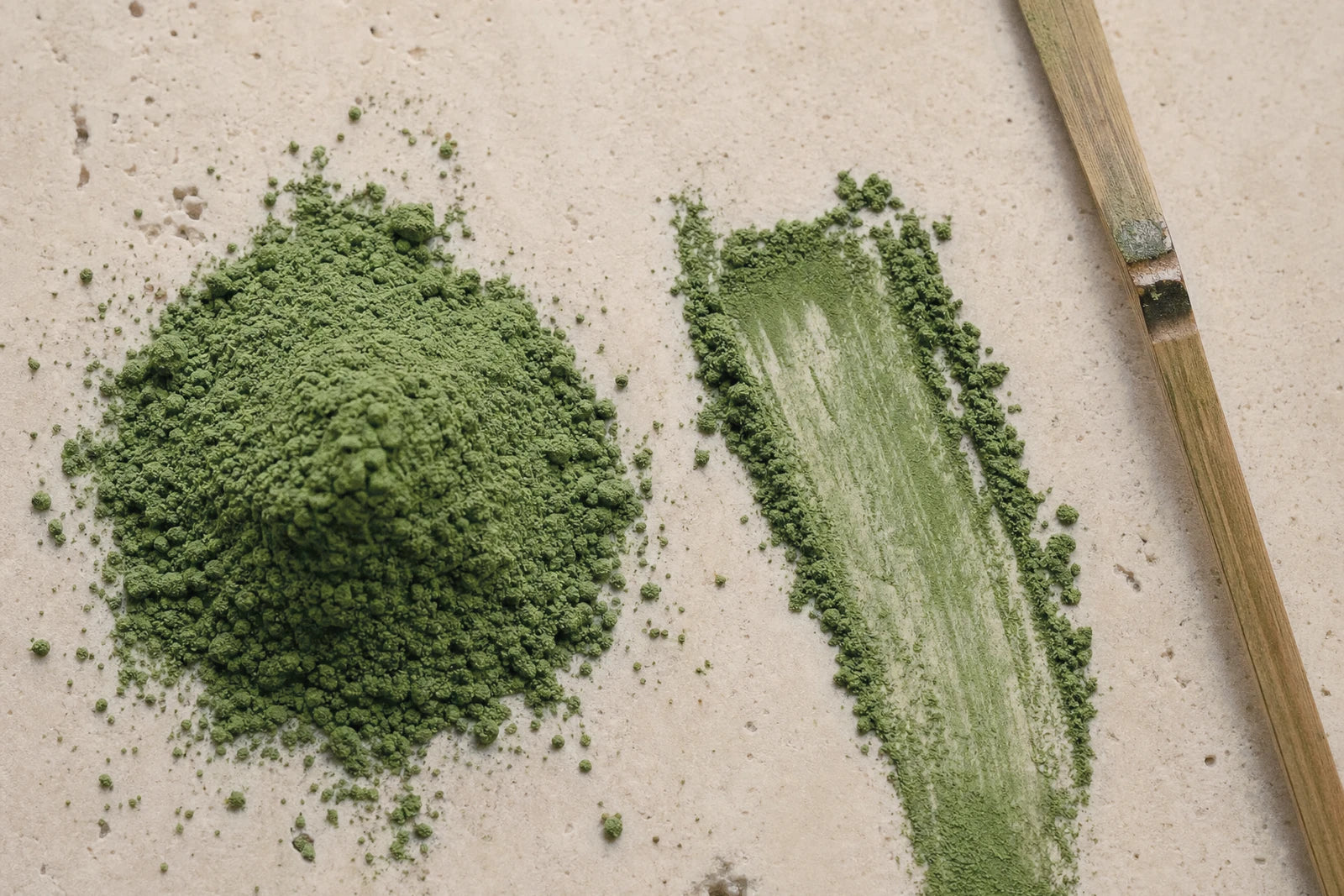
Grinding only happens when matcha is needed. Until then the finished tencha is stored as a leaf, cool and dry. In Nishio it rests at -5 to -10°C, according to the tourism association, and gets a last drying and its blending before milling.
As a powder, tea loses its scent faster, so the leaf waits. It is ground to particles of a few micrometres. What decides the matcha is above all the quality of the tencha. The Japanese tea association speaks of grinding in a tea mill and counts other mills with a comparable function as one too, without prescribing a milling method.
At home too, the aroma escapes after milling through air, light and warmth. So store an opened tin cool and dark, and use the matcha up as soon as you can.
What does the process tell you about your matcha?

Colour and umami come from the shade and from steaming right after harvest.
Straight, you whisk 2g with 60ml of water at 80°C. For a matcha latte from our recipe, you whisk 3g with 60ml of water at 80°C and add 60ml of milk.
Our Waterline is blended from tencha from Kagoshima, Shizuoka and Miyazaki, put together by a tea wholesaler in Shizuoka that has traded tea since the late 19th century and is now run by the fourth generation. Stillpoint comes from the same wholesaler.
That is how a shaded leaf in spring becomes the green powder that makes matcha what it is.
FAQ
Which plant does matcha come from?
Matcha is not a plant of its own. Like every green tea it comes from the tea bush Camellia sinensis, and there is no fixed matcha variety. Growing regions in Japan use varieties such as Okumidori or Samidori for tencha, but shading and processing decide the matcha.
Is matcha difficult to grow?
Yes, it takes more effort than ordinary green tea. Shading costs yield, in a trial in Shizuoka about a fifth less at 98% shade than at 85%, and tencha needs its own ovens. More tencha therefore needs more land under shade and new ovens, and that is one of the reasons for matcha shortages.
Is matcha fermented?
No. The leaves are steamed soon after harvest, and that stops oxidation. Without steaming they would oxidise as in black tea or oolong.
What is the difference between tencha and matcha?
Tencha is the leaf, matcha the powder made from it. Tencha is shaded, steamed, dried without rolling and stripped of stems and veins, and only once it is finely ground is it called matcha. As a leaf it keeps its aroma longer, which is why it is only ground as needed.
All articles on matcha knowledge
 What is matcha? What it's made of, origin and typesMatcha is shade-grown green tea, ground whole. Where it is grown, how it differs from sencha and what usucha and koicha are.
 What does matcha taste like? Matcha taste in four wordsWhat matcha tastes like, savoury first, then a short bitter edge and a faintly sweet finish. Four words for any cup, and why it turns bitter or fishy.
 What is ceremonial grade matcha? How Japan judges qualityCeremonial grade matcha is a trade term for matcha to drink on its own, not a Japanese grade. How tea houses in Japan judge quality and when to pay more.
 Matcha caffeine per bowl and latte, compared with coffeeA 2g bowl of matcha holds about 64mg of caffeine. A 3g latte comes to about 96mg. How that compares with coffee and green tea, and what EFSA says per day.
 How to store matcha, fridge or cupboard, and does it go bad?Store opened matcha airtight, dark and cool in a cupboard, not the fridge. What Japanese tea houses advise, and what the best before date really means.
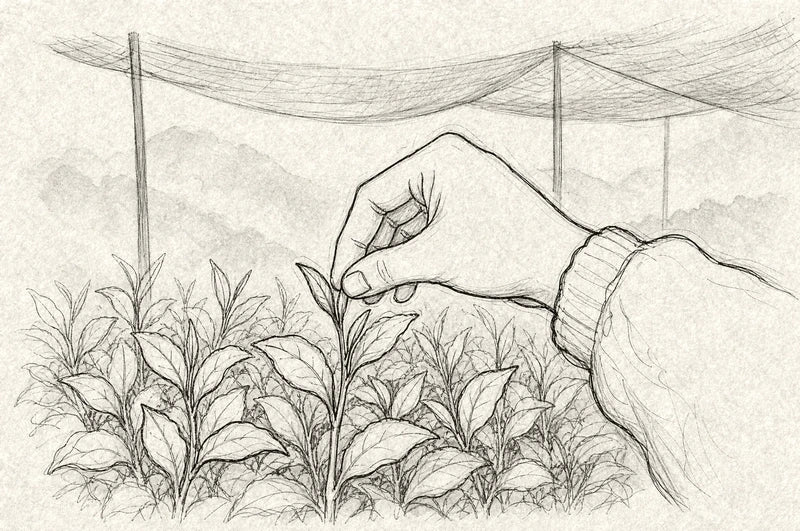 Is Uji Matcha the Best? Japan's Matcha Regions ComparedUji matcha stands for tradition, yet Kagoshima now grows the most tencha, the leaf matcha is ground from. What does origin say about quality and taste?