
The best milk for matcha latte, from oat to dairy and soy
The best milk for a matcha latte is whole milk, and without dairy it is barista oat milk, because both build the firmest foam. Soy milk comes a close second, almond and coconut milk froth with many bubbles and bring their own taste, rice milk stays watery. Whichever milk you choose, a latte still takes 3g of matcha.
In all matcha drinks built on a latte the milk decides foam and sweetness, hot or iced.
What is the best milk for a matcha latte?
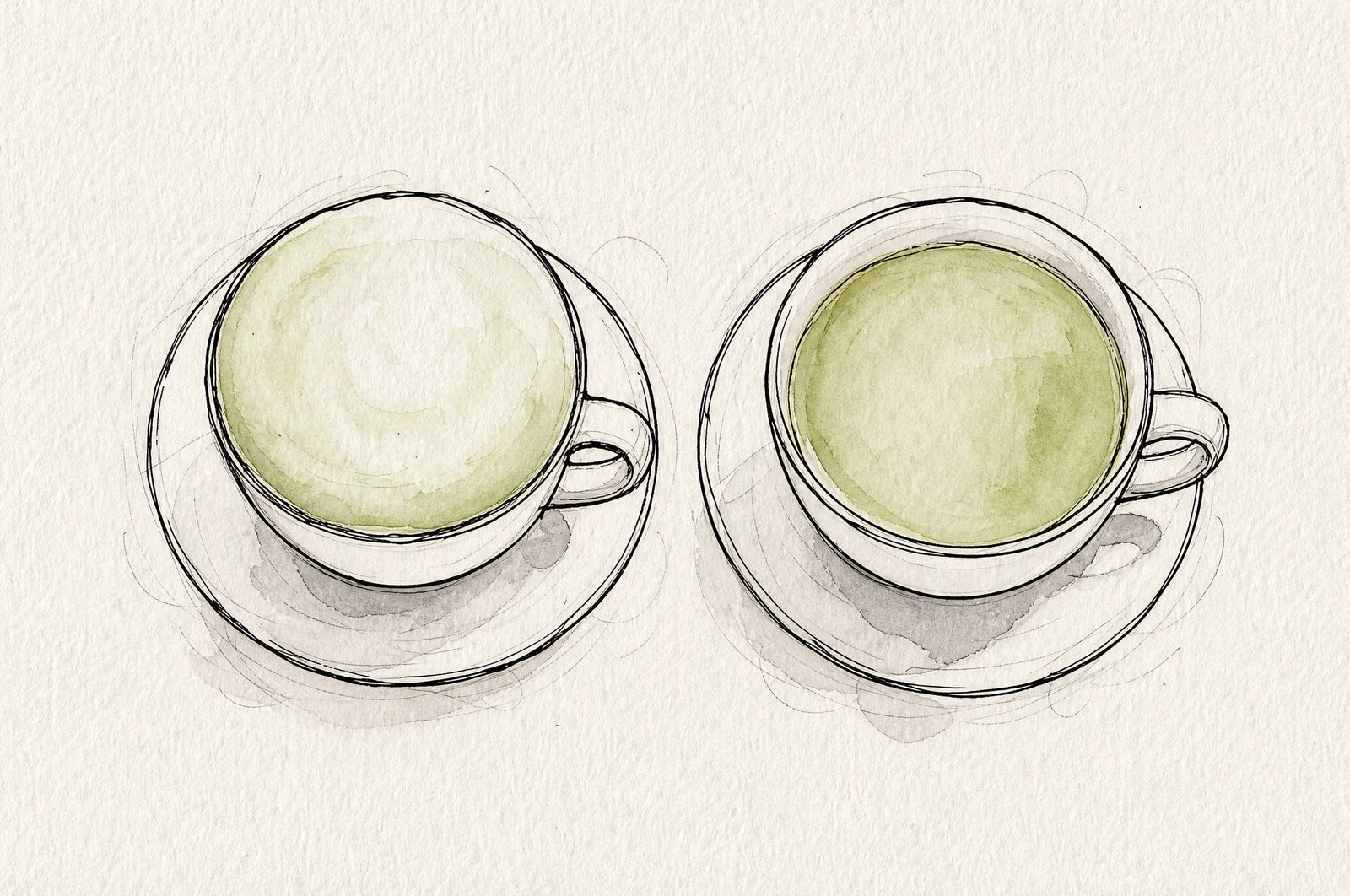
Frothed, the milks differ clearly. The table shows for each milk whether it is the barista version or the regular one.
| Milk (version) | Foam | Taste |
|---|---|---|
| Whole milk | very firm, few bubbles | full and creamy |
| Oat milk (barista version) | very thick and firm, few bubbles | full, creamy and sweet |
| Soy milk (regular version) | firm, some bubbles | sweet, full and a little creamy |
| Almond milk (regular version) | many bubbles, but stays firm | nutty, a little watery, sweet |
| Coconut drink (regular version) | many bubbles, collapses quickly | the coconut dominates |
| Rice milk (regular version) | very little foam, vanishes quickly | watery |
The foam is decided mostly by the protein. Whole milk and soy milk have about 3 to 3.5g of protein per 100ml, almond milk only 0.5g.
The more neutral the milk, the clearer the matcha flavour with umami and a light astringency stays.
Dairy or oat milk, which works better in a matcha latte?
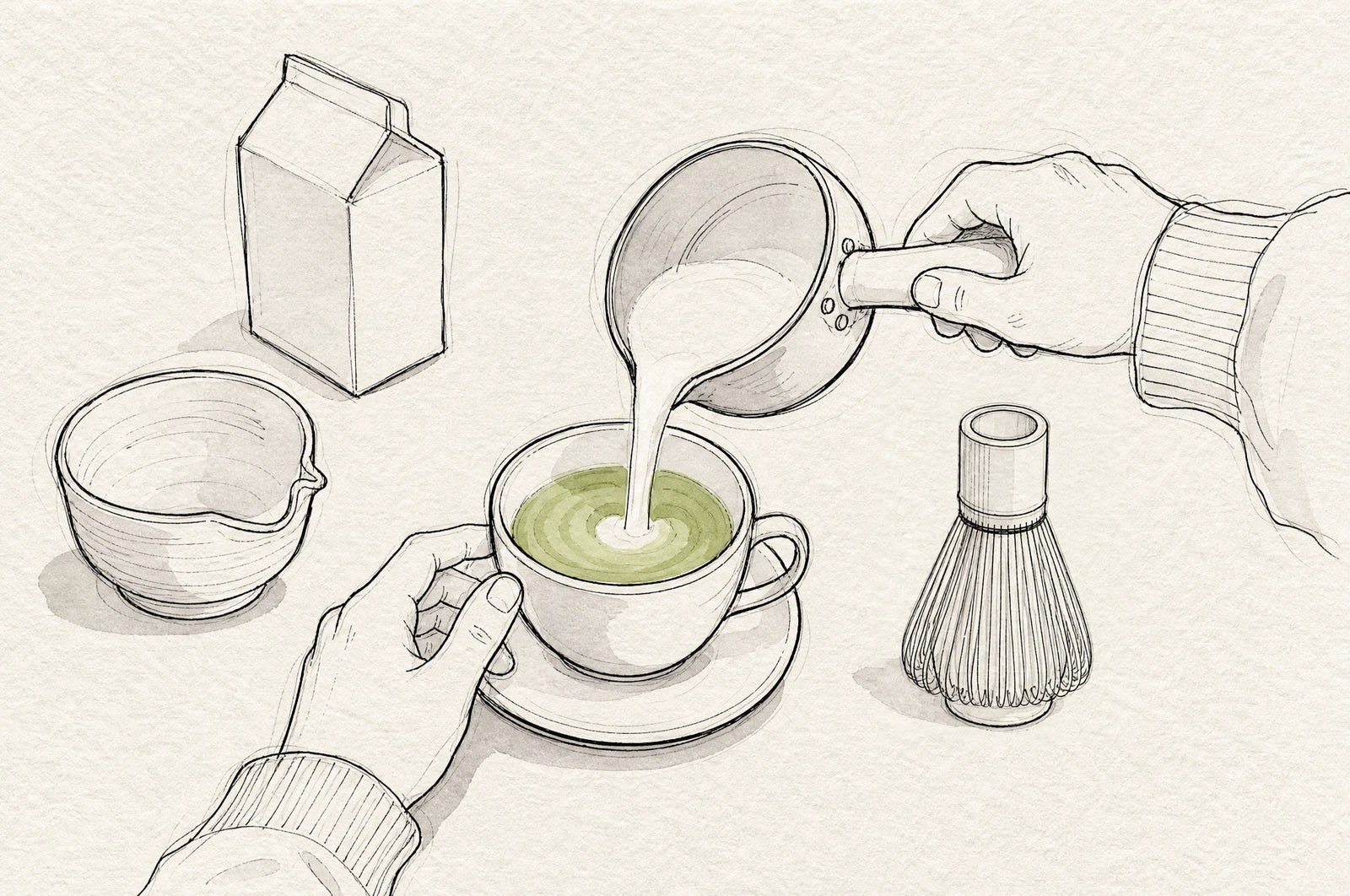
In our tasting, whole milk makes the latte soft and sweet, and oat milk sits between whole milk and soy milk in taste.
Whole milk
Whole milk froths very firmly with few bubbles, and it tastes full and creamy.
Oat milk
The barista version froths as thick and firm as whole milk and tastes full and lightly sweet. A widely sold barista oat drink also contains sunflower oil and pea protein.
Whisk the matcha the way you make matcha every day, with water at 80°C, and add the milk afterwards. Without dairy, barista oat froths the firmest, otherwise take whole milk.
Soy, almond or coconut, which plant milk suits matcha?
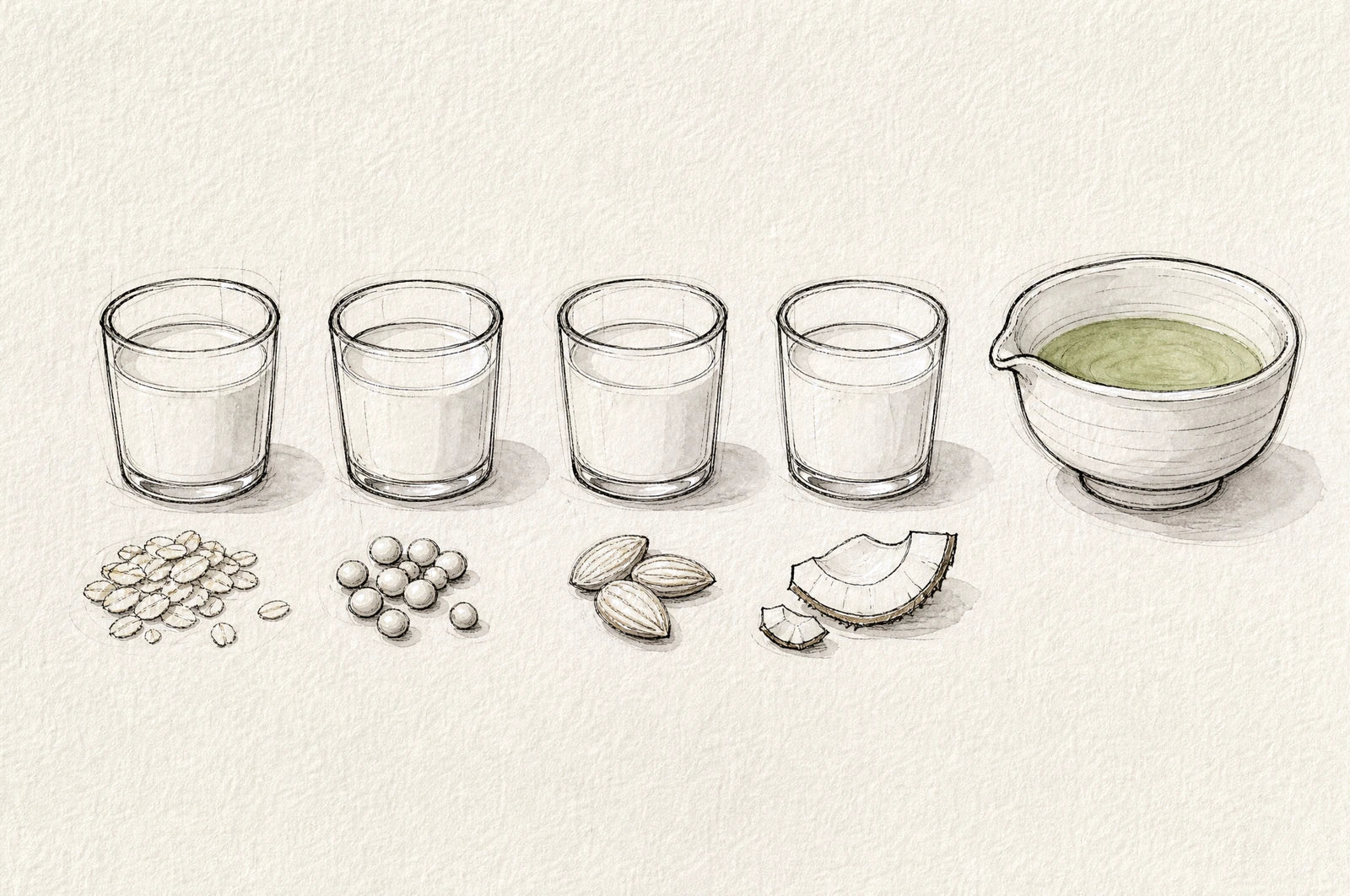
Of the three, soy milk froths the firmest, while almond and coconut milk bring their own aroma.
Soy milk
Soy milk froths firmly with some bubbles, and it tastes sweet, full and a little creamy. Its protein is close to that of dairy milk. With soy milk the matcha latte tastes a little bolder.
Almond milk
In a matcha latte, almond milk forms many bubbles, but the foam stays firm. It tastes nutty, a little watery and sweet, and the aroma of almonds comes through in the latte.
Coconut drink
Coconut drink is the carton plant milk for a latte, not the canned coconut milk for cooking. It froths with many bubbles, and the foam collapses quickly. Here too its aroma comes through in the latte, and the coconut dominates.
Rice milk
Rice milk barely foams, what there is vanishes quickly, and it tastes watery.
Which milk do we use for a matcha latte at MOKU-AN?
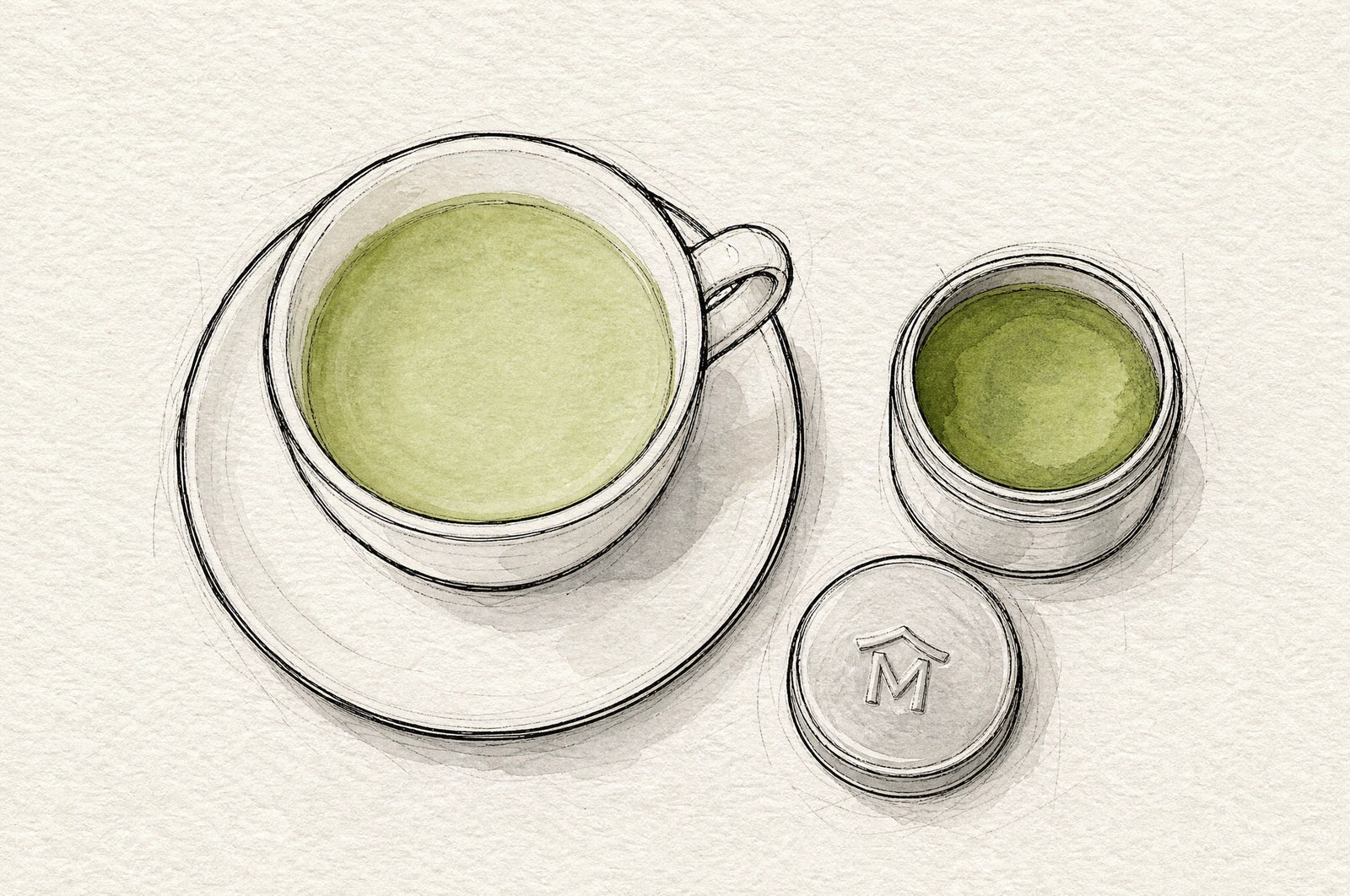
At MOKU-AN, the best milk for a matcha latte depends on the taste we want. If you like it soft and sweet, take whole milk, if you like it bolder, soy, and if you are used to café foam, barista oat milk.
The amount stays the same whatever the milk, in the matcha latte recipe you whisk 3g of matcha with 60ml of water and add 60ml of milk.
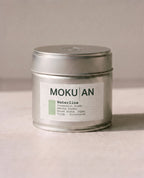
For the latte we recommend Waterline, a house blend from Kagoshima, Shizuoka and Miyazaki that is crisp and clean and keeps its presence in milk. It is blended by a long-established tea house in Shizuoka, now run by the fourth generation.
Barista or regular, what should you check on the carton?
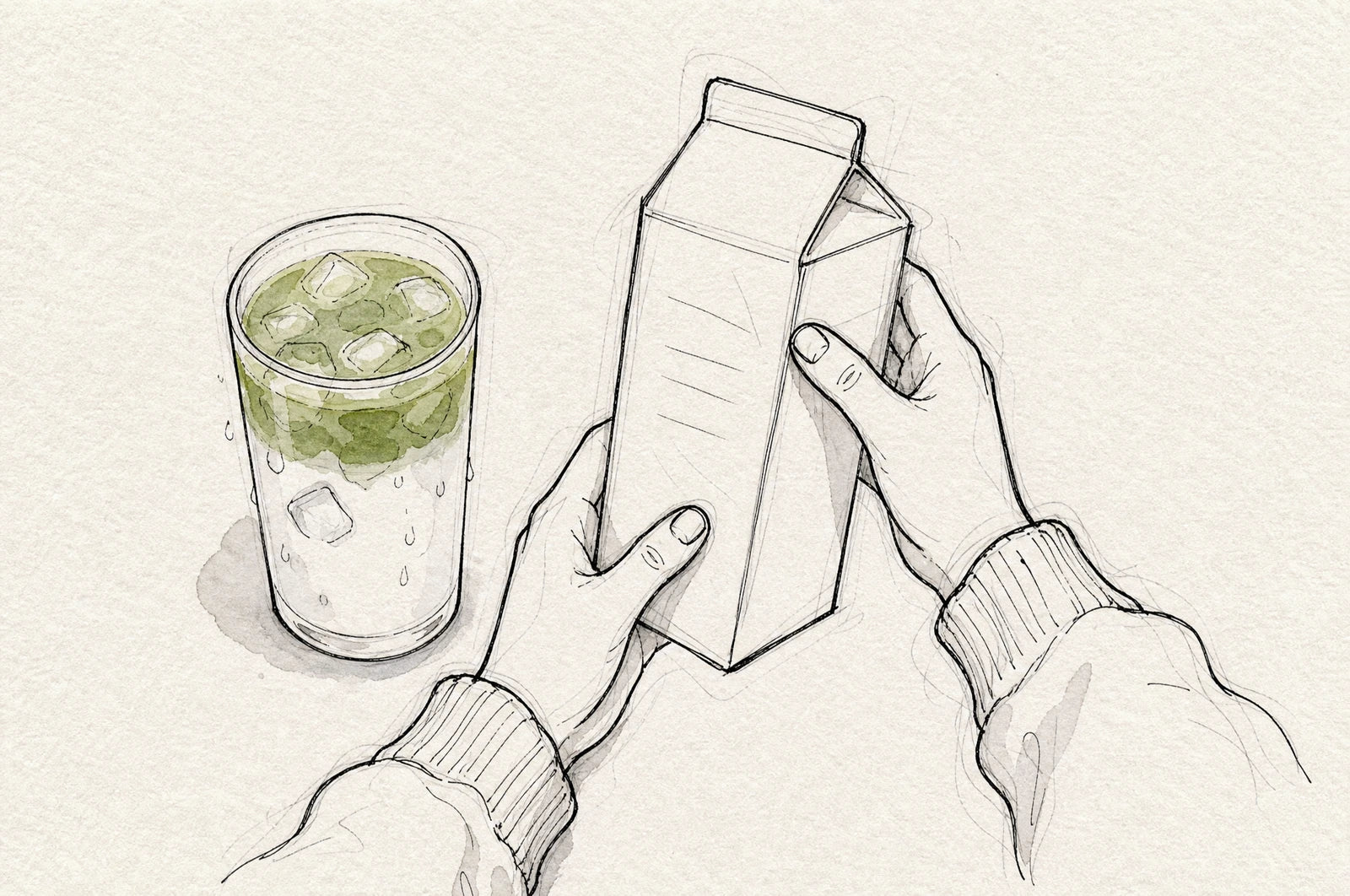
Barista versions are made for frothing, but each in its own way. The ingredient list shows what is in it.
| On the carton | What it means |
|---|---|
| Barista, Barista Edition | Made for frothing, depending on the brand with added oil, protein, acidity regulator or stabiliser. |
| Sugar, fructose in the ingredient list | Sweetens the latte before you add anything. At one widely sold maker, the almond, coconut and soy barista versions list sugar in their ingredients, the oat version does not. |
| A blend, e.g. coconut and soy | In the 1L carton of one widely sold barista coconut drink, the ingredient list shows 5.7% coconut milk next to 2.9% soya beans. |
| Oat drink instead of oat milk | The same product, the name follows the law. Coconut milk may keep its name as a traditional one. |
Regular oat milk usually gives a disappointing foam, while the barista version froths well. If you do not froth the milk, in an iced latte for example, the barista version matters less.
Hot or iced, does the best milk for a matcha latte change?

Hot, you add the warmed milk to the whisked matcha. If you froth the milk first, this is where the differences between milks show most. With hojicha we find soy milk the best match, and a hojicha latte made with 3g of hojicha powder is whisked with 60ml of water too.
Iced, you whisk the matcha with water at 80°C and pour it over cold milk and ice. Because the milk is not frothed, with ice the taste matters more than the foam, and the many bubbles of almond and coconut milk hardly count.
In an iced strawberry matcha latte the cold milk sits on the strawberry purée, and there too its taste matters more than its foam.
The same choice of milk holds for the other matcha drinks in grams, from a dirty matcha to an iced latte.
FAQ
Can you make a matcha latte with normal milk?
Yes, whole milk is one of the best milks for a matcha latte. It froths very firmly and makes the latte creamy. Keep the matcha at 3g.
Is matcha better with oat or almond milk?
For a frothed latte, barista oat milk is the surer choice, as it froths as firmly as whole milk. Almond milk forms a foam with many bubbles that still holds its shape, and it tastes nutty and a little watery. In our tasting, it brings the aroma of almonds to the latte. Over ice, where nothing is frothed, pick the one whose taste you like.
What milk not to use with matcha?
Rice milk barely froths and tastes watery. Sweetened or flavoured drinks, such as vanilla, bring their own aroma and push the matcha into the background.
Can you make a matcha latte with lactose-free milk?
Yes. Lactose-free milk is dairy milk with the milk sugar split, and lactose-free UHT milk froths well too. It tastes a little sweeter.
Why does the carton say oat drink instead of oat milk?
In the UK, as in the EU, the name milk is reserved for dairy, apart from a short list of traditional names such as coconut milk. That is why an oat carton may say oat drink, while recipes and searches still call it oat milk.
Do you need to froth the milk for a matcha latte?
No. Whisk the matcha first and add the warm milk afterwards. If you like it café style, froth the warm milk first, that is where the differences between milks show most.