
Hojicha caffeine, how much is in tea and powder?
Hojicha does contain caffeine, less per gram than matcha. Japan's food composition tables give an infusion of the leaves about 20mg per 100ml, the same as sencha, a steamed Japanese green tea. The gap comes mainly from the raw leaf and only partly from roasting, which removes about a tenth on average.
Hojicha is green tea that is steamed, dried and then roasted. At MOKU-AN it comes as a powder, and with powder you drink the whole leaf, so a cup of brewed tea and a bowl of powder differ in caffeine.
How much caffeine is in hojicha?
Japan's food composition tables give brewed hojicha about 20mg per 100ml, the same as sencha. According to one analysis, hojicha leaves carry 1.95% of their dry weight as caffeine, which is roughly 19.5mg per gram.
| What | Amount | Caffeine, about |
|---|---|---|
| Hojicha, infusion as set in the table | 100ml | 20mg |
| Sencha, infusion as set in the table | 100ml | 20mg |
| Hojicha leaves, from one analysis | 1g | 19.5mg |
Infusion from the Japanese food composition tables (Ministry of Education, MEXT, 2020, 8th edition), leaves from average values per type of tea in an analysis of Japanese commercial teas (Chagyo Kenkyu Hokoku No. 83, 1996).
The table brews hojicha with 15g of tea in 650ml of water at 90°C for 30 seconds. For sencha it uses 10g of tea in 430ml of water at 90°C for 1 minute. Values per 100ml and per gram measure different things, because an infusion holds only what the water pulls out of the leaf.
Hojicha vs matcha and coffee, which has less caffeine?
Gram for gram of leaves or powder, hojicha has less caffeine than matcha, and a cup as set in the table, about 40mg, sits below filter coffee at 90mg. How much caffeine ends up in your cup depends on how many leaves or how much powder you use. The table shows how a cup of hojicha sits next to matcha and coffee.
| Drink | Amount | Caffeine, about |
|---|---|---|
| Filter coffee | 200ml | 90mg |
| Espresso | 60ml | 80mg |
| Matcha, usucha | 2g powder | 64mg |
| Hojicha, infusion as set in the table | 200ml | 40mg |
| Green tea, infusion | 200ml | 30mg |
Hojicha and matcha from the Japanese food composition tables (MEXT), all other drinks from the guideline values of the BfR, the German Federal Institute for Risk Assessment.
More leaves in less water gives a cup with more caffeine. The 40mg for hojicha and the 30mg for green tea come from two sources that brew differently, both describe an infusion of leaves and both sit in the same range. The same table covers caffeine in matcha, where 1g of powder has about 32mg.
Why does hojicha have less caffeine than matcha?
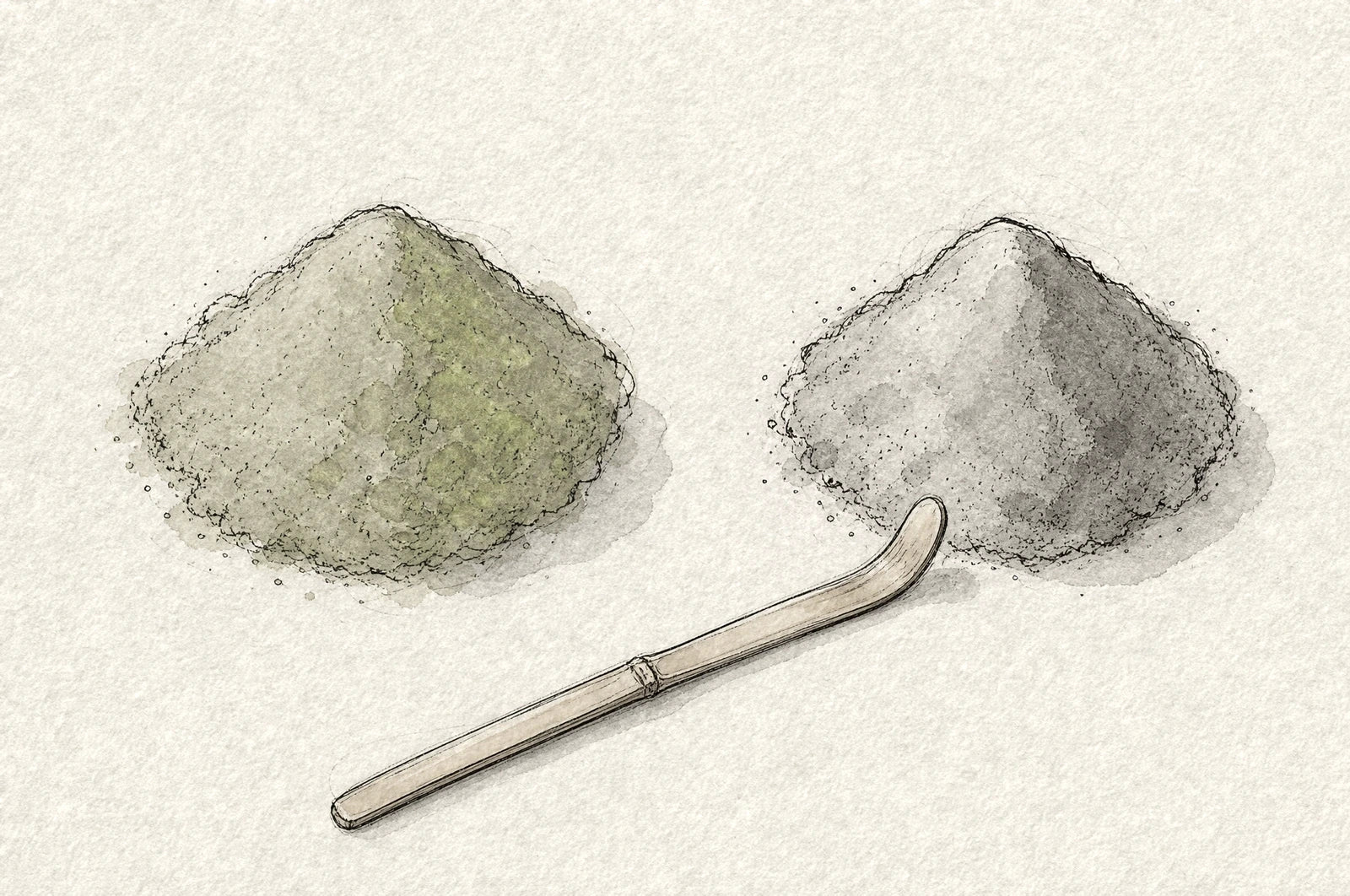
It starts with the raw leaf. Matcha comes from tea bushes that are shaded before harvest, and shading is one step in how matcha is made. In studies from Shizuoka and Fukuoka prefectures shaded leaves held more caffeine than leaves grown in the sun. Hojicha, according to Japan's Ministry of Agriculture, Forestry and Fisheries, is tea made by roasting sencha or bancha, a tea from more mature leaves, over strong heat.
The analysis of Japanese commercial teas measures caffeine in dry weight. Unroasted bancha has almost as little caffeine as hojicha, so the gap to matcha is already in the leaf before any roasting.
| Tea | Caffeine in dry weight |
|---|---|
| Matcha | 3.77% |
| Sencha | 3.07% |
| Bancha, unroasted | 2.05% |
| Hojicha | 1.95% |
Average values per type of tea from an analysis of Japanese commercial teas, Chagyo Kenkyu Hokoku No. 83, 1996. Measured in dry weight, which is why they differ from the per-product values in the food composition tables.
The raw material for hojicha varies widely in Japan, so the value changes from tea to tea.
Does roasting remove caffeine?
Hojicha is steamed, dried and then roasted, according to the German Federal Centre for Nutrition (BZfE) at up to 200°C. A long-established tea wholesaler in Gifu roasts until the leaves reach 160 to 180°C. In a measurement by the Japanese tea association, roasting removed about 10% of the caffeine on average, and about 12% the year before.
It varied a lot from tea to tea, and some hojicha had more caffeine after roasting than before. In a trial by Kochi Prefecture, strong roasting cut caffeine by 6 to 13%, while light roasting left it almost unchanged. Karibancha is a bancha cut later in the season.
| Raw material | Unroasted | Lightly roasted | Strongly roasted |
|---|---|---|---|
| First harvest | 100 | 101 | 94 |
| Late harvest, karibancha | 100 | 99 | 87 |
Caffeine before roasting set to 100. Trial by the Tea Research Station of Kochi Prefecture on roast level and quality of hojicha.
Hojicha powder or brewed leaves, which has more caffeine?
With brewed leaves you drink only what the water pulls out of them, and the leaves stay in the pot. A tea house in Kyoto brews hojicha with 10g of tea in 240ml of water at 100°C and pours off after 30 seconds. That is more tea for less water than the table assumes. A tea house in Uji writes that caffeine dissolves well in water above 80°C.
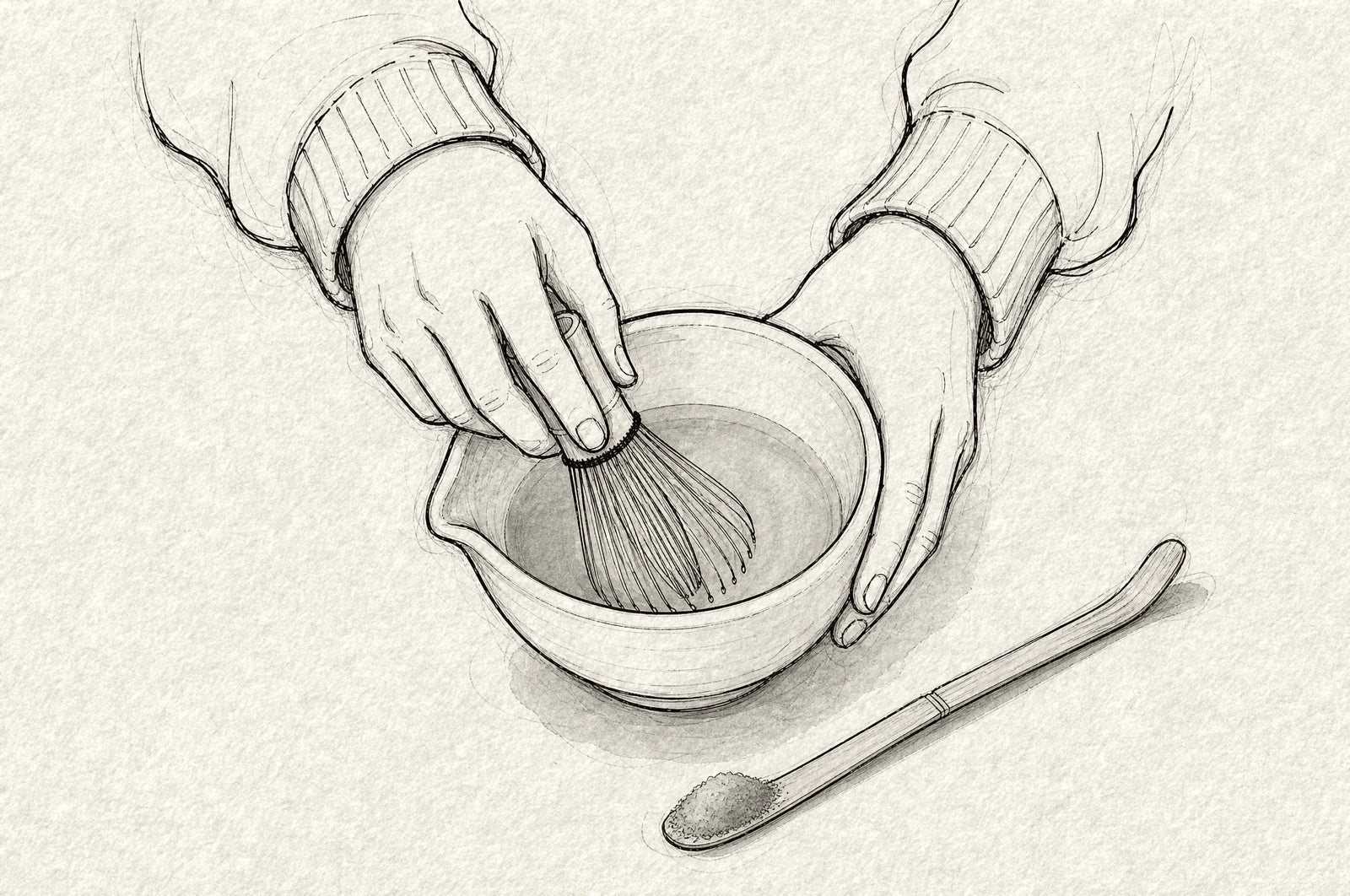
With powder you drink the whole leaf. Nothing is left behind, so the amount of powder decides how much caffeine is in the bowl, just as with matcha. From the same amount of leaves, powder gives you more caffeine than an infusion does.
MOKU-AN's hojicha powder is ground as fine as matcha.
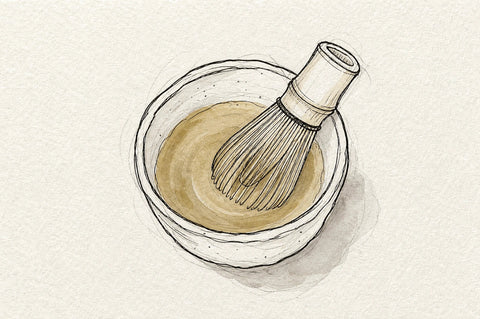
You can make it just like matcha, with 2g in 60ml of water at 80°C and 15 seconds of whisking in an M shape.
Can you drink hojicha at night?
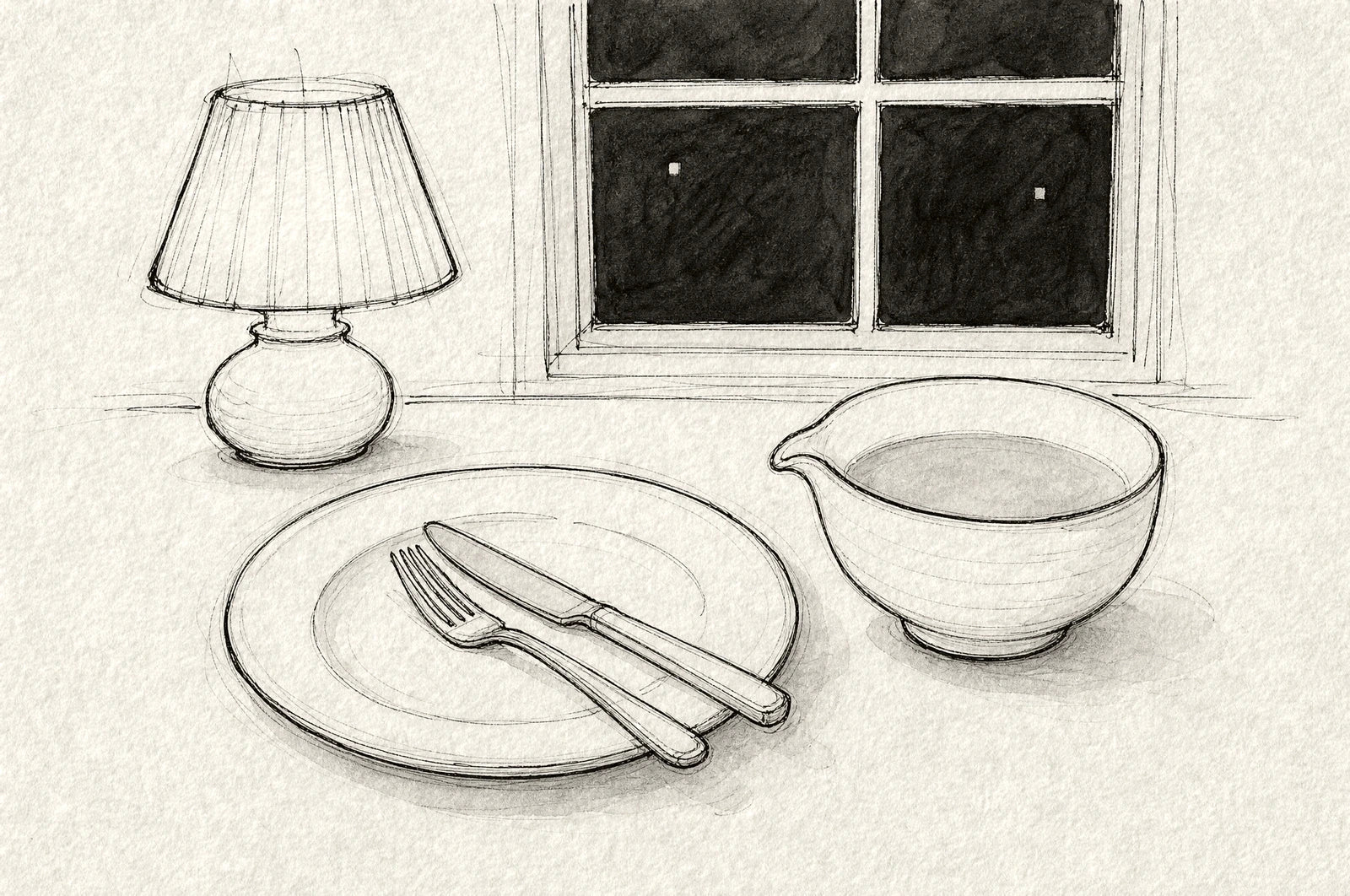
A tea house in Kyoto recommends hojicha at any time of day, including with meals. It still contains caffeine at night, about as much per cup of infusion as green tea, roughly 40mg for the table's infusion against 30mg for green tea in the BfR's guideline values.
The BfR considers up to 200mg at once and 400mg over the day safe for healthy adults, counting all caffeine from food and drink. A cup of hojicha counts towards that like any other caffeinated drink.
Whether you make hojicha as brewed leaves in a pot or as powder in a bowl, the amount of leaves or powder decides how much caffeine ends up in your cup.
Frequently asked questions
Does hojicha have as much caffeine as sencha?
As an infusion, yes. Japan's food composition tables give about 20mg of caffeine per 100ml for both. In the leaves themselves hojicha is lower, and in an analysis of Japanese commercial teas, measured in dry weight, sencha came to 3.07% and hojicha to 1.95%.
Does a hojicha latte have more caffeine than a bowl of hojicha?
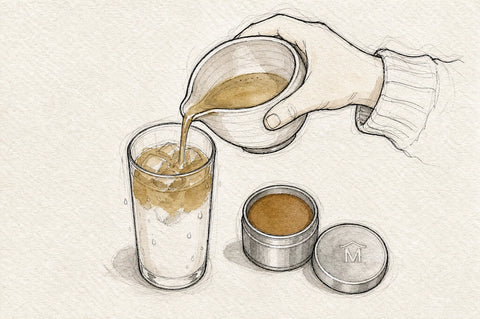
A hojicha latte does, because it is made with more powder. At MOKU-AN that is 3g for the latte and 2g for the bowl, one and a half times as much. The milk adds no caffeine.
Is hojicha stronger than matcha?
Not in caffeine. In the same analysis hojicha has less per gram than matcha, 1.95% against 3.77% in dry weight. An infusion as set in the table has about 40mg in 200ml, less than a bowl of matcha with 2g at about 64mg. More leaves in less water raise the figure.
Which Japanese tea has the most caffeine?
As an infusion, according to Japan's food composition tables it is gyokuro at 0.16g per 100ml, with a lot of tea in little water (10g of tea in 60ml of water at 60°C for 2.5 minutes). Matcha you drink as the whole leaf, and 1g of powder has about 32mg.