
Matcha caffeine per bowl and latte, compared with coffee
Matcha contains caffeine, about 64mg in a bowl made with 2g of powder. A matcha latte with 3g comes to about 96mg, because with matcha, the whole leaf finely ground, the amount of powder sets the level, not the steeping time. The figures come from Japan's official food composition tables (Standard Tables of Food Composition in Japan 2020, 8th edition, MEXT), which list 3.2g of caffeine per 100g of matcha powder, roughly 32mg per gram.
How much caffeine is in a cup of matcha?
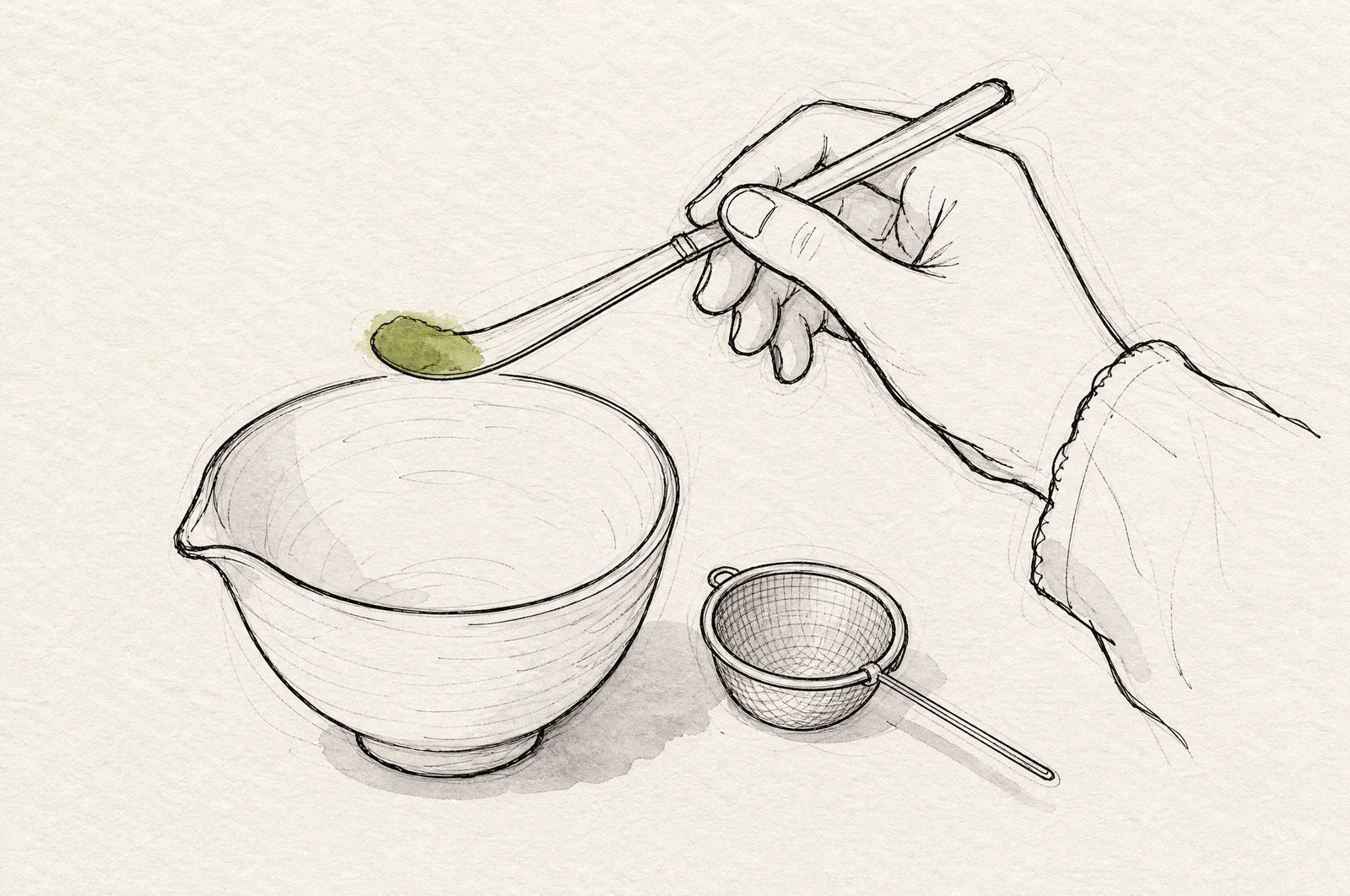
The caffeine in matcha follows the amount of powder. One gram of matcha contains about 32mg of caffeine. A bowl with 2g of powder therefore comes to 64mg.
A tea house in Kyoto sets a bowl of usucha, the thin bowl, at 2g of powder to 60ml of water at 80°C. For koicha, the same tea house uses 4g to 30ml. The usucha bowl matches what applies at MOKU-AN when you make matcha with 2g in 60ml.
| Preparation | Powder | Caffeine, about |
|---|---|---|
| 1g of powder | 1g | 32mg |
| Usucha, the thin bowl, 60ml of water | 2g | 64mg |
| Matcha latte, 60ml of water and 60ml of milk | 3g | 96mg |
| Koicha, the thick bowl, 30 to 40ml of water | 4g | 128mg |
Calculated with 3.2g of caffeine per 100g of matcha powder (Japanese food composition tables, Standard Tables of Food Composition in Japan 2020, 8th edition, MEXT).
Because koicha, the thick tea, takes twice as much powder as usucha, a bowl with 4g comes to about 128mg.
Matcha vs coffee, which has more caffeine?
Per cup, the amount of powder decides how matcha compares. According to Germany's Federal Institute for Risk Assessment (BfR), 200ml of filter coffee holds about 90mg of caffeine and 60ml of espresso about 80mg. A bowl of matcha with 2g, at about 64mg, sits below both. A latte with 3g, at about 96mg, is just above them.
| Drink | Amount | Caffeine, about |
|---|---|---|
| Matcha latte | 3g of powder | 96mg |
| Filter coffee | 200ml | 90mg |
| Espresso | 60ml | 80mg |
| Matcha, usucha | 2g of powder | 64mg |
| Black tea | 200ml | 45mg |
| Green tea, brewed | 200ml | 30mg |
Matcha calculated from the Japanese food composition tables (2020, 8th edition, MEXT), all other drinks from the BfR's guideline values.
Matcha, caffeine and L-theanine
A latte with 3g and a filter coffee, at 96mg and 90mg, are almost level, and yet the caffeine in matcha is often described differently. Matcha also contains L-theanine, which is said to make its caffeine feel gentler and steadier than coffee's, without the usual jitters.
Is matcha higher in caffeine than green tea?
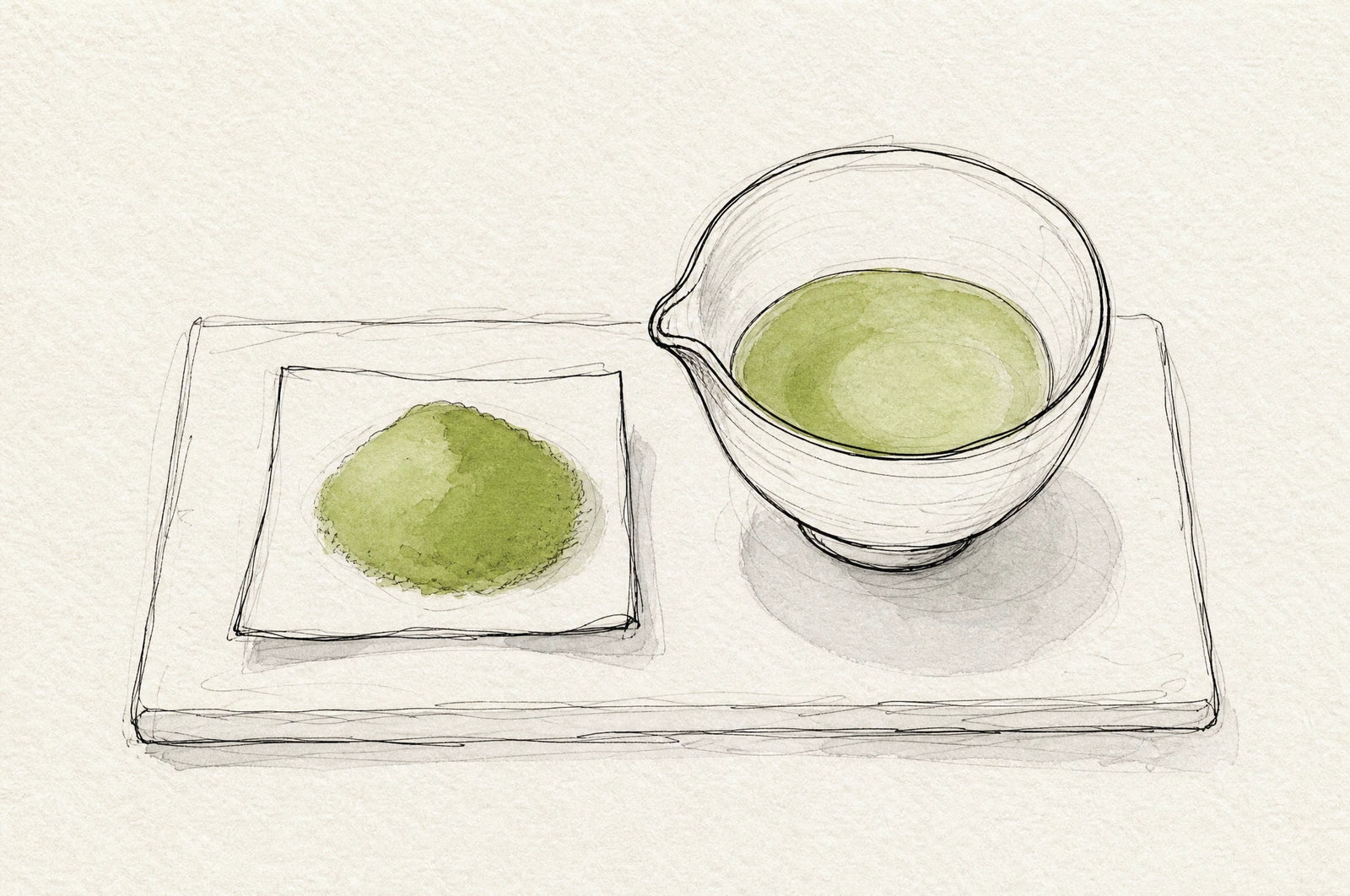
With green tea you drink only what the water draws out of the leaf, and the leaves stay in the pot. With matcha you drink the whole, finely ground leaf, so all of the leaf's caffeine ends up in the bowl.
| Tea | What was measured | Preparation according to the table | Caffeine per 100g |
|---|---|---|---|
| Matcha | Powder, drunk whole | no infusion | 3.2g |
| Gyokuro | Leaves | no infusion | 3.5g |
| Sencha | Leaves | no infusion | 2.3g |
| Gyokuro | Infusion | 10g of tea, 60ml of water, 60°C, 2.5 minutes | 0.16g |
| Sencha | Infusion | 10g of tea, 430ml of water, 90°C, 1 minute | 0.02g |
Standard Tables of Food Composition in Japan 2020, 8th edition, MEXT.
Values per 100g can only be compared when the preparation is the same. The infusion of gyokuro, a shade-grown green tea, looks high at 0.16g per 100g because the table brews 10g of tea in just 60ml of water. For sencha it is 10g of tea in 430ml, so only 0.02g.
For the leaves themselves, the table lists gyokuro at 3.5g, matcha at 3.2g and sencha at 2.3g per 100g. Gyokuro and matcha come from tea bushes that are shaded before the harvest. In studies by the prefectures of Shizuoka and Fukuoka, shaded leaves contained more caffeine than leaves from bushes grown in the sun.
How much caffeine is in a matcha latte?
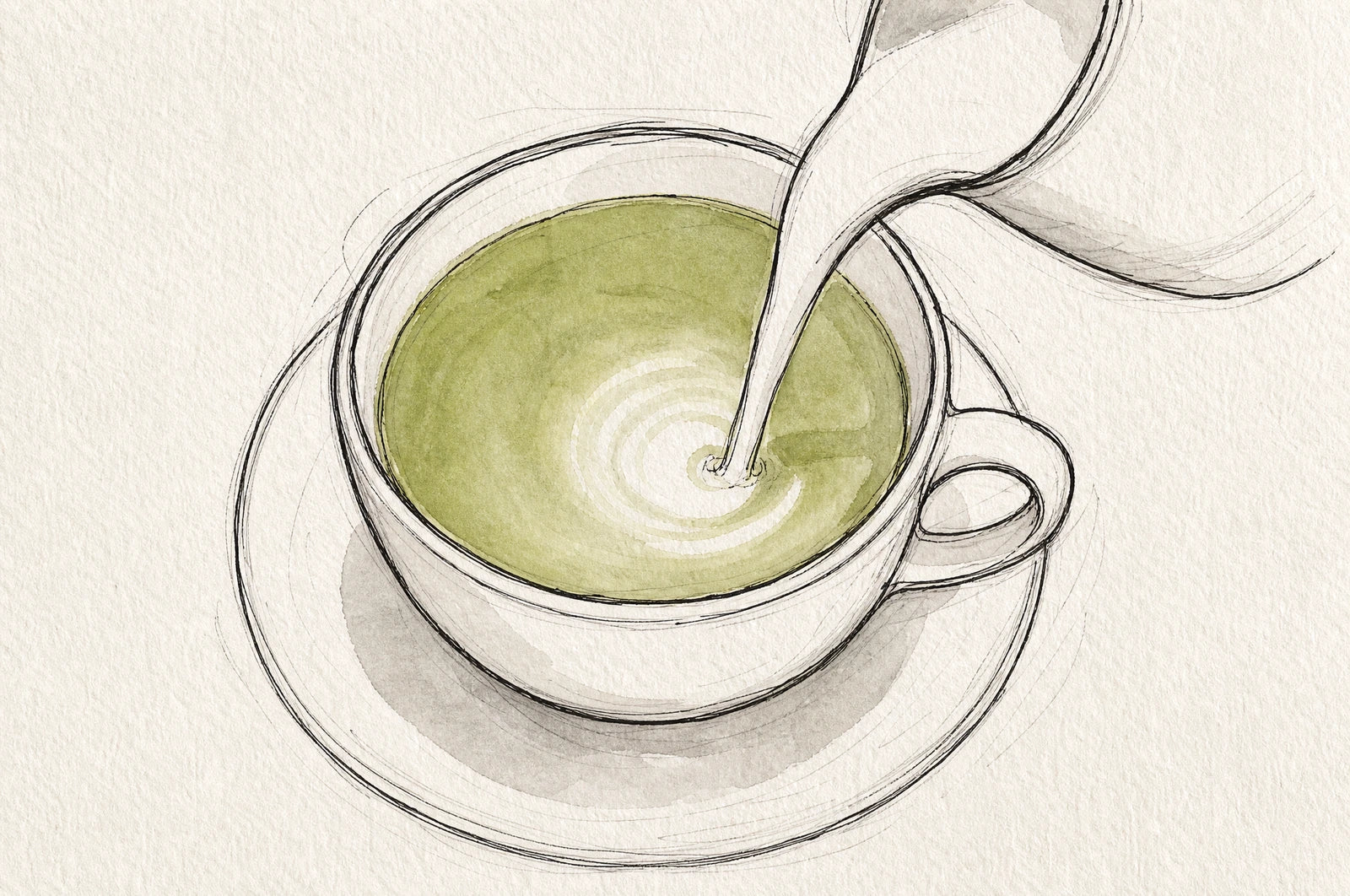
A matcha latte made with 3g has about 96mg of caffeine, because the milk adds none. For the latte, whisk 3g of matcha with 60ml of water at 80°C and top up with 60ml of warm milk.
The caffeine follows the powder, not the milk. With more or less milk, the figure stays the same at 3g of powder. Whether you use oat, almond or cow's milk changes nothing. A matcha latte with strawberries also holds only the caffeine of the matcha powder in it.
How much caffeine a day is safe, according to EFSA?
The European Food Safety Authority (EFSA) assessed caffeine in 2015 and gives healthy adults up to 200mg at once and up to 400mg spread over the day. In the UK, the NHS advises pregnant women to have no more than 200mg of caffeine a day.
| Who | Amount |
|---|---|
| Healthy adults, at once | up to 200mg (3mg per kg of body weight) |
| Healthy adults, spread over the day | up to 400mg |
| Pregnant and breastfeeding women, spread over the day | up to 200mg |
| Children and adolescents | 3mg per kg of body weight, at once or spread over the day |
According to EFSA's 2015 assessment, as set out by the BfR.
The figures apply to caffeine from all sources together. That includes coffee, tea, cola and every other drink or food with caffeine.
A bowl with 2g, at about 64mg, comes to roughly a third of the single dose of 200mg. A latte with 3g, at about 96mg, is below the single dose of 200mg that EFSA gives for healthy adults.
What is L-theanine in matcha?
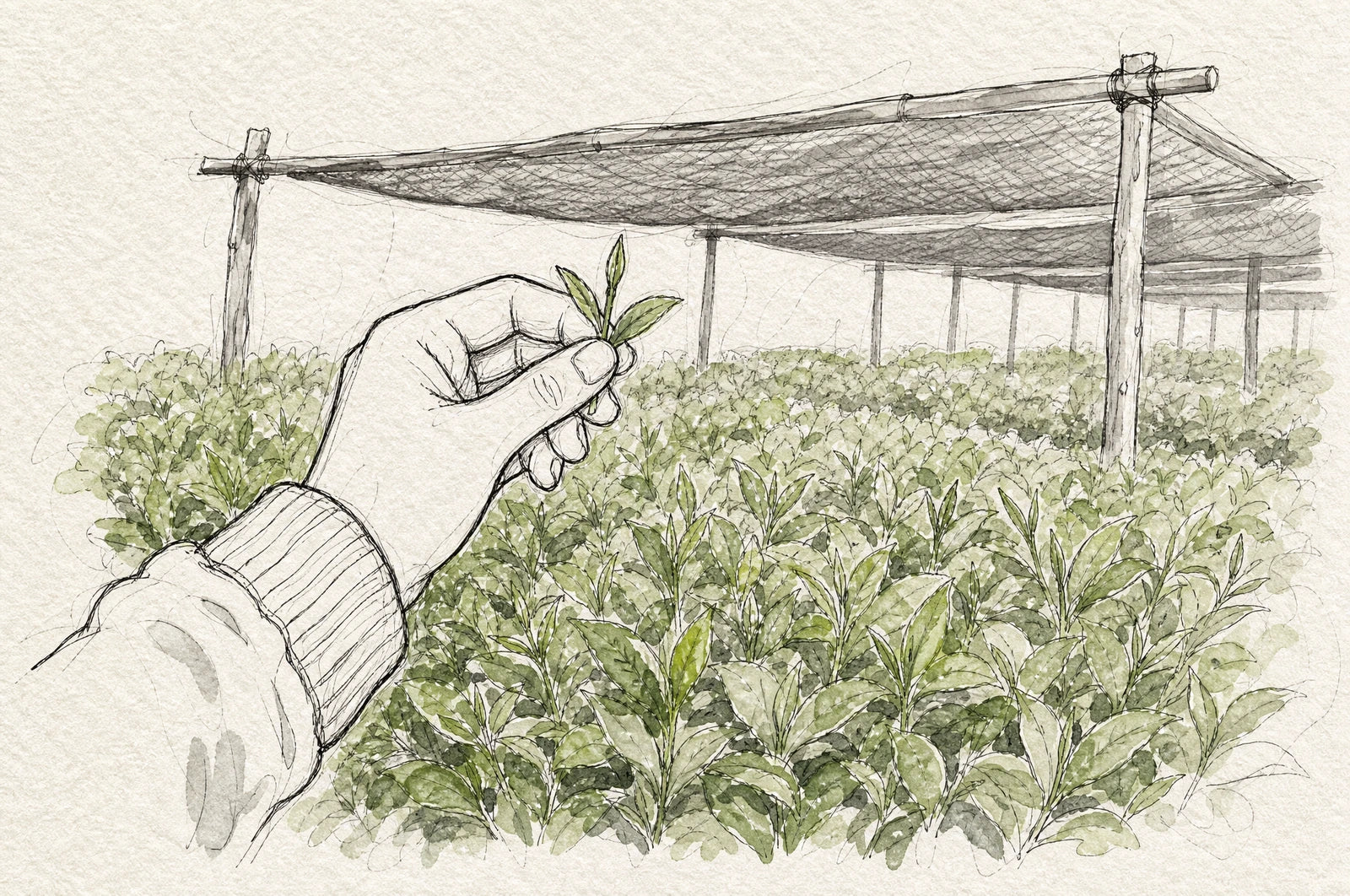
L-theanine is an amino acid, and it is what gives tea its umami. According to the tea research institute of Kyoto Prefecture, free amino acids make up 2 to 5% of the dry weight of tea, and more than 40% of them are theanine. The plant makes theanine in its roots and stores it in the leaf, and sunlight turns it into catechins, which bring the bitterness. Shading before the harvest slows that change, so the tea ends up with more umami and less bitterness.
In Japan, theanine is above all a question of taste. A tea house in Uji simply calls theanine the umami substance of its matcha. You can taste it as the umami in matcha's taste.
How should you measure matcha if you watch your caffeine?
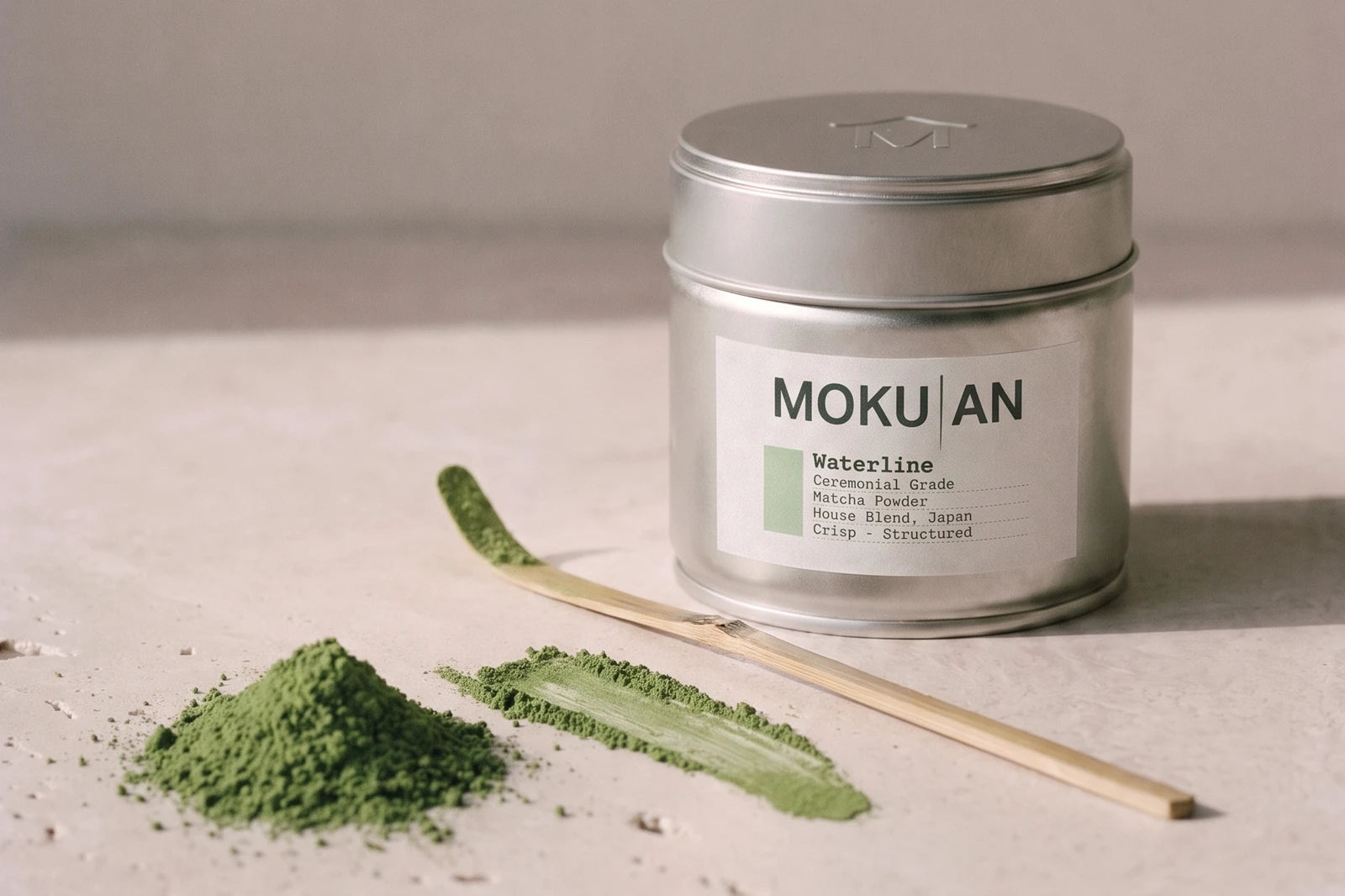
If you watch your caffeine, weigh in grams rather than spoons. The caffeine depends on the grams of powder, and a spoon is not a fixed measure.
Tea houses count their spoons differently, too. A tea house in Kyoto counts 2g as one and a half bamboo scoops (chashaku), another tea house in Uji as two. At MOKU-AN, 2g is two bamboo scoops with a small mound or about one level teaspoon.
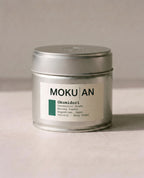
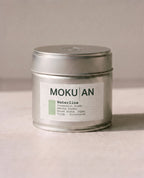
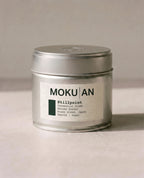
A bowl of Waterline takes 2g. Stillpoint and Okumidori take the same amount. For a latte, use 3g with any of them.
Matcha is shade-grown green tea from Japan that you drink as the whole leaf, so you can measure its caffeine on the scales.
Frequently asked questions
Does matcha have as much caffeine as an espresso?
According to the BfR, a 60ml espresso holds about 80mg, a bowl of matcha with 2g about 64mg. Koicha with 4g, at about 128mg, is above that. A latte with 3g comes to about 96mg.
Is there decaf matcha?
Yes, some shops sell matcha with most of its caffeine removed. Even decaf matcha still contains some caffeine, because caffeine occurs naturally in the tea leaf itself. For a warm bowl in the evening, people in Japan often reach for roasted hojicha. It contains only very little caffeine, much less than matcha.
How much caffeine is in 1g of matcha?
About 32mg. The Japanese food composition tables list 3.2g of caffeine per 100g of matcha powder.
Does all matcha have the same amount of caffeine?
No. The Japanese food composition tables give a representative value for Japan, and in an individual matcha the level varies with the cultivar and how it was grown. In 2024, Bavaria's State Office for Health and Food Safety (LGL) tested matcha powders and teas containing matcha from shops and reported 13 to 68mg of caffeine for a bowl made with 1g to 2g of powder. For the daily bowl, the table value is enough as a guide.
All articles on matcha knowledge
 What is matcha? What it's made of, origin and typesMatcha is shade-grown green tea, ground whole. Where it is grown, how it differs from sencha and what usucha and koicha are.
 What does matcha taste like? Matcha taste in four wordsWhat matcha tastes like, savoury first, then a short bitter edge and a faintly sweet finish. Four words for any cup, and why it turns bitter or fishy.
 What is ceremonial grade matcha? How Japan judges qualityCeremonial grade matcha is a trade term for matcha to drink on its own, not a Japanese grade. How tea houses in Japan judge quality and when to pay more.
 How to store matcha, fridge or cupboard, and does it go bad?Store opened matcha airtight, dark and cool in a cupboard, not the fridge. What Japanese tea houses advise, and what the best before date really means.
 How is matcha made? 8 steps from shaded field to powderMatcha comes from shaded tea leaves, steamed, dried without rolling as tencha and finely ground. How matcha is made, step by step, with figures from Japan.
 Is Uji Matcha the Best? Japan's Matcha Regions ComparedUji matcha stands for tradition, yet Kagoshima now grows the most tencha, the leaf matcha is ground from. What does origin say about quality and taste?